
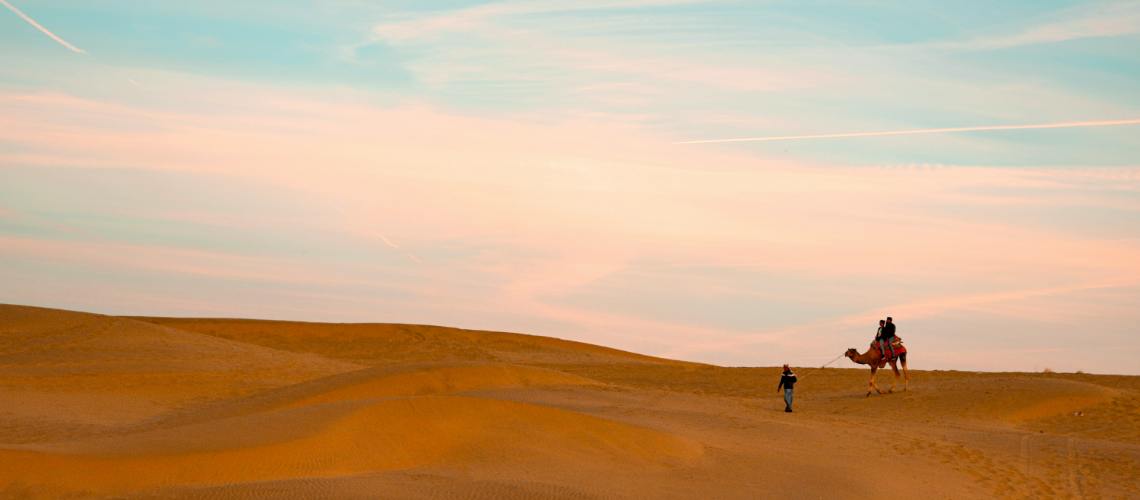
Rajasthan is India at its most vivid and cinematic: a land of walled cities painted pink, blue, white, and gold, of hilltop fortresses that took centuries to build, of a desert that stretches to the horizon, and of a living culture of music, craft, and hospitality that has survived essentially unbroken for a thousand years. This Rajasthan travel guide brings together everything a first-time visitor needs to plan a genuinely rewarding trip: how to structure the route, how much it costs, when to go, how to get around, and which experiences separate a memorable Rajasthan journey from a merely adequate one. It is the definitive planning resource for the Land of Kings.
For curated routes and packages, our collection of Rajasthan tour packages covers the full range of options.
Understanding Rajasthan: The Land of Kings
Rajasthan is the largest state in India by area, covering over 342,000 square kilometres, much of it comprising the Thar Desert in the west and the ancient Aravalli Range, one of the world’s oldest mountain systems, running diagonally across the state. This geography created a patchwork of princely kingdoms, each with its own capital, fortress, and cultural identity, ruled for over a thousand years by the Rajput warrior clans.
The result is a state defined by its cities, each associated with a distinct colour and character: pink Jaipur (the capital and gateway), white Udaipur (the romantic city of lakes), blue Jodhpur (the desert-edge Blue City), and golden Jaisalmer (the sandstone city rising from the Thar Desert). Beyond these, Pushkar offers one of India’s most sacred lakes and the only major Brahma temple in the world, while Ranthambore and other reserves protect the state’s wildlife, including its famous tigers.
The state divides into three broad cultural zones: Dhundhar (around Jaipur), with its grid-planned architecture and Vedic geometry; Mewar (around Udaipur), with its lakes, hills, and sophisticated water management; and Marwar (around Jodhpur and Jaisalmer), the arid desert plains with their resilient fortresses and nomadic trading heritage.

The Classic Rajasthan Route
Rajasthan is best experienced as a circuit, connecting several cities into a single loop rather than focusing on one destination. The most efficient route follows a clockwise or anti-clockwise loop from Jaipur, minimising backtracking.
The classic sequence runs: Jaipur → Pushkar → Udaipur → Jodhpur → Jaisalmer, often starting and ending at Delhi (which adds the Golden Triangle of Delhi, Agra, and Jaipur) or looping back to Jaipur.
Approximate distances and driving times on the main circuit:
- Jaipur to Pushkar: approximately 145 kilometres, 2.5 to 3 hours
- Pushkar to Udaipur: approximately 280 kilometres, 5 hours
- Udaipur to Jodhpur: approximately 250 kilometres, 4.5 to 5 hours (via the Ranakpur Jain Temple)
- Jodhpur to Jaisalmer: approximately 285 kilometres, 4.5 to 5 hours
- Jaisalmer back to Jaipur: approximately 560 kilometres (best broken with an overnight stop, or covered by an internal flight)
Many itineraries add Ranthambore National Park (between Jaipur and the southern cities) for a tiger safari, or Kumbhalgarh (near Udaipur) for its extraordinary 36-kilometre fortress wall, the second longest continuous wall in the world after the Great Wall of China.
Our detailed Rajasthan itinerary guide breaks down 5, 7, and 10-day route options in full.
Rajasthan Travel Guide: Best Time to Visit Rajasthan
October to March (peak season): The best time to visit, with cool, dry weather and daytime temperatures of roughly 15 to 27 degrees Celsius. This is the ideal window for sightseeing, fort exploration, and desert safaris, and coincides with the peak festival calendar. Book accommodation in Udaipur and Jaisalmer two to three months ahead during this period.
April to June (summer): Extremely hot, with desert temperatures regularly exceeding 40 degrees Celsius and reaching up to 48 degrees Celsius in Jaisalmer and Bikaner. Sightseeing is uncomfortable from late morning to evening. The hill station of Mount Abu remains pleasant, and prices drop significantly during this off-peak period.
July to September (monsoon): Rajasthan receives relatively light rainfall compared to the rest of India. Udaipur and Mount Abu become green and beautiful, the lakes fill, and crowds thin considerably. This is an underrated and atmospheric time to visit, particularly for Udaipur.
Our dedicated best time to visit Rajasthan guide covers the seasonal picture, festival calendar, and month-by-month breakdown in detail.

How to Get Around Rajasthan
By private car with driver (recommended): For the multi-city circuit, a chauffeur-driven car is the standard and most comfortable option. It offers door-to-door flexibility, the ability to stop at sites between cities (such as Ranakpur temple between Udaipur and Jodhpur), and a knowledgeable local driver who acts as an informal cultural guide. This is particularly valuable for international visitors, for whom navigating Indian highway traffic, cattle crossings, and rural roads independently can be stressful.
By train: Rajasthan has the best rail connectivity in northern India. The Delhi-to-Jaipur Vande Bharat covers the route in about four hours, and overnight trains link Jaipur with Udaipur, Jodhpur, and Jaisalmer, saving a night at a hotel. Booking via the IRCTC portal at least two weeks in advance is recommended for the better classes (2AC and 3AC).
By air: Jaipur is the main international gateway, with direct flights from Delhi, Mumbai, Dubai, and other cities. Udaipur and Jodhpur have well-connected domestic terminals, and Jaisalmer has limited seasonal service during the winter months.
Our how to reach Rajasthan guide covers flights, trains, and road routes in full detail.
What Does a Rajasthan Trip Cost
Rajasthan accommodates every budget, from backpacker guesthouses to some of the most luxurious palace hotels in the world.
Budget travel: Guesthouses, shared transport, and street food can keep daily costs low, making Rajasthan accessible to budget travellers and backpackers.
Mid-range travel: Comfortable heritage hotels, a private car with a driver, and a mix of restaurant dining represent the sweet spot for most visitors, offering excellent value for the experience.
Luxury travel: Rajasthan is home to some of the world’s finest heritage palace hotels, and a premium trip built around these properties, with private guides and chauffeur-driven cars, is one of the great luxury travel experiences available anywhere.
Our detailed Rajasthan trip cost guide breaks down budget, mid-range, and premium planning with specific figures.
The Experiences that Define Rajasthan
Fort and palace architecture: The six hill forts of Rajasthan inscribed on the UNESCO World Heritage List, along with the great city palaces, represent one of the world’s densest concentrations of fortified architecture. Our fort and palace tours in Rajasthan guide covers the essentials.
Desert experiences: Camel safaris, jeep safaris, and overnight desert camping in the Thar Desert around Jaisalmer are among the most iconic experiences in Rajasthan. See our guide to desert safari in Rajasthan.
Folk music and dance: The Manganiyar and Langa communities of western Rajasthan are among India’s finest folk musicians, and the Kalbeliya dance is on UNESCO’s List of Intangible Cultural Heritage. Our cultural experiences in Rajasthan guide covers these traditions.
Crafts and shopping: Jaipur for blue pottery, gemstones, and block prints; Jodhpur for furniture and bandhej tie-dye; Udaipur for miniature paintings; Jaisalmer for embroidery and leatherwork. See our shopping in Rajasthan guide.
Heritage hotel stays: Sleeping in a converted royal palace, or haveli, is one of the most memorable ways to experience Rajasthan. Our heritage hotels in Rajasthan guide covers the finest.
Cuisine: Rajasthani food, built around the constraints of a desert climate, is rich and distinctive, from dal baati churma to laal maas. Our food of Rajasthan guide covers what to try.

Tips for Travelling in Rajasthan
Dress modestly, particularly at religious sites, where covered shoulders and knees are expected. Carry a scarf or shawl, which is useful for temples and for desert nights.
Pack for temperature swings. Desert nights in winter (December to February) are cold, so a warm layer is essential even when the days are pleasant. Comfortable walking shoes are needed for the forts.
Bargain in the bazaars. In tourist markets, starting negotiations at around 40 per cent of the quoted price is standard. Fixed-price government emporiums offer quality assurance without haggling.
Book safaris and popular hotels in advance. Ranthambore safaris and the best heritage hotels in Udaipur and Jaisalmer book out well ahead during peak season.
Allow enough time. Ten to fourteen days is ideal for a meaningful first visit covering the major cities. Rushing between too many destinations in too few days is the most common planning mistake.
Plan your Rajasthan trip with Immersive Trips
At Immersive Trips, we design Rajasthan journeys around the traveller: the right route, the right pace, the right balance of iconic sights and authentic experiences. We are building a dedicated Rajasthan collection, and our team can craft a custom itinerary for you right now. Get in touch with our team to start planning.
Frequently asked questions about Rajasthan travel
How many days do I need to visit Rajasthan?
Ten to fourteen days is ideal for a meaningful first visit covering Jaipur, Pushkar, Udaipur, Jodhpur, and Jaisalmer at a comfortable pace, with optional extensions to Ranthambore or Kumbhalgarh. Seven days allow a focused circuit of three or four cities. Five days is enough for one or two cities, typically Jaipur combined with Udaipur or Jodhpur.
What is the best route for a first visit to Rajasthan?
The classic route runs Jaipur → Pushkar → Udaipur → Jodhpur → Jaisalmer as a clockwise loop, minimising backtracking and following a logical geographic progression. Starting and ending in Jaipur (or connecting through Delhi for the Golden Triangle) works well for most travellers.
When is the best time to visit Rajasthan?
October to March offers the most comfortable weather, with cool, dry conditions ideal for sightseeing and desert safaris, alongside the peak festival calendar. April to June is extremely hot, particularly in the desert. July to September brings light monsoon rain that makes Udaipur and Mount Abu especially beautiful.
Is Rajasthan safe for tourists?
Yes. Rajasthan is one of the most visited regions in India by international travellers, and the main cities have well-developed tourist infrastructure. Standard precautions apply: use reputable accommodation and transport, dress modestly, and exercise normal awareness, particularly for solo travellers after dark.
How much does a trip to Rajasthan cost?
Costs vary enormously by travel style. Budget travel using guesthouses and shared transport is very affordable. Mid-range travel with heritage hotels and a private car offers excellent value. Luxury travel centred on palace hotels is a world-class experience at a commensurate cost. Our Rajasthan trip cost guide provides detailed figures.
What is the best way to travel around Rajasthan?
For the multi-city circuit, a private chauffeur-driven car offers the most flexibility and comfort, allowing stops between cities and door-to-door convenience. Rajasthan also has excellent rail connectivity, and overnight trains between cities are a comfortable alternative. Many travellers combine both.
Do I need any permits to visit Rajasthan?
No special permits are required for the main Rajasthan tourist destinations; standard Indian visa rules apply for foreign visitors. National parks such as Ranthambore require advance safari bookings, issued by the Rajasthan Forest Department, which a good tour operator arranges on your behalf.
Which cities should I prioritise if I only have a week?
For a first visit of seven days, the classic west-arc route of Jaipur, Pushkar, Udaipur, and Jaisalmer covers Rajasthan’s essential variety: forts, lakes, sacred sites, and desert. Alternatively, Jaipur, Jodhpur, and Udaipur form a slightly more compact loop if you prefer to skip the longer desert leg.
What should I pack for Rajasthan?
Light cotton clothing that covers shoulders and knees works year-round and suits temple visits. Carry a scarf or shawl. In winter, desert nights are cold, so a warm layer is essential. Comfortable walking shoes are needed for the forts, along with sunscreen, sunglasses, and a hat for the desert sun.
Can I combine Rajasthan with the Taj Mahal and Delhi?
Yes, and many visitors do. The Golden Triangle of Delhi, Agra (for the Taj Mahal), and Jaipur is the most popular combination, and Jaipur serves as the natural entry point to the wider Rajasthan circuit. Adding two to three days at the start of a Rajasthan trip comfortably covers Delhi and the Taj Mahal.