
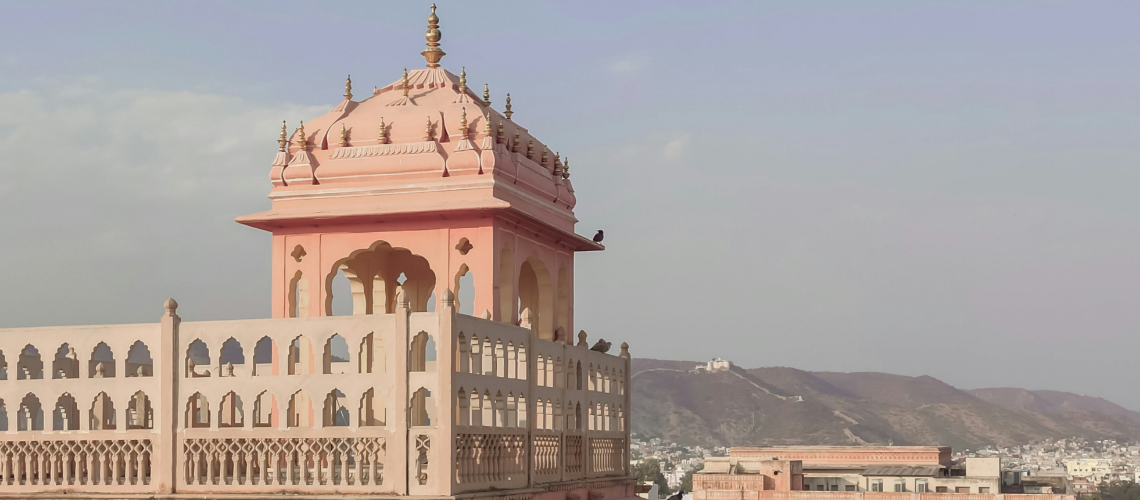
Rajasthan holds one of the world’s greatest concentrations of fortified architecture: hilltop fortresses that took centuries to build, sprawling city palaces still inhabited by royalty, marble lake palaces that appear to float on water, and desert citadels that glow gold at sunset. For many travellers, these magnificent structures are the very reason to visit the Land of Kings. This guide to fort and palace tours in Rajasthan covers the essential forts and palaces, the six UNESCO World Heritage hill forts, and how to build a journey around the state’s extraordinary royal architecture.
For full trip planning, see our Rajasthan travel guide, and for curated itineraries, our Rajasthan tour packages collection.
Why is Rajasthan the land of forts and palaces
For over a thousand years, Rajasthan was a patchwork of princely kingdoms ruled by the Rajput warrior clans, each with its own capital, fortress, and royal palace. The constant need for defence, combined with the immense wealth of the ruling houses and their patronage of the finest craftsmen, produced an astonishing legacy of military and palatial architecture. Today, these forts and palaces range from ruined desert citadels to living forts still inhabited by communities, from museums to some of the most luxurious heritage hotels in the world.
The state’s forts and palaces are concentrated in and around its major cities, making a fort-and-palace tour a natural way to structure a Rajasthan journey, moving from Jaipur’s Amber Fort to Jodhpur’s Mehrangarh, to Udaipur’s City Palace, to Jaisalmer’s golden Sonar Quila.
The six UNESCO World Heritage hill forts
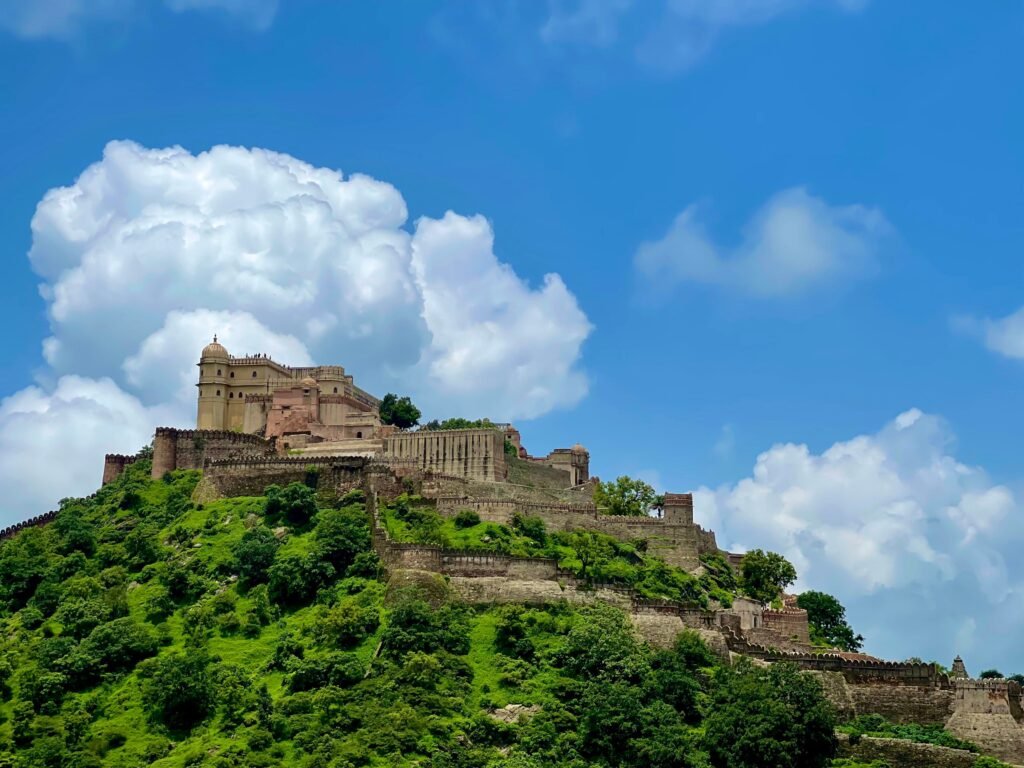
Six hill forts of Rajasthan are jointly inscribed on the UNESCO World Heritage List, recognised for their military architecture and their role in Rajput history:
Amber Fort (Jaipur): The magnificent hilltop fort-palace overlooking Maota Lake, with its dazzling Sheesh Mahal (Mirror Palace). Our places to visit in Jaipur guide covers it in detail.
Chittorgarh Fort: One of the largest forts in India, steeped in Rajput history and legends of valour and sacrifice.
Kumbhalgarh Fort: Encircled by a wall stretching approximately 36 kilometres, the second-longest continuous wall in the world after the Great Wall of China, and the birthplace of Maharana Pratap.
Ranthambore Fort: A dramatic fort within the Ranthambore tiger reserve, offering history and wildlife together.
Gagron Fort: A rare water fort, surrounded on three sides by rivers, near Jhalawar.
Jaisalmer Fort: The golden Sonar Quila, one of the world’s few living forts, where a quarter of the old city still lives within the walls. Our Jaisalmer travel guide covers it in detail.
The great city palaces
City Palace, Udaipur: The largest palace complex in Rajasthan, a complex of eleven interconnected palaces on the shore of Lake Pichola, with mirror work, the Crystal Gallery, and unforgettable lake views. Our Udaipur travel guide covers it.
City Palace, Jaipur: A beautiful fusion of Mughal and Rajput architecture, still home to Jaipur’s royal family, with museums, courtyards, and the famous Peacock Gate.
Mehrangarh Fort, Jodhpur: One of the largest and most magnificent forts in India, rising 120 metres above the blue city, with an outstanding museum and decorated palaces. Our Jodhpur travel guide covers it.
Umaid Bhawan Palace, Jodhpur: One of the largest private residences in the world, part royal home, part luxury hotel, part museum.
The lake and island palaces
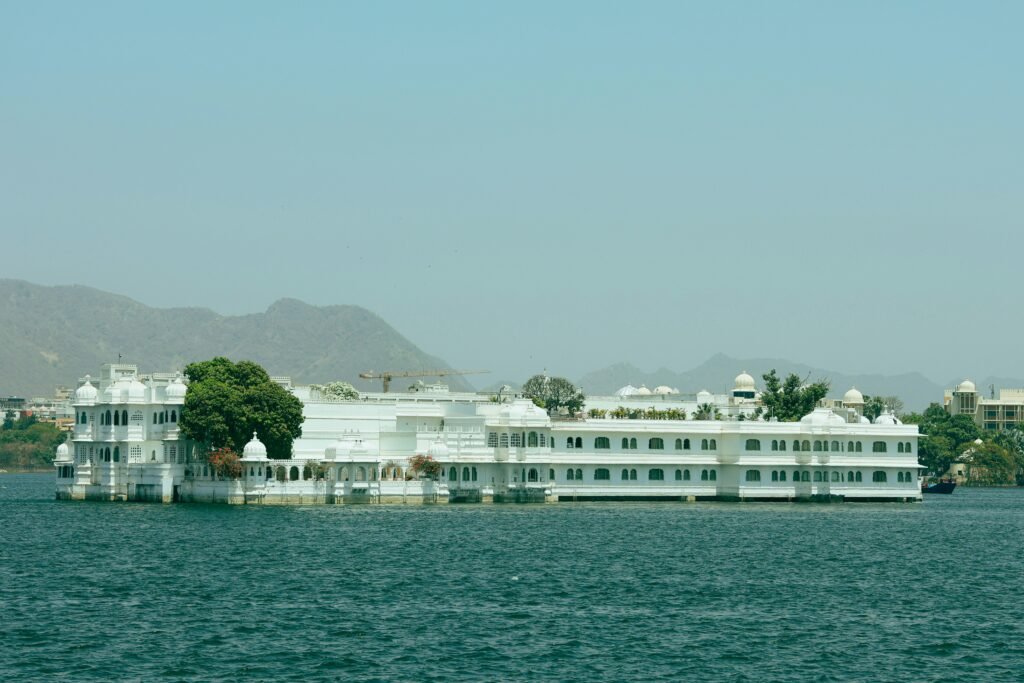
Lake Palace (Taj Lake Palace), Udaipur: The marble palace that appears to float on Lake Pichola, now one of the most romantic luxury hotels in the world.
Jag Mandir, Udaipur: The island palace on Lake Pichola, said to have inspired elements of the Taj Mahal.
Jal Mahal, Jaipur: The Water Palace that appears to float in the middle of Man Sagar Lake.
The other notable forts and palaces
Beyond the essentials, Rajasthan offers many more remarkable forts and palaces: Nahargarh and Jaigarh forts above Jaipur; the Junagarh Fort at Bikaner (unusually not built on a hilltop); the Taragarh Fort and palace at Bundi with its Rajput murals; the Chittorgarh complex; and the painted havelis of Shekhawati and Jaisalmer. Our offbeat places in Rajasthan guide covers some of these.
Building a fort and palace tour
A fort-and-palace tour naturally follows the main Rajasthan circuit, with each city offering its own architectural highlights:
- Jaipur: Amber Fort, City Palace, Nahargarh, Jaigarh, Hawa Mahal, Jal Mahal (2 to 3 days)
- Udaipur: City Palace, Lake Palace, Jag Mandir, with a day trip to Kumbhalgarh and Ranakpur (2 to 3 days)
- Jodhpur: Mehrangarh Fort, Umaid Bhawan Palace, Jaswant Thada (1 to 2 days)
- Jaisalmer: Jaisalmer Fort (Sonar Quila) and the merchant havelis (2 days)
Adding Chittorgarh, Bundi, or Bikaner extends the tour for those with a particular passion for forts. Staying in a heritage palace hotel along the way turns the architecture into an immersive experience. Our heritage hotels in Rajasthan guide covers the finest properties.
Tips for fort and palace tours
Start early. Arriving at the major forts soon after opening avoids both the heat and the crowds, and the early light is best for photography.
Hire a guide. A knowledgeable guide brings the history, legends, and architecture of the forts and palaces to life, greatly enriching a visit.
Wear comfortable shoes. The forts involve significant walking and climbing, often on uneven surfaces.
Stay in a heritage property. Sleeping in a converted palace or haveli turns the fort-and-palace tour into a fully immersive experience of Rajasthan’s royal heritage.
Allow enough time. The major forts, particularly Amber, Mehrangarh, and the Udaipur City Palace, deserve two to three hours each. Rushing diminishes the experience.
Plan your fort and palace tour with us
At Immersive Trips, we design fort-and-palace tours of Rajasthan that bring the state’s extraordinary royal architecture to life, with expert guides, well-paced itineraries, and the option of staying in heritage palace hotels along the way. Get in touch with our team to plan your journey through the Land of Kings.
Frequently asked questions about fort and palace tours in Rajasthan
Which are the must-visit forts in Rajasthan?
The essential forts are Amber Fort (Jaipur), Mehrangarh Fort (Jodhpur), and Jaisalmer Fort (the golden Sonar Quila). Beyond these, Kumbhalgarh (with its 36-kilometre wall), Chittorgarh (one of the largest forts in India), and Ranthambore Fort (within the tiger reserve) are the most rewarding.
How many of Rajasthan’s forts are UNESCO World Heritage Sites?
Six hill forts of Rajasthan are jointly inscribed on the UNESCO World Heritage List: Amber Fort (Jaipur), Chittorgarh Fort, Kumbhalgarh Fort, Ranthambore Fort, Gagron Fort, and Jaisalmer Fort. Together, they represent one of the world’s greatest concentrations of fortified architecture.
What is the most impressive fort in Rajasthan?
Opinions vary, but Mehrangarh Fort in Jodhpur (one of the largest and most magnificent forts in India, rising 120 metres above the blue city) and Amber Fort in Jaipur (with its dazzling Sheesh Mahal) are the most frequently cited. Jaisalmer Fort, as one of the world’s few living forts, is uniquely atmospheric.
What is special about Kumbhalgarh Fort?
Kumbhalgarh is encircled by a wall stretching approximately 36 kilometres, the second-longest continuous wall in the world after the Great Wall of China. A UNESCO World Heritage Site and the birthplace of Maharana Pratap, it is one of the most impressive yet underappreciated forts in Rajasthan.
Can I stay in a palace in Rajasthan?
Yes. Many of Rajasthan’s palaces and forts have been converted into heritage hotels, ranging from affordable havelis to legendary luxury palace hotels such as those in Udaipur, Jaipur, and Jodhpur. Staying in one is one of the defining experiences of a Rajasthan trip. Our heritage hotels in Rajasthan guide covers the options.
How long does a fort and palace tour of Rajasthan take?
A comprehensive fort-and-palace tour covering Jaipur, Udaipur, Jodhpur, and Jaisalmer takes around 10 to 14 days at a comfortable pace. A shorter tour focusing on two or three cities can be done in a week. Adding Chittorgarh, Bundi, or Bikaner extends the tour for dedicated fort enthusiasts.
What is the difference between a fort and a palace in Rajasthan?
A fort (garh or quila) is a fortified structure built primarily for defence, usually on a hilltop or strategic location, while a palace (mahal) is a royal residence built for comfort and grandeur. Many Rajasthan complexes combine both, with palaces built within fort walls, such as at Amber and Mehrangarh.
Which lake palaces can I visit in Rajasthan?
The most famous lake palaces are in Udaipur: the Lake Palace (Taj Lake Palace), which appears to float on Lake Pichola and is now a luxury hotel, and Jag Mandir, the island palace that can be visited by boat. The Jal Mahal in Jaipur appears to float on Man Sagar Lake but cannot be entered.
Do I need a guide for the forts and palaces?
While not essential, a knowledgeable guide greatly enriches a visit by bringing the history, legends, and architectural details of the forts and palaces to life. Guides are available at the major sites, and a good tour operator can arrange expert guides throughout your journey for a deeper experience.
What is the best time for a fort and palace tour of Rajasthan?
October to March offers the most comfortable weather for exploring the forts and palaces, with pleasant temperatures ideal for the significant walking and climbing involved. The forts are best visited early in the morning for the best light and fewest crowds. The summer months (April to June) are extremely hot.