
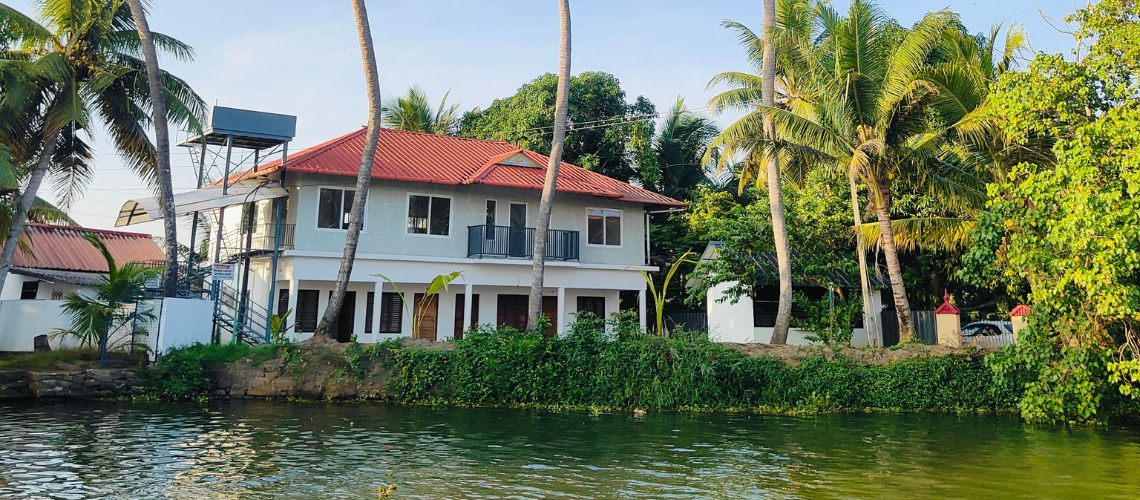
Deciding where to stay in Kerala is one of the most important choices you will make for your trip. The state stretches from the Arabian Sea coast across paddy fields and backwater canals to the mist-covered peaks of the Western Ghats, and where you base yourself shapes almost everything: the food you eat, the experiences you can access, the pace of your mornings, and the kind of memories you bring home. This guide covers the best areas to stay in across Kerala, the types of accommodation to consider, and how to match your choice to your travel style.
Where to Stay in Kerala Matters more than Most Destinations
Kerala is a long, narrow state running roughly 580 kilometres from north to south, but rarely more than 120 kilometres wide. It looks manageable on a map, but travel by road between regions can take several hours. Choosing accommodation in the right area for each stage of your trip, rather than staying in one place and travelling long distances daily, makes an enormous difference to how relaxed and rewarding the journey feels.
The state divides naturally into four distinct travel zones: the northern Malabar coast (Kozhikode, Kannur, Wayanad); central Kerala (Kochi, Thrissur, Alappuzha, Kumarakom, Kottayam); the southern hill stations and wildlife areas (Munnar, Thekkady); and the southern coast (Varkala, Kovalam, Thiruvananthapuram). Most itineraries of a week or more will move through at least two of these zones.
Kochi: Best Base for First-Time Visitors
For most travellers arriving in Kerala, Kochi is the natural starting point. The city has an international airport, excellent transport connections to the rest of the state, and a food and cultural scene that rewards several days of exploration on its own.
Fort Kochi is the most atmospheric neighbourhood to stay in. This historic peninsula carries the layered history of Portuguese, Dutch, and British occupation, and its streets of painted colonial buildings, Chinese fishing nets, art galleries, and heritage homestays make it one of the most distinctive urban neighbourhoods in India. Heritage homestays in Fort Kochi are among the best accommodation choices in the state: small, family-run properties in restored colonial homes where hospitality is personal and breakfasts are cooked to order.
The nearby area of Mattancherry extends the Fort Kochi experience, with its spice warehouses, Jewish Quarter, and Mattancherry Palace (also known as the Dutch Palace). Staying close to either neighbourhood means you can walk most of what matters.
For travellers who prefer a more contemporary hotel, Willingdon Island and the mainland Ernakulam area offer a wider range of business hotels and mid-range properties with easier access to the ferry terminals and train station.
Alappuzha: Where to Stay in Kerala for Backwater Experience
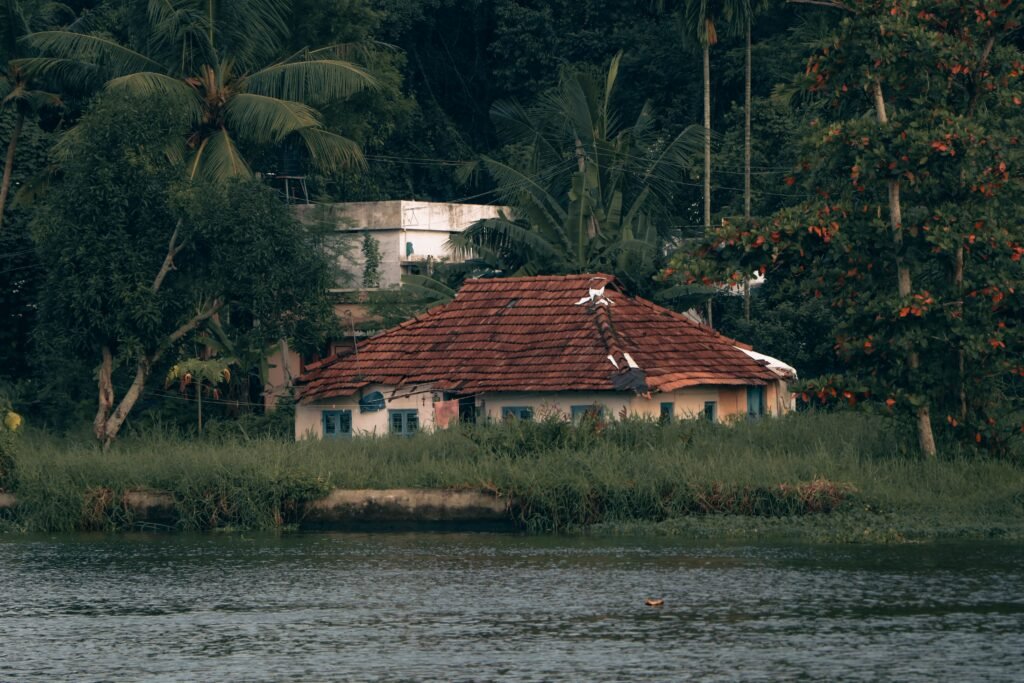
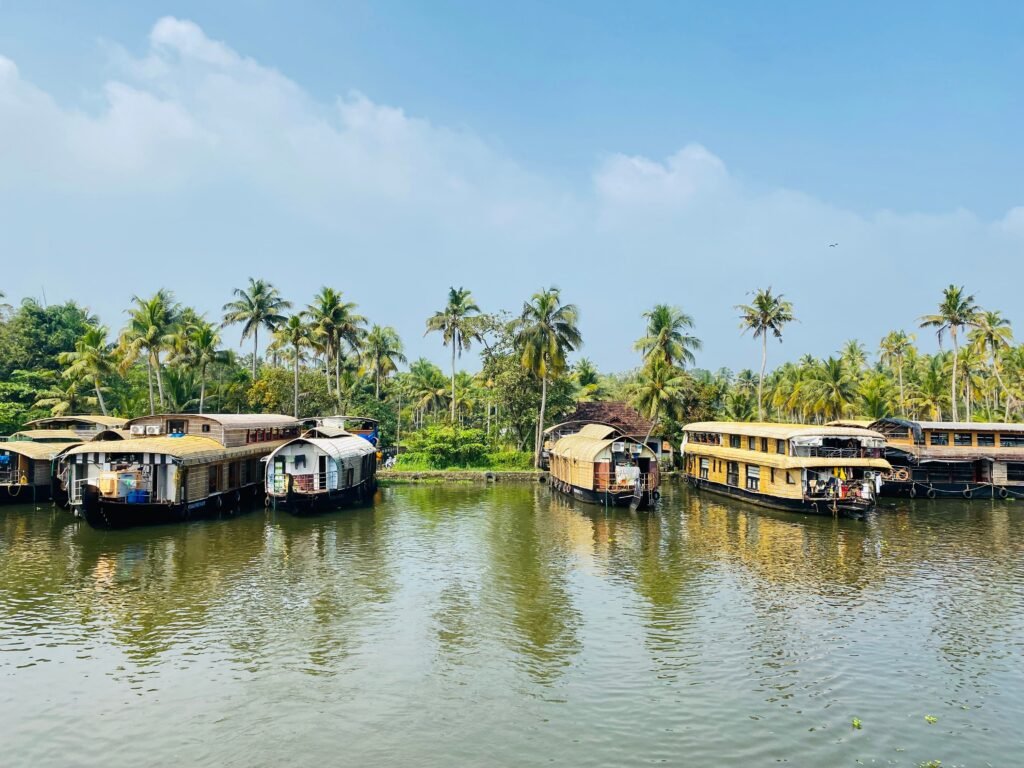
Alappuzha (Alleppey) is the centre of Kerala’s famous backwater world and one of the most visited destinations in the state. The town sits at the junction of a network of canals, lagoons, and lakes, and the experience of waking up on the water surrounded by paddy fields and coconut palms is an experience that embodies slow travel in Kerala better than anywhere else in the world.
A Kerala houseboat stay on Vembanad Lake is the iconic choice and rightly so. Traditional kettuvallam houseboats, built from bamboo poles, coconut fibres, and cane, have been converted into floating guesthouses with bedrooms, a sit-out deck, and a kitchen where a cook prepares fresh meals from the day’s catch. An overnight houseboat journey, departing from Alappuzha and returning the following morning, is an experience that almost every visitor to the backwaters considers the highlight of their trip.
For those who prefer to stay on land, canal-side homestays along the backwaters offer a quieter, more intimate version of the same landscape at a fraction of the cost. Several well-regarded properties sit directly on the waterfront, with views across the paddy fields and the option of hiring a small country boat for the morning.
Kumarakom, about 15 kilometres from Kottayam and sitting on the banks of Vembanad Lake, is a quieter alternative to Alappuzha for those who want the backwater setting without the tourist density. It is home to some of Kerala’s finest luxury resorts, several of which front directly onto the lake and offer Ayurvedic spa treatments, bird watching over the Kumarakom Bird Sanctuary, and Kerala cuisine prepared from fresh local ingredients.
Munnar: Best Area To Stay in Kerala for Hill Station Lovers
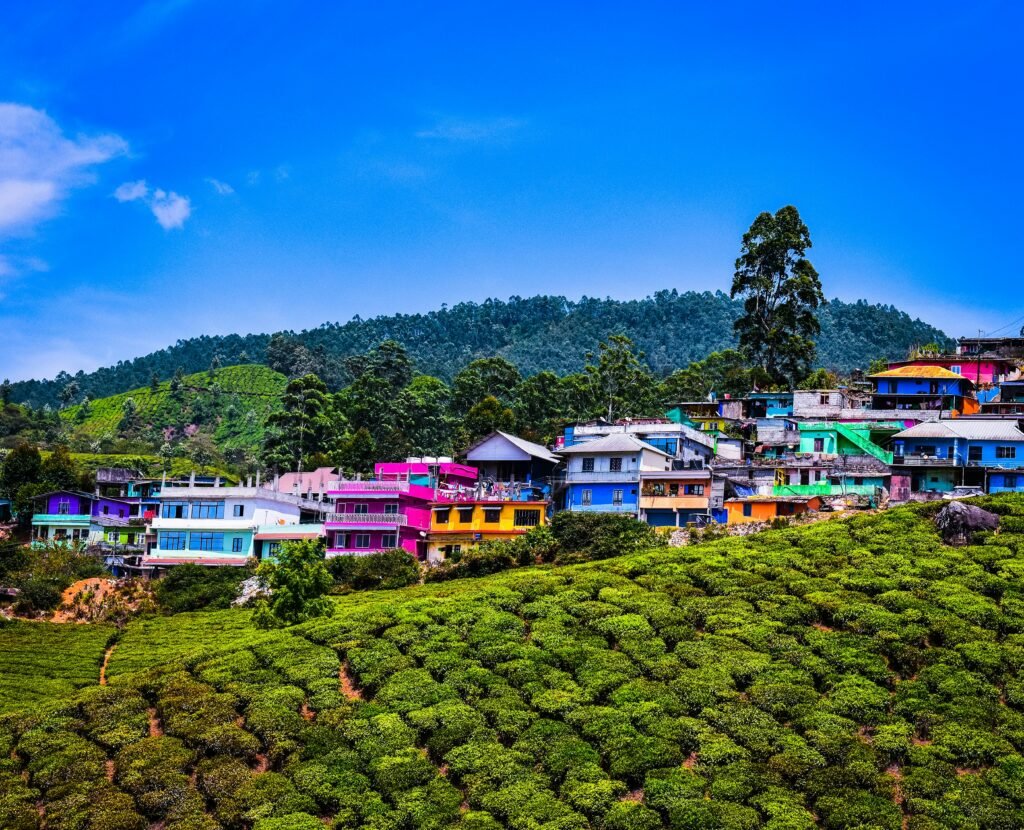
Munnar sits at around 1,600 metres above sea level in the Idukki district, surrounded by some of the largest tea plantations in South India. The air is cool even in summer, the mornings are misty, and the landscape of rolling green hills covered in tea bushes is unlike anything else in India.
The best accommodation in Munnar tends to sit slightly outside the busy town centre, where the views and the quiet are both considerably better. Tea estate homestays and plantation bungalows are the most atmospheric choices: properties set among working tea or cardamom estates where guests can walk through the gardens in the morning, watch the day’s harvest being processed, and eat meals cooked with spices grown on the property.
For travellers seeking something more adventurous, treehouse resorts in the forests around Munnar and neighbouring hill districts offer a genuinely immersive experience. These wooden structures set high among the trees combine basic comfort with close encounters with the surrounding forest and its wildlife.
The Eravikulam National Park, home to the endangered Nilgiri tahr, is easily accessible from most Munnar stays and is worth building accommodation choices around for wildlife enthusiasts.
Thekkady and Wayanad: Stay for Nature and Wildlife
Thekkady is the gateway to Periyar Wildlife Sanctuary, one of India’s most important tiger and elephant reserves. Accommodation here ranges from forest lodges at the edge of the sanctuary to spice garden resorts where guests can take guided tours of pepper, cardamom, and cinnamon plantations and attend cooking classes using produce grown on site.
Wayanad, in northern Kerala, is perhaps the state’s most underrated destination for travellers who want nature without the crowds. The district sits in the Western Ghats and is covered in coffee and tea estates, dense forest, and a network of rivers and waterfalls. Treehouse stays deep within coffee and spice plantations are among the most memorable accommodation experiences available anywhere in Kerala, with some properties set so far into the forest that wildlife sightings from the deck are a regular occurrence. The Tholpetty and Muthanga wildlife sanctuaries are accessible from most properties in Wayanad.
Varkala and Kovalam: Best Areas for Beach Stays
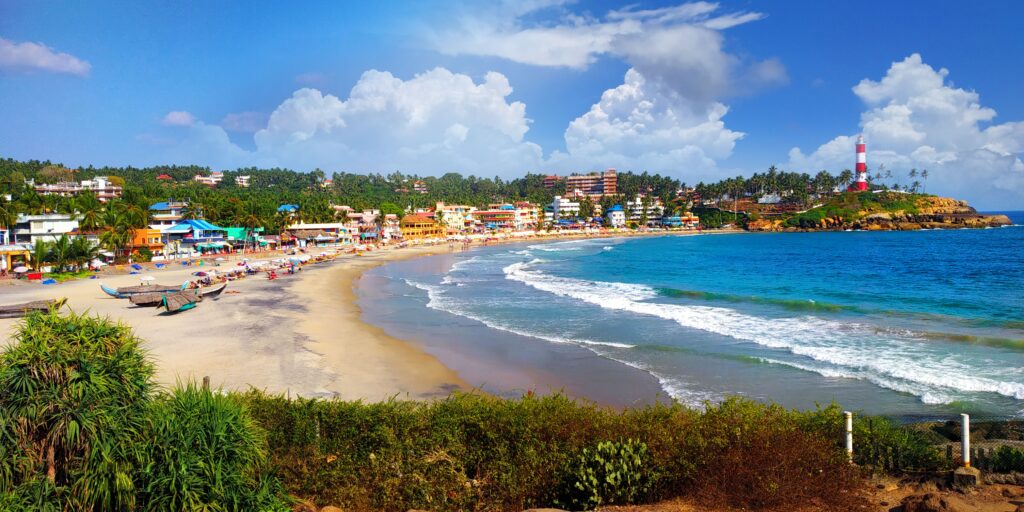
Varkala is Kerala’s most distinctive beach destination. Unlike most of the state’s flat coastline, Varkala sits atop a long laterite cliff with the Arabian Sea below and a line of guesthouses, cafes, and yoga studios along the clifftop. The North Cliff area is where most travellers stay, in a mix of budget guesthouses, boutique cliff-edge properties, and small resorts. The beach itself is accessible via steps cut into the cliff face.
Varkala draws a mix of travellers: those looking for surf and yoga, those on longer slow-travel itineraries, and those coming specifically for Ayurvedic treatments offered at dozens of clinics and resorts along the cliff. It is notably more relaxed and less developed than Kovalam.
Kovalam, closer to Thiruvananthapuram, is Kerala’s most established beach resort area and the better choice for travellers seeking a wider range of hotel options, including larger resorts with pools and spas, all within easy reach of the capital.
Types of Accommodation in Kerala
Homestays are the most highly recommended type of accommodation for travellers seeking an authentic experience of Kerala. A well-chosen homestay means a family cooking ancestral recipes each morning, local knowledge that no travel guide can replicate, and a level of personal hospitality that consistently distinguishes Kerala from other destinations in India.
Kerala Houseboats
Kerala houseboats are unique to the backwater regions and are best enjoyed on an overnight stay rather than a day cruise. The experience is most rewarding on a private or semi-private boat where meals are prepared on board, and the pace is entirely your own.
Heritage Hotels and Colonial Bungalows
Heritage hotels and colonial bungalows in Fort Kochi, along with a handful of other locations, offer beautifully restored buildings with genuine historical character. Several have been in the same family for generations.
Ayurvedic Resorts and Wellness Retreats
Ayurvedic resorts and wellness retreats are found throughout the state, with the highest concentration in Kumarakom, Kovalam, and Varkala. Kerala is the traditional home of Ayurveda, and a structured treatment stay of several days is one of the most considered ways to spend time in the state.
Plantation and Farm Stays
Plantation and farm stays in Wayanad, Thekkady, and the hills around Munnar offer a quieter, greener alternative to resort tourism. Many are small-scale family properties where the food comes directly from the land surrounding your room.
Let us find the right stay for your trip
The best accommodation in Kerala is rarely the most visible. Some of the most memorable stays are small family properties with no marketing budget, houseboat operators known only by word of mouth, or plantation bungalows accessible only with local knowledge.
At Immersive Trips, we match travellers to the right stays for the right reasons. Get in touch with our team and tell us what kind of experience you are looking for. We will handle the rest.
A Final Note on Choosing Wisely
The travellers who get the most from Kerala are usually those who stay longer in fewer places rather than rushing between destinations. A two-night minimum in any single location is a reasonable rule, and for places like Munnar, Wayanad, or the backwaters, three nights allows you to genuinely settle in.
Kerala rewards those who slow down. The right stay, in the right area, with the right host, can transform a good holiday into one of those trips that stays with you for years. Explore our thoughtfully designed Kerala tour packages and tell us where you want to go we will help you find exactly that.Tell us where you want to go and we will help you find exactly that.
Frequently asked questions
Which is the best area to stay in Kerala for first-time visitors?
Fort Kochi is the most recommended base for first-time visitors. It has excellent transport links to the rest of the state, a rich concentration of history and culture within walking distance, and a strong range of heritage homestays and boutique hotels. It is a comfortable, characterful introduction to Kerala.
Is a houseboat stay in Alappuzha worth it?
Yes, for most travellers an overnight houseboat stay in Alappuzha is one of the highlights of a Kerala trip. The experience of sleeping on the water, waking to the sounds of the backwaters, and eating freshly cooked meals on board is something few other destinations in the world can offer. An overnight stay is far more rewarding than a day cruise.
What is the best time of year to visit Kerala?
October to March is the most comfortable period across most of Kerala. The monsoon, which runs from June to September, brings heavy rainfall to much of the state, though it also transforms the landscape dramatically and appeals to those who enjoy lush scenery and quieter roads. The hill stations of Munnar and Wayanad are cooler and more pleasant than the coast throughout the year.
How many days do I need in Kerala?
A minimum of seven to ten days allows you to cover the key areas comfortably: Kochi, the backwaters, and one hill station or wildlife area. Shorter trips of four to five days can work if you focus on two destinations, such as Kochi and Alappuzha. Kerala genuinely rewards slower travel, and a two-week itinerary gives you the chance to explore the less-visited north and south as well.
Is a homestay better than a hotel in Kerala?
For most travellers, a well-chosen homestay offers a more authentic and memorable experience than a standard hotel. You eat home-cooked Kerala food, receive genuinely personal hospitality, and gain access to local knowledge that is hard to find elsewhere. Hotels make more sense when you need specific amenities such as a pool, spa, or conference facilities.
Which is better for backwaters: Alappuzha or Kumarakom?
Alappuzha is busier, more accessible, and better for those who want a wider choice of houseboats and budget options. Kumarakom is quieter, more upscale, and better suited to travellers looking for a more exclusive backwater experience. Both sit on Vembanad Lake, so the landscape is broadly similar. Alappuzha also has a beach, which Kumarakom does not.
Is Varkala or Kovalam better for a beach stay?
Varkala is the better choice for independent travellers, long-stay visitors, and those interested in yoga, surfing, or Ayurvedic treatments in a relaxed clifftop setting. Kovalam is better for those who want a more established resort infrastructure, a wider choice of larger hotels, and easy access to Thiruvananthapuram.
Can I stay in the middle of a tea plantation in Munnar?
Yes. Several tea estate homestays and plantation bungalows in and around Munnar offer accommodation within working estates. These range from simple family properties to more comfortable bungalows with views across the tea-covered hills. Staying on a plantation gives you early-morning access to the gardens and often the chance to watch the processing of the day’s harvest.
Are treehouse stays in Wayanad suitable for families?
Most treehouse properties in Wayanad are suitable for couples and adult travellers. Some are set quite high in the forest canopy and may not be appropriate for very young children or those with mobility concerns. That said, a number of Wayanad resorts offer ground-level or lower-level options alongside their treehouses, making them workable for families who want the atmosphere without the height.
How do I choose the right accommodation in Kerala without wasting time researching?
The honest answer is that local knowledge makes the biggest difference. Many of the best-value and most memorable stays in Kerala are small, family-run properties that are hard to find through standard booking platforms. Working with a travel specialist who knows the state well, and who can match your preferences to the right property in the right area, saves considerable time and significantly improves the quality of your trip.