
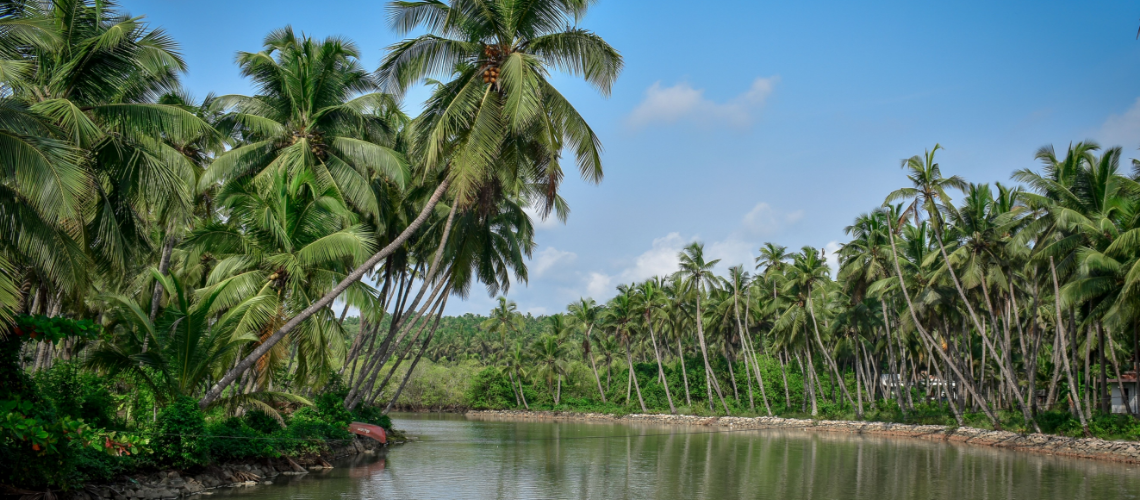
Kannur is the destination in Kerala that best rewards travellers willing to arrive without a packed itinerary. The Kannur travel guide below is for those who want to understand what makes this northern Kerala town genuinely distinct: untouched beaches that see a fraction of the visitors that Varkala and Kovalam attract, a rich weaving tradition that has produced hand-loom fabrics for centuries, a colonial fort with a history that spans Portuguese, Dutch, and British occupation, and above all, Theyyam, one of the most extraordinary ritual performance traditions in the world. Kannur does not shout for attention. It does not need to.
For the broader Kerala context, our Kerala travel guide and guide to offbeat places in Kerala provide a useful background.
Understanding Kannur
Kannur sits on the northern Malabar coast of Kerala, about 90 kilometres north of Kozhikode and 530 kilometres north of Thiruvananthapuram. It was historically known as Cannanore under British administration and was one of the most strategically significant ports on the Malabar coast, attracting Portuguese, Dutch, and British interest in succession from the 15th century onward.
The district is also known as the land of looms and lores: a reference to its centuries-old hand-loom weaving tradition (Kannur produces a significant proportion of India’s hand-loom fabric exports) and its equally deep tradition of performing arts and ritual culture, of which Theyyam is the most significant.
Muzhappilangad in Kannur holds the distinction of being India’s longest drive-in beach, stretching approximately four kilometres. Kannur district is also considered by some historians to be the birthplace of Kalaripayattu, one of the world’s oldest martial art forms, though this claim is also made for parts of Tamil Nadu.

Best places to visit in Kannur
St Angelo Fort
St Angelo Fort (also known as Kannur Fort) stands at the edge of the Arabian Sea just south of Payyambalam Beach, where it has overlooked the sea since the Portuguese built it in 1505. The fort was constructed on a laterite rock outcrop and served as one of the most important Portuguese military strongholds on the Malabar coast. It subsequently passed to the Dutch in 1663 and then to the British in 1790, with each occupying power leaving traces in the structure.
The fort’s massive laterite walls, sea-facing bastions, old cannons, and panoramic views across the Arabian Sea make it one of the most atmospheric colonial heritage sites in Kerala. It is significantly less visited than comparable sites in Goa, which means you can often explore it in near-complete quiet. A lighthouse within the fort complex adds another layer of maritime history to the visit.
Payyambalam Beach
Payyambalam Beach is the most popular beach in Kannur and runs along the town’s western seafront. The beach is wide, clean, and lined with a well-maintained garden at its northern end. A notable sculpture of a mother and child, created by the distinguished sculptor Kanayi Kunhiraman, stands at the entrance to the garden. The beach is liveliest in the evenings, when local families gather, and the sunsets here are consistently good. Dolphin-sighting trips are offered from the beach in the early morning, between 6 AM and 8 AM.
Muzhappilangad Drive-in Beach
Muzhappilangad, about 15 kilometres south of Kannur town, is India’s longest drive-in beach at approximately four kilometres. The hard-packed sand of the lower beach allows vehicles to drive along the shoreline, and the experience of watching the waves break from a car window is unusual and particularly enjoyable. The beach is also suitable for swimming and walking, and the northern end near the Dharmadam Island estuary is the most scenic. This is a family-friendly destination that is entirely free and easily accessible.
Theyyam ritual performances
Theyyam is the defining cultural experience of Kannur and one of the most extraordinary things a traveller can witness anywhere in India. This ancient ritual performance tradition involves performers from specific hereditary communities embodying deities, ancestral spirits, or heroes through elaborate costumes, fierce facial makeup, and rhythmic movement. The tradition is estimated to be over 1,000 years old.
Theyyam takes place in local temple courtyards and ancestral family shrines between November and May, following local temple calendars that are not published in standard travel guides. The most consistent year-round access to Theyyam is at the Parassinikkadavu Muthappan Temple, approximately 22 kilometres from Kannur, where a form of Theyyam is performed daily as part of the temple’s regular ritual. This is the only temple in Kerala where daily Theyyam takes place year-round.
Our dedicated guide to Theyyam in Kerala covers everything you need to know before attending.
Arakkal Museum
The Arakkal Museum in Kannur town occupies the former palace of the Arakkal royal family, the only Muslim dynasty to have ruled in Kerala. The Arakkal family controlled the Lakshadweep Islands and sections of the Malabar coast from the 17th to 19th centuries. The museum displays artefacts, weapons, records, and other objects related to the family’s history and their relationship with the period’s Arab trade networks. It is a genuinely interesting stop for visitors interested in Kerala’s layered religious and political history.
Ezhimala and the Naval Academy
Ezhimala, about 50 kilometres north of Kannur, is a coastal hill that serves as the campus of the Indian Naval Academy, one of the largest naval training institutions in Asia. The academy campus covers the Ezhimala peninsula, which was historically significant as a strategic naval position and is now largely restricted. The surrounding coastline and the views from the road to Ezhimala are, however, among the most dramatic in northern Kerala.
Ezhimala is also home to what is reportedly the largest cinnamon plantation in Asia, operated by the Kerala government’s spice gardens.

Dharmadam Island
Dharmadam Island, a small tidal island visible from the Muzhappilangad coastline, is accessible by wading or by a short boat crossing at low tide. The island is covered in coconut palms and is privately owned, but permission for a short visit is generally available. The island is at its most photogenic from the mainland beach, particularly in the late afternoon, when the light catches the palms and the surrounding sea.
Kannur handloom weaving centres
Kannur produces a significant proportion of India’s hand-loom fabric exports, and several weaving centres and cooperatives in and around the town are open for visits. The most accessible are the weaving centres in Chirakkal (about four kilometres from Kannur town), where traditional looms produce the Kannur fabric (known for its distinctive fine cotton weaves) in a process that has continued largely unchanged for generations. Watching the weaving process and buying directly from the cooperative produces higher-quality, better-priced fabric than the most tourist-facing shops.
Food and eating in Kannur
Kannur’s food reflects its Malabar Muslim heritage. The region’s Thalassery biryani, made with short-grained jeerakasala rice, is the most famous dish associated with northern Kerala and reflects the influence of Arab traders on the Malabar coast’s culinary tradition. Pathiri (thin rice flatbread), Malabar parotta, and the full range of Mappila Muslim cooking are all available at local restaurants.
The most celebrated Kannur dining experience is the combination of Malabar parotta and fish curry at a neighbourhood restaurant, a pairing that Kannur residents will defend enthusiastically. See our guide to places to eat in Kannur for specific recommendations.
Plan your Kannur visit with Immersive Trips
Kannur rewards those who arrive with curiosity and a willingness to follow the local calendar. At Immersive Trips, we know when and where Theyyam is happening, which weaving cooperatives most genuinely welcome visitors, and how to combine Kannur with the wider northern Kerala itinerary. Get in touch with our team or explore our Kerala tour packages.
Frequently asked questions about visiting Kannur
1. What makes Kannur different from other Kerala destinations?
Kannur stands apart for the combination of Theyyam, a ritual performance tradition of extraordinary depth and antiquity, with some of Kerala’s most untouched beaches, a centuries-old weaving tradition, and a Malabar food culture distinct from central and southern Kerala. It is a destination for travellers who value cultural immersion over packaged experiences.
2. When is the best time to visit Kannur?
November to May covers the Theyyam season and is the most culturally rich period to visit. October to February offers the most comfortable beach weather. December to February combines the best of both. The monsoon (June to September) brings heavy rain but dramatically transforms the landscape.
3. How do I find Theyyam performances in Kannur?
Village Theyyam performances follow local temple calendars that change each year and are not published in standard travel guides. The most reliable year-round option is the daily Theyyam at Parassinikkadavu Muthappan Temple. A travel specialist with local knowledge, or a Theyyam guide based in Kannur, can provide current performance schedules during the November to May season. Our guide to Theyyam in Kerala covers this in detail.
4. Is St Angelo Fort worth visiting?
Yes. The fort is one of the most atmospheric colonial heritage sites in Kerala, with massive laterite walls, sea-facing bastions, and panoramic views over the Arabian Sea. Its relative lack of visitors compared to Goa’s forts makes the experience particularly enjoyable. Allow an hour to explore the grounds.
5. What is the Arakkal family, and why is their museum significant?
The Arakkal family was the only Muslim royal dynasty to rule in Kerala, controlling the Lakshadweep Islands and parts of the Malabar coast from the 17th century. Their museum in Kannur town documents this often-overlooked chapter of Kerala’s history and is particularly interesting for understanding the role of Arab trade and Islam in shaping the Malabar coast.
6. Can I drive on Muzhappilangad Beach?
Yes. Muzhappilangad is India’s longest drive-in beach, and vehicles can drive on the hard-packed sand of the lower beach for approximately four kilometres. The beach is also suitable for walking and swimming. It is best visited in the morning or late afternoon when the light and temperature are most comfortable.
7. What is Thalassery biryani, and where should I try it?
Thalassery biryani, named after the nearby town of Thalassery (Tellicherry), is the most celebrated regional biryani of northern Kerala. It uses short-grained jeerakasala rice rather than basmati, giving it a nuttier, more aromatic character. The preparation and spice ratios are traditionally passed down through Mappila Muslim families in the Malabar region. Thalassery town, 19 kilometres south of Kannur, has several restaurants that serve this dish. Several restaurants in Kannur town also serve good versions.
8. Is Kannur suitable for a family holiday?
Yes. The beaches at Payyambalam and Muzhappilangad are safe and enjoyable for families. While intense, Theyyam performances are generally appropriate for older children with adequate preparation about what they will see. The drive-in beach experience at Muzhappilangad is particularly popular with families. The relaxed pace and low tourist density of Kannur make it a comfortable destination for family groups.
9. How do I get to Kannur?
Kannur has its own airport (Kannur International Airport, operational since 2018) with connections to major Indian cities and some international destinations. The town is also well connected by train to Kochi, Kozhikode, Thiruvananthapuram, and other major cities in South India. By road, Kannur is about three hours north of Kozhikode and about six hours north of Kochi.
10. Can I combine Kannur with Kozhikode and Wayanad in a single trip?
Yes. Kannur, Kozhikode, and Wayanad form a natural northern Kerala circuit. Kozhikode to Kannur takes about two hours by road or train. Wayanad is accessible from either Kozhikode or Kannur and adds a hill station and wildlife dimension to a predominantly coastal and cultural itinerary. Our guide to places in north Kerala covers this circuit in detail.