
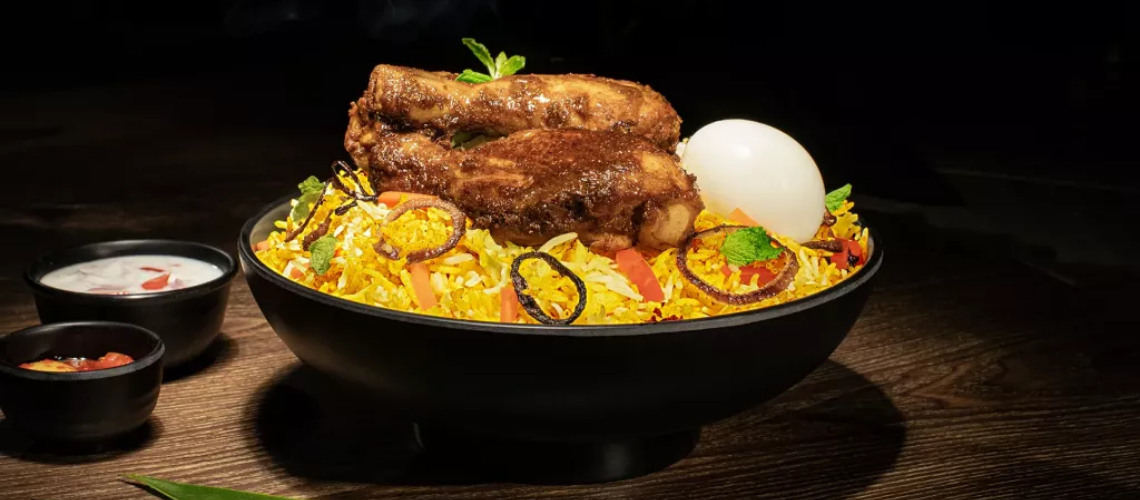
Kannur’s food culture belongs to the Malabar tradition of northern Kerala: a cuisine shaped by centuries of Arab maritime trade, the culinary inheritance of the Mappila Muslim community, and the spice wealth of the Western Ghats behind the coast. The places to eat in Kannur reflect this history in every dish: the biryani uses jeerakasala rice, which Arab traders helped popularise; the pathiri (rice flatbread) is a Mappila staple; and the fish and prawn preparations use coconut oil and fresh spices in ways specific to the Malabar region. This guide covers what to order, where to eat, and what makes Kannur’s food culture worth exploring.
For the broader Kerala food context, our traditional food of Kerala guide and places to eat in Kerala provide the wider picture.
What to eat in Kannur
Thalassery biryani
Thalassery biryani is the signature dish of the northern Malabar coast and is most associated with the town of Thalassery (Tellicherry), 19 kilometres south of Kannur. The biryani uses short-grained jeerakasala rice (also called Kaima rice), which has a naturally nutty, aromatic quality that distinguishes it from basmati-based biryanis. The meat (typically chicken or mutton) is marinated in spices and cooked separately before being layered with the rice and slow-cooked (dum-cooked) with fried onions, cashews, and raisins.
The biryani is richer, more fragrant, and more complex than most versions you will encounter elsewhere in India. The technique and spice ratios are traditionally passed down through generations of Mappila Muslim families in the region. Several restaurants in both Thalassery and Kannur town serve excellent versions.
Malabar parotta and fish curry
The combination of Malabar parotta (layered, flaky wheat flatbread) with a spicy, tamarind-based fish curry is arguably the most widely enjoyed everyday meal in northern Kerala. The parotta is made by kneading maida flour into a specific consistency, coating it with oil, and using a distinctive flipping technique that produces the characteristic flaky layers. Paired with a fresh fish curry made using kudampuli (Malabar tamarind) and coconut oil, it is one of the most satisfying and characteristically Malabar combinations available.

Pathiri
Pathiri is a thin, soft rice flatbread specific to Malabar Muslim cuisine and found almost exclusively in the Malabar region of northern Kerala. Made from ground rice flour and water, it is lighter and more delicate than a roti and is traditionally served with muttamala (an egg yolk dessert) or spiced chicken or mutton gravy. A breakfast of pathiri and chicken curry is a genuinely regional experience that is impossible to find with the same authenticity outside the Malabar region.
Seafood from the Arabian Sea
Kannur’s coastline produces excellent fish, prawns, and crab, and the seafood preparations of the Malabar tradition are among the most flavourful in India. Fish curry with kudampuli (the characteristic tamarind that gives Malabar fish curry its distinctive sour note), crab roast, and prawn masala cooked with freshly ground coconut and spices are the preparations most worth seeking out.
Thalassery plum cake
Thalassery plum cake is a distinctly regional speciality: a rich, dark, spiced fruit cake produced in the bakeries of Thalassery since the British colonial period. It is available year-round (not just at Christmas, despite its association with fruit cake in other traditions) and has a character specific to the local bakeries that produce it, using local spices and a recipe maintained in some establishments for over a century.
Places to eat in Kannur: restaurants and local spots
Hotel Rahmath, Kannur town
Hotel Rahmath is one of the most consistently recommended restaurants in Kannur town for Thalassery biryani and Malabar cuisine. The restaurant has been operating for several decades and maintains a strong local following for the quality and consistency of its biryani. The mutton biryani in particular receives consistent praise. Arrive before noon for the freshest service.
Kairali Restaurant
Kairali is a Kannur institution for traditional Kerala breakfast and lunch. The morning service includes puttu and kadala curry, appam and stew, and a range of tiffin items that attract local workers and residents before the tourist circuit is even awake. The lunch service offers a Kerala thali with rice and a rotating selection of curries, sambar, and vegetable preparations. Simple, honest, and excellent value.
Muslim Hotel and Malabar Hotel restaurants
Kannur has a strong tradition of Muslim hotels (a category of restaurant ordinary in northern Kerala, typically run by members of the Mappila Muslim community and serving Malabar cuisine). These restaurants are generally open for breakfast and lunch and offer the most authentic versions of Malabar parotta, pathiri, biryani, and fish curry available in the town. They typically operate without the formal dining room setting of tourist-facing restaurants, and the food quality reflects the priorities of local diners rather than visitor expectations.
Thalassery biryani restaurants
The most authentic Thalassery biryani is found in Thalassery itself, 19 kilometres south of Kannur. Hotel Aromas in Thalassery is among the most highly recommended for its biryani, with a recipe passed down through generations. The short drive from Kannur is well worth it, especially for a biryani lunch, and it pairs well with a visit to Thalassery Fort.
Bakeries of Thalassery
The old bakeries of Thalassery produce the region’s famous plum cake year-round. Mambally’s Royal Biscuit Factory, established in 1880 and widely credited as one of the first bakeries in Kerala to produce Western-style baked goods, is the most historically significant. The bakery still operates and produces plum cake, biscuits, and bread using recipes passed down through generations.
Eating at homestays in Kannur
Several homestays in the Kannur district offer home-cooked Malabar meals as part of the accommodation. These kitchens, run by families who have cooked these dishes for generations, produce versions of Thalassery biryani, pathiri, and seafood preparations that no restaurant can fully replicate. The meal is typically eaten communally, either on the floor or at a family table, and the hospitality extended to guests at these properties is one of the defining pleasures of a Kannur stay.
At Immersive Trips, matching travellers with the right homestay kitchens in northern Kerala is one of our areas of expertise. Get in touch with our team to tell us what you are looking for.

Tips for eating in Kannur
Eat biryani at lunch. The best biryani restaurants in both Kannur and Thalassery serve from noon and often run out of the best preparations by early afternoon. Arriving between noon and 1 PM gives the best combination of freshness and availability.
Ask for pathiri at breakfast. Pathiri is not always listed on menus and in some places must be asked for. The combination of fresh pathiri and a spiced chicken or egg gravy is one of the most specifically regional breakfasts available in Kerala.
Look for the busiest Muslim hotels. In Kannur and Thalassery, the most authentic Malabar food is served at the restaurants with the largest local lunch crowds. A full dining room of local workers at noon is the most reliable indicator of food quality.
Make the trip to Thalassery for biryani and plum cake. The combination of a Thalassery biryani lunch and a visit to one of the old bakeries for plum cake and tea makes a half-day food trip that is one of the most enjoyable ways to spend an afternoon in the Kannur district.
Plan your Kannur food experience with us
At Immersive Trips, food is central to how we build northern Kerala itineraries. We know which Kannur restaurants uphold the highest standards, which homestay kitchens produce the most memorable Malabar meals, and how to combine the region’s best food experiences into a coherent and satisfying journey. Browse our Kerala tour packages or contact our team.
Frequently asked questions about places to eat in Kannur
1. What is the most famous dish from the Kannur region?
Thalassery biryani, associated with the neighbouring town of Thalassery and using short-grained jeerakasala rice, is the most celebrated dish of the Kannur region. Malabar parotta with fish curry is the most widely eaten everyday dish. Pathiri, a thin rice flatbread specific to Mappila Muslim cuisine, is the most distinctively regional breakfast item.
2. Is Thalassery biryani very different from other Kerala biryanis?
Yes, significantly. Using jeerakasala (Kaima) rice rather than basmati gives it a different texture and aroma. The dum cooking technique, combined with the specific spice ratios of the Malabar tradition, produces a richer, more layered dish than most biryanis found elsewhere in Kerala or India. It is generally considered among the finest regional biryanis in the country.
3. What is pathiri, and where can I try it?
Pathiri is a thin, soft rice flatbread made from ground rice flour and water, specific to Malabar Muslim cuisine. It is available at Muslim hotels and traditional Malabar restaurants in Kannur. It is served for breakfast or as an accompaniment to spiced meat or egg gravies. It is lighter and softer than a roti and has a subtle, clean flavour that complements the robust gravies of the Malabar tradition.
4. Is there good vegetarian food in Kannur?
Yes, though Kannur is primarily a meat-and-seafood destination. Traditional Kerala breakfast items (puttu, idiyappam, appam with vegetable stew) are widely available. Several restaurants serve Kerala thalis with multiple vegetable preparations at lunchtime. For a primarily vegetarian itinerary in Kerala, the central and southern regions offer more variety, but Kannur accommodates vegetarian diners without difficulty.
5. What is Mambally’s Royal Biscuit Factory, and is it worth visiting?
Mambally’s in Thalassery is one of Kerala’s oldest bakeries, established in 1880 and widely credited as among the first in the state to produce Western-style baked goods, including plum cake and biscuits. The bakery still operates, and the plum cake, made to a recipe passed down through generations, has a distinct character of its own. It is worth a visit if you are making the trip to Thalassery for biryani.
6. Are there good seafood options in Kannur?
Yes. The Arabian Sea coastline around Kannur produces excellent fish, prawns, and crab. Most Muslim hotels and mid-range restaurants in the town serve fresh seafood preparations in the Malabar style. Fish curry with kudampuli (Malabar tamarind), crab roast, and prawn masala are the preparations most specific to the region.
7. Can I eat at a home kitchen in Kannur?
Yes, through a homestay or a specifically arranged home dining experience. Several homestay families in the Kannur district offer home-cooked Malabar meals for guests. These meals, prepared using family recipes and local produce, represent the most authentic experience of the region’s food culture available to a visitor.
8. What is kudampuli, and why is it important to Malabar cooking?
Kudampuli (Malabar tamarind, also known as Gamboge) is a dried fruit specific to the Western Ghats and the Malabar coast. It provides the characteristic sour note in Malabar fish curry and is used in the region’s coastal cooking in place of the more widely known regular tamarind. The flavour is distinct and specifically Keralite, and the fish curry made with kudampuli has a depth and complexity that cannot be achieved with a substitute.
9. Is it safe to eat street food in Kannur?
Yes. The street food culture in Kannur, including the snack stalls around the market area and the small tiffin stalls near the bus stand, is generally safe and represents some of the most authentic and affordable eating in the town. Freshly made items are always the safest choice.
10. How does the food in Kannur differ from that in Kochi or Thiruvananthapuram?
Kannur’s food is firmly in the Malabar tradition: rice-based flatbreads (pathiri), jeerakasala rice biryani, Mappila Muslim cooking, and the specific flavours of kudampuli and Malabar spices. Kochi has a more cosmopolitan food culture blending Syrian Christian, Hindu, and colonial influences. Thiruvananthapuram is more firmly in the Travancore Hindu and Syrian Christian tradition. Each region of Kerala has a distinct food identity, and exploring all three in a single trip gives the fullest picture of Kerala’s cuisine.