
Kochi is one of those cities that give back in proportion to the attention you give it. Arrive with an open afternoon and a willingness to wander, and it will reward you generously. The things to do in Kochi range from historically significant landmarks to living cultural practices, from morning fish markets to evening art performances, from ferry rides across the harbour to walks through lanes where the scent of black pepper and cinnamon still hangs in the air, carried by warehouses that have been trading since the 15th century. This guide covers the experiences that make Kochi one of the most distinctive cities in India.
For a broader picture of planning your time in Kochi, see our Kochi travel guide and our overview of places to visit in Kochi.
Best Things to do in Kochi: The Essential List
Watch the Chinese fishing nets at sunset
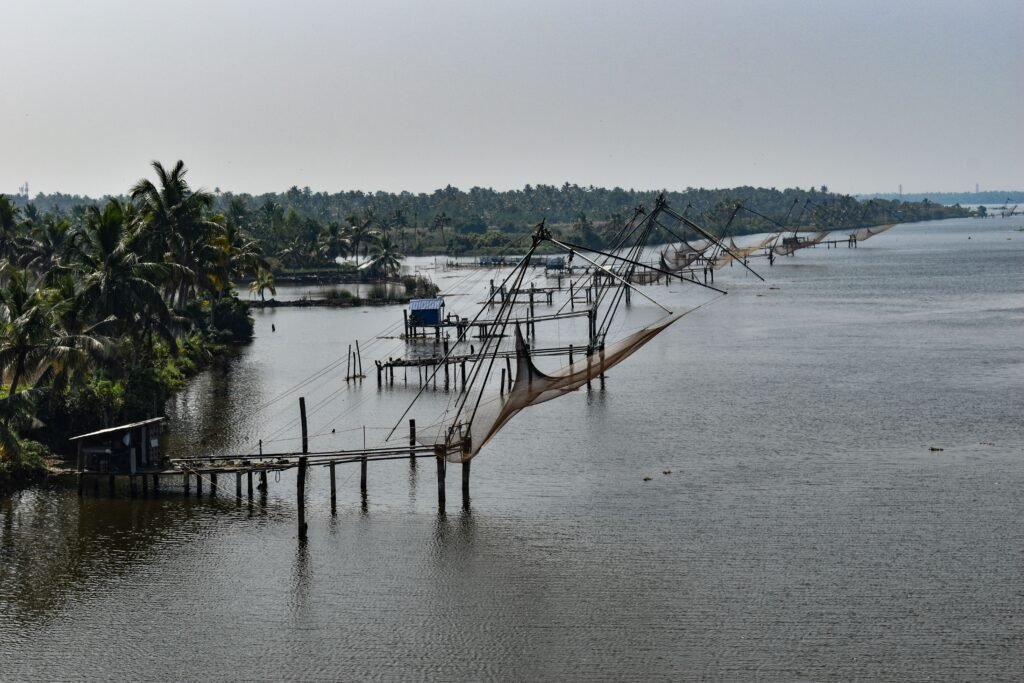
The Chinese fishing nets at the Fort Kochi waterfront are the city’s most iconic sight and are best seen in the late afternoon when the light turns golden, and the nets create a dramatic silhouette against the Arabian Sea. These large cantilevered structures, believed to have been introduced by traders from the court of Kublai Khan in the 14th century, are still operated by local fishing families. Arrive around 5 pm, watch the nets lowered and raised, and buy fresh fish from the operators to be grilled at nearby stalls. It is one of those experiences that is far better than any photograph of it suggests.
Walk through Fort Kochi and Mattancherry
Fort Kochi and its neighbouring area of Mattancherry are best explored on foot over a full morning or afternoon. The lanes of Fort Kochi are lined with painted colonial buildings, street art, independent galleries, and the occasional centuries-old church. The walk from Fort Kochi into Mattancherry takes about fifteen minutes and leads through the Jew Town spice market, where the aromas of black pepper, cinnamon, cloves, and Malabar tamarind are as vivid as anything in the city.
The key landmarks along this route include St Francis Church (India’s oldest European church, built by Portuguese Franciscans in 1503), Santa Cruz Basilica (known for its remarkable painted interior), the Mattancherry Palace (with its Kerala mural paintings), and the Paradesi Synagogue (built in 1568 and one of the oldest active synagogues in the Commonwealth).
Attend a Kathakali or Kalaripayattu performance
Several cultural centres in Fort Kochi stage daily evening performances of Kathakali and Kalaripayattu. Most include a pre-performance Kathakali makeup demonstration where visitors can watch the elaborate face paint being applied over 45 to 60 minutes, a process that is itself fascinating to observe. Kathakali performances tell stories from Hindu mythology through precise facial expressions, hand gestures, and costume. Kalaripayattu, one of the world’s oldest martial arts, is a physically extraordinary performance of combat techniques, acrobatics, and weapons training.
For the context behind these art forms, see our guide to cultural experiences in Kerala.
Take a ferry across the harbour
Kochi’s ferry network is both a practical mode of transport and one of the most enjoyable ways to see the city. The ferry from Fort Kochi to Ernakulam passes the Chinese fishing nets, the harbour, and the waterfront of Willingdon Island. The journey takes about twenty minutes, costs a nominal fare, and offers views of the city that no road journey replicates. Taking the ferry to Mattancherry and then walking back through the spice market to Fort Kochi is a particularly satisfying way to spend a morning.
Explore the street art of Mattancherry and Fort Kochi
Over the past decade, the walls of Mattancherry and Fort Kochi have become one of the most significant street art destinations in South India. Much of the work was produced in connection with the Kochi-Muziris Biennale, the large-scale contemporary art festival held in even years, but new murals continue to appear year-round. The art ranges from politically engaged works to playful local references to internationally recognised pieces, and it coexists with the 16th-century buildings behind it in a way that somehow makes both better.
Walking through the lanes of Mattancherry specifically for the street art, without a fixed destination, is one of the most enjoyable and free things to do in Kochi.
Visit the Kochi-Muziris Biennale venues
The Kochi-Muziris Biennale, first held in 2012, takes place every two years and is one of Asia’s largest contemporary art exhibitions. The venues, spread across warehouses, heritage mansions, public spaces, and former factory buildings in Fort Kochi and Mattancherry, are often worth visiting independently of the Biennale itself: Aspinwall House, David Hall, and Pepper House have all developed into permanent arts and culture venues between Biennale editions.
Take a day trip to Kumbalangi village
Kumbalangi, India’s first model ecotourism village, is located about 15 kilometres from Kochi and offers a genuinely immersive half-day experience of traditional Kerala village life. Activities include watching Chinese fishing-net operations, visiting crab and prawn farms, observing coir-making on traditional hand looms, taking a country boat through the mangrove-lined waterways, and eating a home-cooked seafood meal at a village homestay. The experience is community-managed and directly supports local livelihoods. Our offbeat places in Kerala guide covers Kumbalangi in detail.
Visit Cherai Beach
Cherai Beach, about 30 kilometres from Fort Kochi and accessible by ferry to Vypin Island, followed by a short drive, is a long, relatively uncrowded stretch of coast with views of the backwaters from the seafront. It is a pleasant contrast to the historical intensity of Fort Kochi and makes for a relaxed half-day or full-day excursion, particularly for those staying multiple nights in the city.
Explore the Hill Palace
The Hill Palace Museum in Tripunithura, about 12 kilometres east of Ernakulam, is the former residential palace of the Cochin Royal Family and is now the largest archaeological museum in Kerala. The 49-building complex, set in a landscaped garden, houses royal thrones, weapons, ornaments, manuscripts, bronze sculptures, and artefacts spanning several centuries of Kochi’s history. It receives far fewer visitors than the Fort Kochi sights and offers a quieter, more contemplative experience of the city’s royal heritage.
Walk through the Mattancherry spice market
The spice streets of Mattancherry have been at the centre of the global pepper and spice trade since Kochi first opened its harbour to Arab and Chinese merchants centuries ago. The warehouses and shops here still trade in black pepper, cardamom, cinnamon, cloves, turmeric, and Malabar tamarind (kudampuli), and the aromas are as vivid and layered as any spice market in the world. Walking through these streets slowly, stopping to look inside the godowns, and buying freshly vacuum-packed spices directly from traders is one of the most sensory and distinctly Kochi experiences available.
Attend a sunset cruise on the backwaters
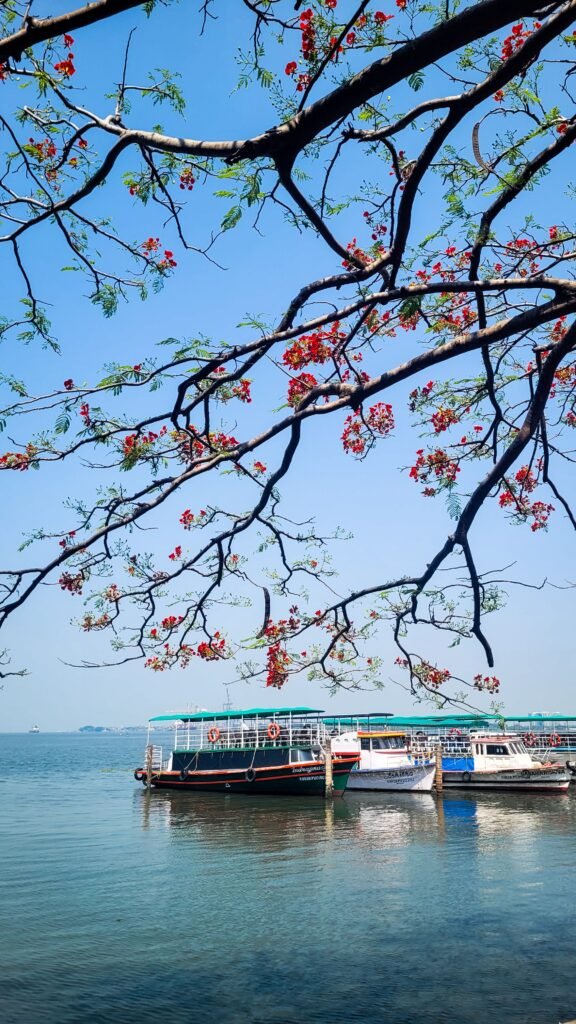
Several operators offer sunset backwater cruises departing from the Fort Kochi waterfront, typically lasting two to three hours and passing through canals and waterways connecting the city to Vembanad Lake. These cruises combine the pleasures of backwater scenery with the spectacle of Kochi harbour at dusk, offering a gentle, enjoyable alternative to a full houseboat stay for those with limited time.
Practical tips for Kochi
Getting around: Fort Kochi is best explored on foot. Hired bicycles are available and work well for the peninsula. Ferries connect the main areas of the city pleasantly and affordably. Auto-rickshaws are widely available for shorter distances.
Best time to visit: October to March offers the most comfortable weather. The Kochi-Muziris Biennale (December to March in even years) adds a significant extra layer of cultural programming.
Day trip connections: Kochi is an excellent base for day trips to Thrissur (90 minutes), Alappuzha (90 minutes), and Kumbalangi (30 minutes). The drive to Munnar (four hours) is too long for a comfortable day trip, but it works for an early departure.
Plan your Kochi experience with us
At Immersive Trips, we know Kochi in the kind of detail that makes the difference between a good visit and a great one. Browse our Kerala Tour packages or get in touch directly to build an itinerary that makes the most of this remarkable city.
Frequently asked questions about things to do in Kochi
How much time do I need to see the main things in Kochi?
Two full days comfortably cover the essential Fort Kochi and Mattancherry sights. Three days allow for a day trip to Kumbalangi or Cherai Beach. Four days is ideal if you also want to visit the Hill Palace Museum and attend an evening cultural performance.
Is Fort Kochi suitable for solo travellers?
Yes. Fort Kochi is one of the most solo-friendly destinations in Kerala. The area is safe, walkable, and has a welcoming atmosphere. Heritage homestays are particularly well-suited to solo travellers, offering local knowledge and social interaction alongside comfortable accommodation.
What should I buy in Kochi?
The Mattancherry spice market is the best place to buy Kerala’s famous spices: black pepper, cardamom, cinnamon, and Malabar tamarind. Jew Town also has a concentration of antique shops with genuine and reproduction Kerala antiques. Kashmiri and local handicraft shops in Fort Kochi sell kathakali masks, wooden carvings, and textiles. Buy spices from the godowns rather than the most touristy street-facing shops for better quality and price.
Are there free things to do in Kochi?
Yes. The street art walk through Mattancherry and Fort Kochi is entirely free. Watching the Chinese fishing nets at the waterfront costs nothing. The ferry rides are very inexpensive. Walking through the spice market and the Jew Town lanes costs nothing. The Cherai Beach day trip by ferry is affordable.
Is Kochi safe for travellers at night?
Fort Kochi is generally safe in the evenings. The waterfront area is pleasant for a post-dinner walk. The restaurant and cafe scene in Fort Kochi and Mattancherry is active until around 10 pm. As with any city, street awareness is advisable, particularly in less-frequented lanes after dark.
What is the best cultural performance to see in Kochi?
Kathakali is the most distinctive and accessible cultural performance for visitors. The pre-show makeup demonstration, where you can watch the elaborate face paint being applied, is itself worth the ticket price. Kalaripayattu, the ancient martial art, offers a physically more dynamic performance and is also staged regularly in Fort Kochi.
Can I visit Kochi during the monsoon?
Yes, though the heavy rainfall of June to September affects some outdoor activities and ferry services. Fort Kochi is atmospheric in the monsoon, with the old buildings, empty streets, and grey harbour light creating a different but equally compelling version of the city. Indoor sights such as Mattancherry Palace and the Paradesi Synagogue are unaffected by rain.
What is the Paradesi Synagogue, and can anyone visit?
The Paradesi Synagogue in Mattancherry is one of the oldest active synagogues in the Commonwealth, built in 1568. It is open to visitors of all backgrounds, except on Fridays, Saturdays, and Jewish holidays. Modest dress is required, and shoes must be removed. The interior, with its hand-painted Chinese floor tiles and Belgian crystal chandeliers, is remarkable.
Are there good vegetarian restaurants in Fort Kochi?
Yes. Fort Kochi has a range of vegetarian-friendly dining options, from traditional Kerala thali restaurants serving rice and curries to cafes offering continental and health-focused menus. The traditional Kerala breakfast of appam and vegetable stew, or puttu and kadala curry, is widely available and one of the best ways to start the day in the city.
How do I get from the airport to Fort Kochi?
Cochin International Airport is located in Nedumbassery, approximately 35 kilometres from Fort Kochi. Taxis and app-based cabs from the airport to Fort Kochi take around 45 to 60 minutes, depending on traffic. Prepaid taxi services are available from the airport and are the most straightforward option for arriving passengers.