
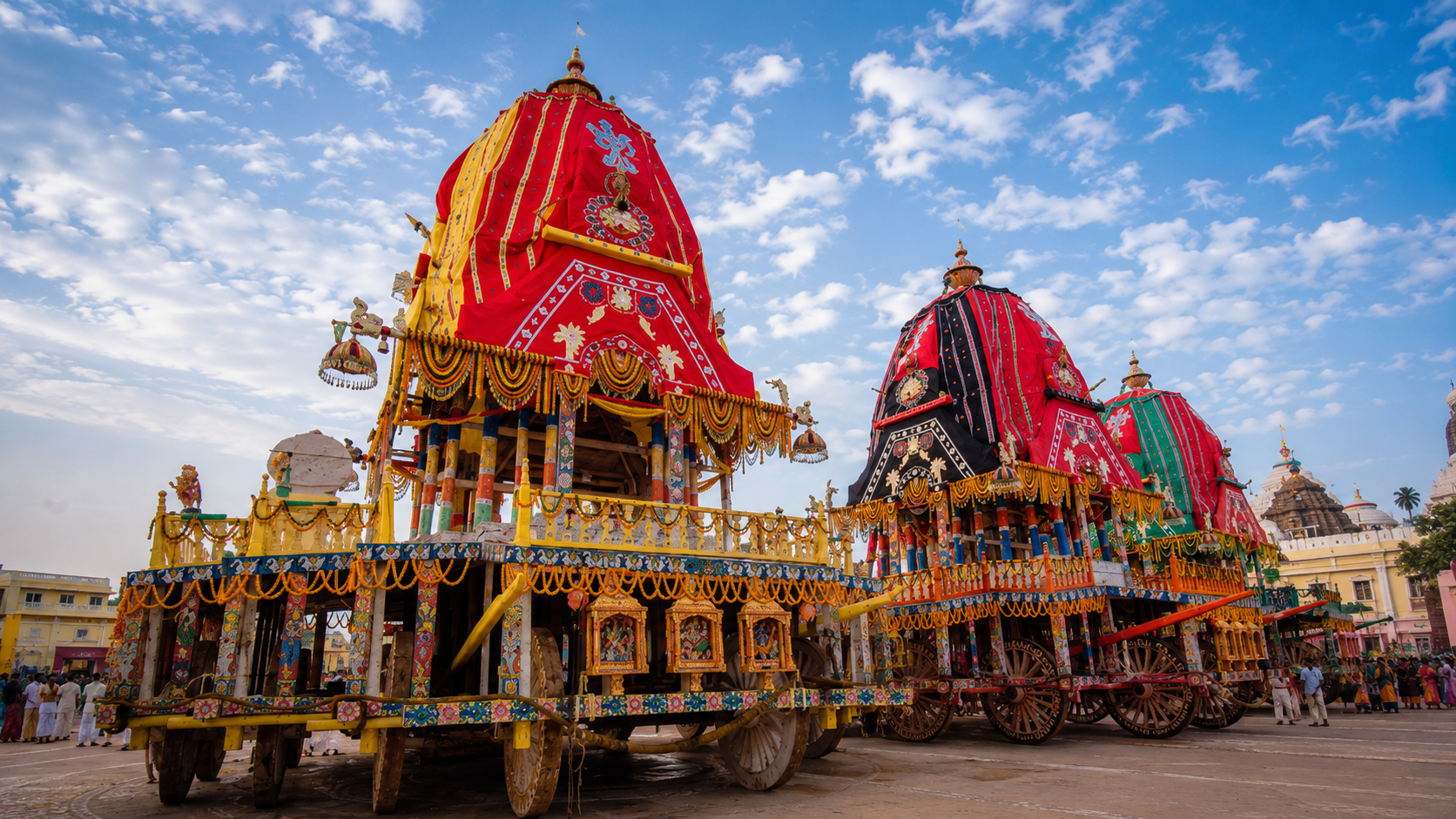
Two of Hindu pilgrimage tradition’s more significant coastal sites sit within a single travel corridor along the eastern seaboard, and this 7 day Puri Jagannath Yatra from Immersive Trips ties them into one route without the awkward multi-leg logistics that most independent pilgrims end up negotiating themselves. Sagar Island, at the mouth of the Ganga in Bengal, and Puri, home to one of the four Char Dham temples on the Odisha coast, sit less than 600 kilometres apart by road and one night apart by train. The route also folds in Konark, a Chilika Lake dolphin cruise, the Dhauli Shanti Stupa and Bhubaneswar, with notes on timing the trip around the Rath Yatra festival, which turns the pilgrimage arc into something broader than a two-temple checklist.
Two Great Coastal Pilgrimages Joined Into One Trip
Both Gangasagar and Puri Jagannath sit on the pilgrimage circuit for reasons that reach back well over a thousand years. The bath at the Ganga-Sagar confluence carries scriptural weight equivalent to bathing at multiple upstream Ganga sites, and Puri’s Jagannath Temple is one of only four temples on the country’s cardinal-direction Char Dham circuit established by Adi Shankaracharya in the 8th century (the others being Badrinath in the north, Dwarka in the west and Rameswaram in the south).
Combining the two is unusual mainly because most operators sell Bengal and Odisha as separate itineraries, which is why a combined Puri Jagannath Yatra saves so much planning.
The corridor between them is well-connected by overnight rail, which is what makes this seven-day frame workable. Any puri jagannath yatra built around a first visit to eastern India rewards adding Gangasagar and not treating it as a separate trip, since the two share the same coastal geography and much of the same pilgrimage calendar.
Gangasagar and the Sagar Island Confluence
Day 2 of the route crosses from the mainland jetty at Kachuberia to Sagar Island by the government ferry. The Kapil Muni Temple at the island’s southern tip is the anchor shrine, dedicated to the sage Kapila and connected in Puranic tradition to the story of King Sagara’s 60,000 sons, whose ashes were said to be liberated when the Ganga was brought down to earth by Bhagiratha. The confluence bath at the exact point where the river empties into the Bay of Bengal is the ritual centre of the visit.
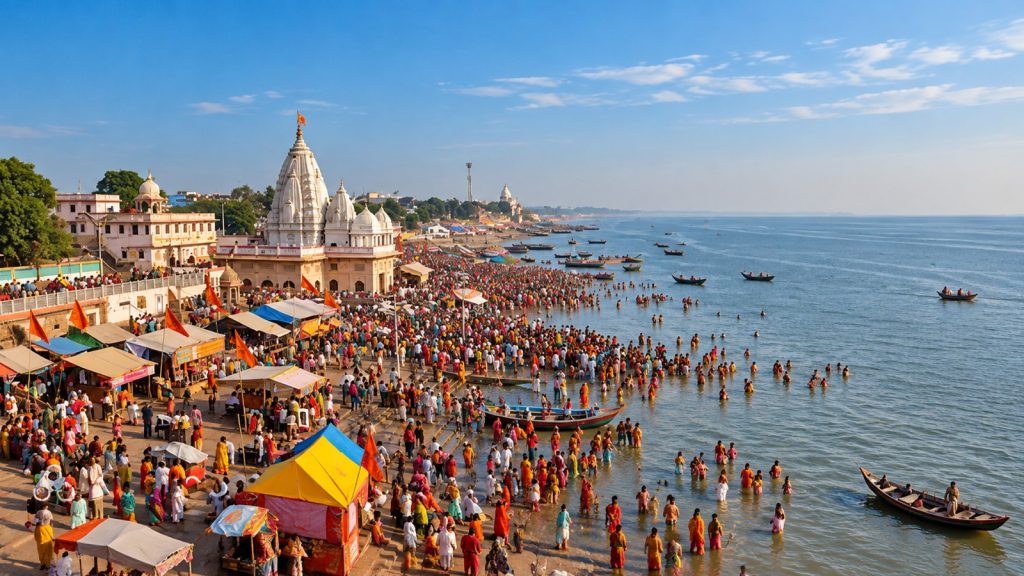
The Gangasagar Mela around Makar Sankranti (14 to 15 January) sees several million pilgrims arrive over a few days, ranking as India’s second-largest religious congregation after the Kumbh at Prayagraj. Departures outside the Mela window use a calmer crossing and give the temple grounds proper walking room, which is what most travellers on this itinerary target.
The Puri Jagannath Yatra at the Centre of the Trip
Day 4 begins the Puri Jagannath Yatra portion of the route. The temple complex sits in the heart of the old town, with the main sanctum housing the wooden idols of Jagannath (a form of Vishnu), his elder brother Balabhadra and their sister Subhadra. Non-Hindu visitors are not permitted inside the sanctum itself, though the temple’s 65-metre spire dominates the surrounding streets, and the raised platform at Raghunandan Library across the road is the standard viewing point for those unable to enter.

The temple’s daily ritual sequence begins with the Mangala Aarti before dawn and continues through a set of specific darshans and offerings across the day, culminating in the Sandhya Aarti in the evening. The morning slot is what this itinerary is built around, both for the temple’s atmosphere at that hour and for freeing the afternoon for Konark.
The Jagannath tradition itself is unusual within Hindu practice for its wooden idols (not stone or metal), for the Nabakalebara ritual in which the idols are ceremonially replaced every 12 to 19 years depending on the lunar calendar, and for the temple’s kitchen, which prepares mahaprasad for tens of thousands of devotees daily and is claimed to be the largest continuously operating kitchen in the world.
Rath Yatra Festival and the Wider Puri Calendar
The Rath Yatra festival is Puri’s single biggest annual event, held in late June or early July, when the three deities are brought out of the temple and taken through the town on massive wooden chariots pulled by tens of thousands of devotees. The three chariots (Jagannath’s Nandighosha, Balabhadra’s Taladhwaja and Subhadra’s Darpadalana) are built new each year by the same hereditary carpenter families and dismantled after the festival, with the wood repurposed for temple use through the following year.
Travellers timing a puri jagannath yatra to coincide with the Rath Yatra festival should expect crowds that transform the town entirely, with pilgrim numbers pushing past a million across the festival week and hotel availability across Puri tightening months in advance. For anyone with the flexibility, timing the visit for the ordinary pilgrimage window from October through March gives a calmer temple visit without the festival compression, though the trade-off is missing what remains one of the largest and oldest continuously observed religious processions on the subcontinent.
Konark Sun Temple on the Same Day
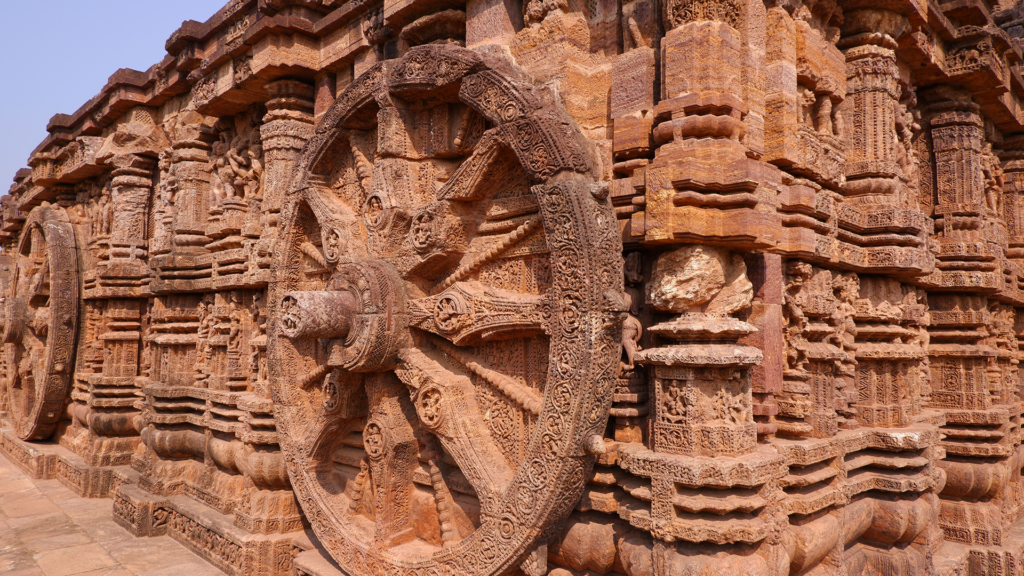
The afternoon of Day 4 covers the Konark Sun Temple, roughly 35 kilometres east of Puri. Built in the 13th century under Eastern Ganga king Narasimhadeva I as a monumental stone representation of the sun god Surya’s chariot, the temple carries 24 carved wheels and seven horses hauling the chariot eastward toward the sunrise. UNESCO added the site to its World Heritage List in 1984. The main tower fell centuries ago, though the surviving jagamohan and the wheel-carved base rank among the finest examples of Kalinga architecture anywhere in India.
The Chilika Lake Dolphin Cruise
Day 5 heads roughly 50 kilometres south of Puri for the Chilika Lake dolphin cruise from Satpada. Chilika is Asia’s largest brackish water lagoon and holds one of only two known lagoon-dwelling populations of Irrawaddy dolphins in the world, a resident group that stays in the lagoon year-round, which is what makes a Chilika Lake dolphin cruise from Satpada so reliable in season.
Sightings on the Chilika Lake dolphin cruise are most reliable between October and March, when water conditions and dolphin activity align, though sightings are never guaranteed on any single trip. The lagoon also holds Kalijai Temple on one of its small islands and supports over 200 bird species during the winter migration from Siberia and central Asia.
Pipli and the Dhauli Shanti Stupa
Day 6 turns north from Puri toward Bhubaneswar with two stops built into the drive. Pipli, a village about 20 kilometres short of Bhubaneswar, is known across India for its appliqué craft, particularly the brightly stitched umbrellas, canopies and hangings that traditionally cover the Rath Yatra chariots at Puri.
Dhauli is the more historically weighted of the two stops. The hillside marks the site of the Kalinga War of 261 BCE, where Emperor Ashoka’s decisive victory over the Kalinga kingdom triggered his conversion to Buddhism and the subsequent spread of the religion across South and Southeast Asia through his missionary efforts. The Dhauli Shanti Stupa on the hilltop, built in 1972 by the Japan Buddha Sangha and the Kalinga Nippon Buddha Sangha as a symbol of peace, sits directly above the Ashokan rock edicts carved into the hillside below.
The Dhauli Shanti Stupa is the visual anchor of the site, though the edicts themselves, still legible after more than 2,000 years, are what make the visit historically weighted. For most pilgrims, the Dhauli Shanti Stupa is the quiet close to a Puri Jagannath Yatra, a reminder that this coast has been sacred to more than one tradition.
Kolkata as the Trip’s Starting Point
The route opens with a day of Kolkata sightseeing before turning south to Sagar Island. The Day 1 circuit takes in Dalhousie Square and its cluster of colonial administrative buildings (Raj Bhavan, the Writer’s Building, St. John’s Church, the Calcutta High Court, GPO and Town Hall), the flower market beneath Howrah Bridge, St. Paul’s Cathedral, the Indian Museum (founded 1814 and the oldest museum on the subcontinent), Victoria Memorial and Kalighat Kali Temple.
The Indian Museum and Victoria Memorial both close on Mondays and national holidays, which is worth confirming against the specific departure date. Kalighat is one of the 51 Shakti Peethas of Hindu tradition and is the shrine from which the city takes its name.
Timing a Puri Jagannath Yatra
October through March gives the most comfortable weather across the entire route. Cooler mornings suit the temple visits and the ferry crossing, and the peak Chilika dolphin sighting window sits within this period. Two specific festival dates warrant separate consideration. Gangasagar Mela in mid-January transforms Sagar Island for a few days and requires targeted booking well in advance.
Rath Yatra at Puri in June or July does the same for the temple town. Any puri jagannath yatra that specifically wants either experience should be planned months ahead, with the understanding that ordinary logistics (hotels, drivers, ferry schedules) come under strain during both windows. Travellers with schedule flexibility tend to find the November to February block gives the best combination of weather, temple access and coastal boat conditions.
Booking This Route
Pilgrims planning around either the Gangasagar Mela window or Rath Yatra should book well in advance, since both events tighten hotel availability across the entire corridor months ahead. Current departure schedules and hotel category options for this route are maintained on the itinerary page, which is the fastest way to see what is available for a given month. For discussion of specific festival windows, group formats or documentation for international travellers, the Immersive Trips team is reachable at info@immersive-trips or 98219 94800.
Immersive Trips also designs customized India tours, so this Puri Jagannath Yatra can be extended to Bhubaneswar’s old temple town or reshaped around the Gangasagar Mela or the Rath Yatra festi
Frequently Asked Questions
Which Char Dham temple does this route cover?
Jagannath Temple at Puri, one of the four cardinal-direction Char Dham sites established by Adi Shankaracharya. The other three are Badrinath, Dwarka and Rameswaram, none of which are included in this route.
Can non-Hindu visitors enter the Jagannath Temple sanctum?
No. The main sanctum is closed to non-Hindu visitors. The temple exterior and outer courtyards are visible from surrounding streets, and Raghunandan Library across the road has a raised platform view.
When is the Rath Yatra festival held each year?
In late June or early July, on the second day of the bright fortnight of Ashadha in the Hindu calendar. Exact dates shift each year based on the lunar calendar.
Are dolphin sightings guaranteed on the Chilika Lake dolphin cruise?
No. Sightings are most reliable between October and March, when water conditions favour dolphin activity, though no single boat ride can be guaranteed.
Do the Ashokan rock edicts at Dhauli need a separate ticket?
The Dhauli Shanti Stupa and the edict site are on the same hillside and covered by a single visit. Entry is typically free, though this can vary based on Archaeological Survey of India protocols on the day.
Is the pilgrimage suitable for older travellers?
Yes, with two caveats. The Sagar Island ferry crossing involves a short boarding and disembarking transfer, and the overnight A/C sleeper train from Howrah to Puri is a shared-berth arrangement and not a private cabin. Both are manageable for most travellers but worth flagging in advance if mobility is a concern.