Kerala’s reputation rests largely on its landscapes: the backwaters, the tea hills, the beaches, and the forest reserves. But the state’s culture runs just as deep and rewards those who look for it with equal generosity. The cultural experiences in Kerala available to a curious traveller span ancient performing arts, living ritual traditions, harvest festivals, a cuisine that is itself a cultural document, and a way of daily life shaped by centuries of spice trade, religious coexistence, and community belonging. This guide covers what to look for, where to find it, and how to engage with it meaningfully.
For a broader introduction to the state, read our Kerala travel guide and our guide to offbeat places in Kerala for destinations where culture sits closest to the surface.
Why cultural experiences in Kerala go deeper than most destinations
Kerala’s cultural life is not a performance staged for visitors. The art forms, rituals, and festivals described in this guide are living traditions, practised and maintained by communities who have inherited them across generations. Kathakali artists spend decades mastering their craft. Theyyam performers undergo ritual preparation that has continued unchanged for centuries. Onam is celebrated in every household in the state, not just in tourist venues. The traveller who engages with Kerala’s culture is observing something real, which is what makes the experience so lasting.
The state’s 100 per cent literacy rate and strong intellectual tradition mean that conversations with locals, whether with a homestay host, a spice trader in a Kozhikode market, or a fisherman in Kumbalangi, are often among the most interesting and memorable parts of a trip.

Kathakali: the face of Kerala’s performing arts
Kathakali is one of the oldest classical dance forms in the world and Kerala’s most internationally recognised art form. Performances combine elaborate facial expression (navarasas), precise hand gestures (mudras), intricate costumes, and live percussion and vocal accompaniment to tell stories drawn primarily from the Hindu epics: the Ramayana, the Mahabharata, and the Bhagavata Purana. The art form is estimated to be around 300 years old in its current form, though its roots in temple performance traditions are considerably older.
What makes Kathakali visually extraordinary is its makeup, a complex system of pigments and rice paste applied to the face over one to two hours before a performance begins. Watching a Kathakali makeup application is an experience in itself, and most cultural centres in Fort Kochi and Thiruvananthapuram offer pre-performance demonstrations that are open to visitors.
For the most authentic Kathakali experience, look for performances at dedicated cultural institutions such as Kerala Kalamandalam, the premier traditional performing arts academy in Thrissur, established in 1930, rather than abbreviated tourist shows. Full performances typically last three to six hours.

Theyyam: the ritual that becomes the deity
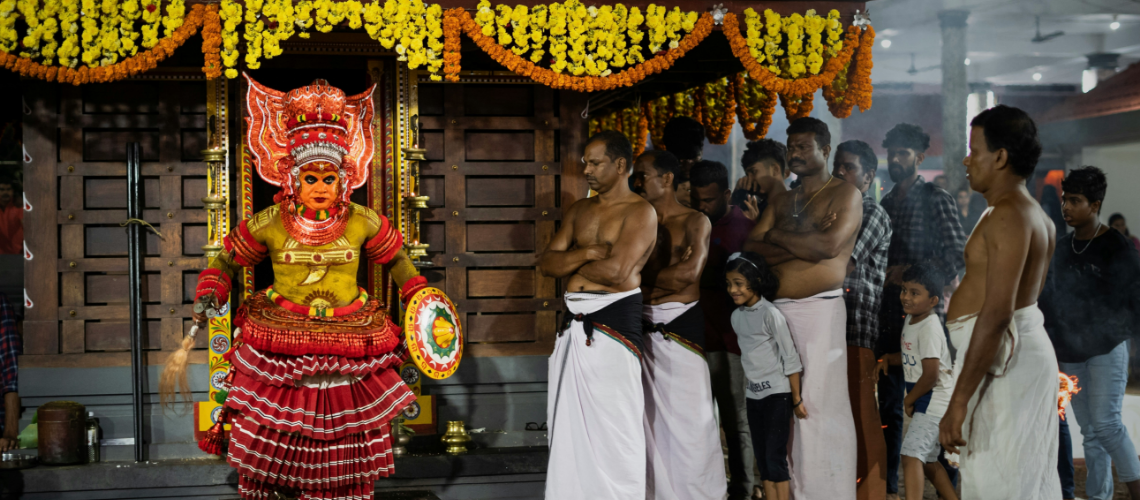
Theyyam is a form of ritual possession practised in the Malabar region of northern Kerala, primarily in Kannur and Kasaragod districts. It is one of the most extraordinary cultural experiences available anywhere in India. Performers from specific hereditary communities assume the identities of deities, ancestral spirits, or heroes through elaborate costumes, fierce facial makeup, and rhythmic movement, entering a trance-like state during the performance. The tradition is estimated to be over 1,000 years old.
Theyyam is not staged for tourists. It takes place in local temple courtyards and tharavaad (ancestral family compound) shrines between November and May each year, and is attended by village communities as an act of religious devotion. Visitors are generally welcome to observe, but attendance requires awareness of appropriate conduct, and the schedules follow local temple calendars rather than fixed tourist timetables.
Our dedicated guide to Theyyam in Kerala covers everything travellers need to know before visiting. Seeing Theyyam with a knowledgeable local guide, who can explain the specific deity being embodied and the significance of the ritual, transforms an already remarkable experience into something genuinely profound.

Kalaripayattu: one of the world’s oldest martial arts
Kalaripayattu is generally considered the world’s oldest surviving martial art form, with origins in Kerala estimated at over 3,000 years. It combines combat techniques, physical conditioning, weapons training, and spiritual practice in a system that addresses the whole person rather than merely the body. Practitioners train in a specially constructed earthen-floor gymnasium called a kalari, and the discipline includes its own healing tradition of massage and injury treatment.
Kalaripayattu demonstrations are staged at cultural centres and training schools across Kerala, with Fort Kochi being the most accessible location for visitors. For those who want more than a performance, several traditional kalari schools in Kannur, Thrissur, and Kozhikode offer half-day or full-day introductory sessions under the supervision of an experienced gurukkal (master practitioner).
Onam: Kerala’s grand harvest festival
Onam is Kerala’s most important festival and is celebrated across the entire state, regardless of religion or community. It marks the annual return of the mythological King Mahabali, who is said to visit his people during the festival period. Onam falls in August or September (the Malayalam month of Chingam) and lasts for ten days, with the most significant celebrations on Thiru Onam.
The festival is characterised by several iconic elements. The Onam Sadya is the definitive feast of Kerala cuisine: a full vegetarian meal served on a banana leaf with more than twenty individual dishes, eaten while seated on the floor. Pookalam (flower rangoli) competitions see courtyards and thresholds covered in intricate designs made from fresh flowers. Vallam Kali (snake boat races) take place on the backwaters of Alappuzha and Kottayam, with teams of more than 100 rowers racing traditional chundal boats in one of the most spectacular sporting events in South India.
Timing a Kerala trip to coincide with Onam gives access to all of these experiences simultaneously and is one of the most culturally rewarding ways to visit the state.

Thrissur Pooram: India’s largest temple festival
Thrissur Pooram, held annually in April or May at the Vadakkunnathan Temple in Thrissur, is widely considered the grandest temple festival in India. The event involves two groups of temples competing in a spectacular procession featuring decorated elephants, traditional percussion ensembles, and umbrella exchanges timed to the beat of the music. The finale includes a fireworks display that continues through the night.
The event draws enormous crowds and is a genuinely overwhelming sensory experience: the sound of the Panchavadyam (ensemble of five instruments), the sight of elaborately decorated elephant processions, and the energy of the assembled crowd make it unlike anything else in India. Attendance requires planning: accommodation in Thrissur books out months in advance for Pooram dates.

Mohiniyattam and classical dance forms
Mohiniyattam is Kerala’s classical dance form, distinct from Kathakali, traditionally performed by women. The name translates as “dance of the enchantress,” and the form is characterised by graceful, swaying movements, flowing white-and-gold costumes, and storytelling drawn from Hindu mythology. It is considered one of India’s eight classical dance forms and has been performed at the courts of Kerala’s royal families for centuries.
Mohiniyattam performances are staged at cultural centres and during temple festivals across the state. The most significant institution for the form is Kerala Kalamandalam in Thrissur, which also offers residential training programmes for students.
The living culture of Kerala’s villages
Some of the most genuine cultural experiences in Kerala are not performances or festivals but simply daily life in villages where traditional occupations and community practices continue unchanged. Kumbalangi, India’s first model ecotourism village near Kochi, offers structured village walks that include coir-making demonstrations, crab farming, traditional fishing techniques, and home-cooked meals. The experience is managed by the community itself and directly supports local livelihoods.
In northern Kerala, weavers in Kannur have produced hand-loom fabrics for centuries, and several weaving cooperatives are open to visitors who want to watch the process and buy directly from the makers. In the backwater regions of Kottayam, toddy tappers continue their traditional work on the coconut palms that line the waterways, and spending an afternoon in a local toddy shop, eating freshly prepared food, is itself an authentic encounter with the region’s culture.

Kerala’s food as a cultural experience
The traditional food of Kerala is inseparable from its cultural life. The Onam Sadya is as much a ritual as a meal. The preparation of rice and coconut dishes in a Syrian Christian household in Kottayam follows traditions passed down through generations. The Malabar biryani of Kozhikode carries the history of Arab traders who arrived on the spice coast centuries ago
Our dedicated guide to the traditional food of Kerala and the places to eat in Kerala covers the food culture in detail, including where to find the most authentic versions of each dish and what each one represents culturally.
Experience Kerala’s culture with local guidance
The difference between watching a Theyyam from the edge of a crowd and understanding what you are seeing is almost entirely a matter of who is with you. The same is true of a Kathakali performance, a temple festival, or a village walk. Local knowledge, context, and the ability to be in the right place at the right time transform good experiences into genuinely memorable ones.
At Immersive Trips, cultural immersion is at the heart of how we design Kerala journeys. Get in touch with our team and tell us what aspects of Kerala’s culture matter most to you.
Frequently asked questions about cultural experiences in Kerala
What is the most important cultural experience in Kerala?
It depends on your interests and timing. Theyyam in Kannur (November to May) is the most extraordinary and least packaged experience. The Onam festival (August to September) is the most all-encompassing cultural event. Kathakali is the most accessible year-round art form. Each offers something the others do not.
Is it respectful for foreign visitors to attend Theyyam performances?
Yes, visitors are generally welcome at Theyyam performances, but respectful conduct is essential. This means dressing modestly, following locals’ guidance on where to stand or sit, not photographing without permission, and understanding that you are observing an act of religious devotion rather than a theatrical performance. Going with a local guide is strongly recommended.
When is the best time to visit Kerala for cultural experiences?
November to May covers the Theyyam season in Kannur. April and May include Thrissur Pooram. August and September bring Onam. The Kerala Kalamandalam festival in Thrissur typically takes place in December. Year-round, Kathakali and Kalaripayattu performances are available in Fort Kochi and other cultural centres.
Where is the best place in Kerala to learn about Kathakali?
Kerala Kalamandalam in Thrissur, established in 1930, is the premier institution for Kathakali and other classical arts. It offers guided campus visits, performances, and longer immersive programmes. In Fort Kochi, several cultural centres stage regular performances with pre-show makeup demonstrations.
Can travellers learn Kalaripayattu during a Kerala trip?
Yes. Several traditional kalari schools accept visitors for half-day or longer introductory sessions. These are available in Fort Kochi, Kannur, and Thrissur. Residential programmes lasting several days to several weeks are also available for those who want a more immersive training experience.
What is Panchavadyam, and where can it be heard?
Panchavadyam is an ensemble of five traditional percussion and wind instruments played together in temple festivals across Kerala. The most spectacular setting is Thrissur Pooram in April or May. Smaller performances take place at temple festivals and cultural events throughout the state, particularly during the Onam period.
Is Onam celebrated only by Hindus in Kerala?
No. Onam is celebrated as the state’s harvest festival by Keralites of all religious communities. The Onam Sadya, snake boat races, and pookalam competitions are observed across communities and are considered expressions of Keralite identity rather than exclusively Hindu practices.
What is Kerala’s most significant contribution to world culture?
Kalaripayattu, as one of the world’s oldest martial art forms with documented influence on other Asian martial traditions, is arguably Kerala’s most globally significant cultural contribution. Kathakali is Kerala’s most internationally recognised art form. Ayurveda, while practised across South Asia, has its most developed and systematic expression in Kerala.
Are there cultural experiences suitable for children visiting Kerala?
Kathakali makeup demonstrations are particularly engaging for children. Watching the snake boat race during Onam is exciting for all ages. Village walks in Kumbalangi, with crab farming, coir making, and fishing, work well for families. Kalaripayattu demonstrations, with their acrobatic energy, are consistently popular with younger visitors.
How do I find authentic cultural experiences rather than tourist versions?
The key is local knowledge and timing. Attending Theyyam requires knowing temple calendars. Attending Thrissur Pooram requires advance planning. Finding a genuinely authentic Kathakali performance, rather than an abbreviated tourist show, requires knowing which institutions preserve the full tradition. A travel specialist with deep knowledge of Kerala can connect you with the right experiences at the right time.