
Kerala is many things – misty hill stations, serene backwaters, ancient temples, and sun-soaked beaches. But for travellers who have visited once, it is often the food they remember most vividly. The traditional food of Kerala is a cuisine built over centuries, shaped by the spice trade, coastal geography, Arab and Portuguese influences, and the distinct culinary traditions of communities like the Mappila Muslims, Syrian Christians, and Hindu Nairs. The result is one of India’s most layered and flavour-rich food cultures, and exploring it is as essential a part of your Kerala trip as any landmark on your itinerary.
Here is a guide to the dishes you simply cannot leave Kerala without trying.
The Building Blocks of Kerala Cuisine
Before diving into specific dishes, it helps to understand what makes Kerala food distinct. Rice is the staple, but it appears in dozens of forms – steamed, pressed into noodles, fermented into batters, or ground into flour for flatbreads. Coconut features in almost everything: as oil, milk, fresh gratings, or paste. The spice rack is rich – black pepper (Kerala was its original global source), cardamom, curry leaves, mustard seeds, turmeric, dried red chillies, and tamarind all appear regularly. Most dishes are steamed, boiled, or lightly cooked, which keeps them surprisingly light and digestible despite their complex flavours.
Must-Try Traditional Foods of Kerala
1. Kerala Sadya – The Grand Feast on a Banana Leaf
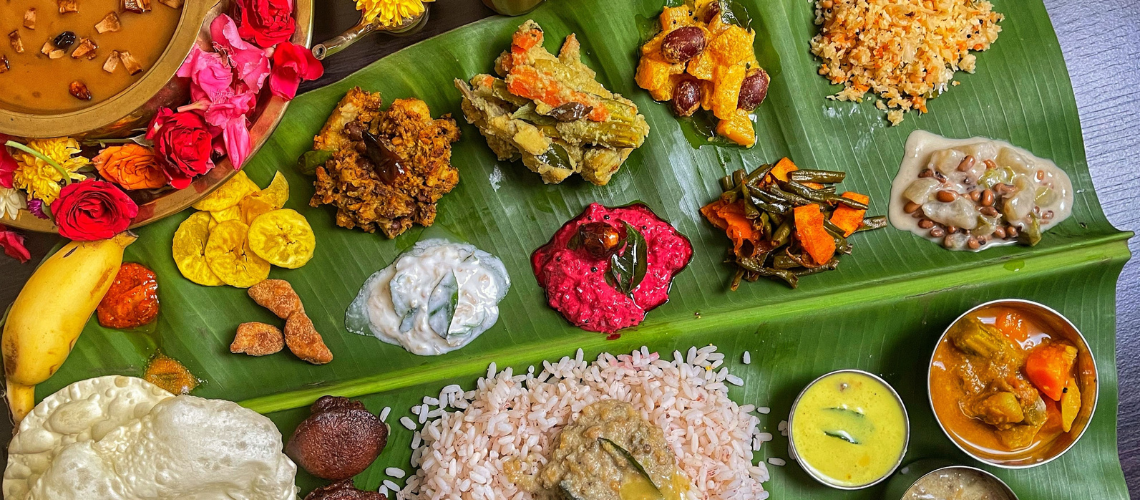
If you can time one meal perfectly in Kerala, make it a Sadya. This is the state’s ceremonial vegetarian feast, traditionally served on a fresh banana leaf, with diners seated on the floor. A full Sadya can include over 24 items – rice, sambar, rasam, avial (a mixed vegetable dish in coconut and yoghurt), thoran (stir-fried vegetables with coconut), olan (ash gourd in coconut milk), pachadi, kichadi, papadam, pickles, and multiple varieties of payasam (kheer) to finish.
Sadya is most commonly prepared for Onam – Kerala’s biggest harvest festival – and for Vishu, the Malayalam New Year. However, many traditional restaurants and homestays serve it year-round. Eating Sadya is not just a meal; it is a cultural ritual.

2. Puttu and Kadala Curry – The Classic Kerala Breakfast
Ask any Keralite about home food, and Puttu will come up almost immediately. It is a cylindrical steamed cake made of coarsely ground rice flour layered with fresh coconut gratings, cooked in a special mould called a “puttu kutty.” The result is mildly flavoured and fluffy, almost always served alongside kadala curry – a hearty black chickpea gravy cooked with spices and coconut paste.
This combination is a staple breakfast across every region of Kerala, though the accompaniments shift as you travel. In southern Kerala, puttu is often served with steamed green grams and banana. In Christian households in central Kerala, it pairs with spicy beef or chicken curry. It is endlessly versatile, deeply comforting, and entirely addictive.
3. Appam and Stew – A Lighter, Equally Beloved Breakfast
Appam is one of Kerala’s most recognisable dishes: a soft, lacy rice pancake with a crispy edge and a fluffy, bowl-shaped centre. The batter is made from fermented rice and coconut milk, which gives it a slightly tangy flavour and an impossibly light texture. It is paired with a mild, aromatic stew of vegetables, chicken, or mutton, slow-cooked in coconut milk with green chillies, ginger, and curry leaves.
The contrast between the crispy edge and pillowy centre of the appam, soaked in a creamy stew, is one of the great culinary pleasures of Kerala. It is popular among international travellers precisely because it is gentle on the palate while remaining deeply flavourful.

4. Karimeen Pollichathu – The Backwater Speciality
Karimeen, or Pearl Spot fish, is native to the backwaters and lakes of Kerala and was declared the state fish in 2010. Pollichathu refers to a cooking method: the fish is marinated in a thick paste of red chillies and spices, wrapped tightly in banana leaves, and slow-cooked over a flame. The banana leaf seals in moisture and adds a distinctive smoky aroma that no other cooking method can replicate.
The dish has deep roots in Kerala’s fishing communities and was originally cooked over open fires. Today, it is served everywhere from toddy shops to five-star resorts. If you are travelling through Alappuzha (Alleppey) on a houseboat, you may even catch fresh karimeen and have it prepared on board – an experience that is almost impossible to replicate anywhere else.
5. Malabar Biryani (Thalassery Biryani) – A Fragrant Heirloom Recipe
The Malabar region of northern Kerala has its own distinct biryani tradition, shaped significantly by Arab traders who sailed into the Malabar coast centuries ago. Thalassery Biryani, the most celebrated variety from this region, uses short-grained Kaima rice (also called Jeerakasala rice) rather than basmati, which gives it a nuttier, more aromatic quality. The meat – chicken, mutton, or beef – is marinated in spices, layered with the rice, and slow-cooked (dum-cooked) together with fried onions, cashews, and raisins.
The technique and the precise spice ratios are traditionally passed down orally through generations of families in the Malabar region. It is richer and more complex than most biryanis you will encounter elsewhere in India, and it is a dish that travellers to northern Kerala specifically seek out.
6. Idiyappam and Fish Moilee – Delicate and Deeply Satisfying
Idiyappam – also called noolputtu or “thread puttu” – is made by pressing rice flour through a mould to create thin, steamed rice noodles. It is extraordinarily light, with a texture that absorbs curries beautifully. Its classic pairing is Fish Moilee: a mild fish curry cooked in coconut milk with green chillies, turmeric, and curry leaves. The moilee is among Kerala’s gentlest curries, with a clean, bright flavour that showcases the quality of the fish rather than overpowering it.
This combination is a favourite for travellers who want an authentic Kerala meal that does not hit hard on the spice front.

7. Kappa and Meen Curry – The Everyman’s Meal
Kappa is boiled tapioca, and it sits at the very heart of Kerala’s everyday eating culture. Tapioca became widely cultivated in Kerala during the colonial era because it grows easily in tropical soil and was an accessible source of calories. Today, kappa paired with a deeply spiced, tamarind-based fish curry is considered quintessential comfort food – eaten at roadside shacks, in fishing villages, and in family kitchens across the state.
The dish is deliberately rustic: soft, neutral tapioca against a fiery, tangy curry. It is one of the most honest and satisfying things you will eat in Kerala, and it costs almost nothing at a local eatery.
8. Kerala Parotta and Beef Fry – Street Food at Its Finest
Kerala parotta is a layered, flaky flatbread made from maida (refined flour), requiring skilled kneading and a characteristic flipping technique to achieve its distinctive texture. Paired with Kerala beef fry – known locally as Irachi Ularthiyathu – it is arguably the state’s most beloved street food combination.
The beef fry is slow-roasted in coconut oil with aromatic spices, onions, fresh curry leaves, and slivers of coconut, resulting in a dish that is dry, intensely flavoured, and deeply satisfying. References to this preparation can be traced back to early texts from Kerala and Tamil Nadu. Today, no visit to Kerala’s tea shops or toddy shops is complete without this iconic pairing.
9. Pazham Pori – The Street Snack You Will Keep Going Back To
Pazham pori are banana fritters – ripe nendran bananas dipped in a batter of flour and turmeric, then deep-fried in coconut oil until golden. They are crispy on the outside, soft and sweet inside, and almost universally served with a cup of milky, slightly spiced Kerala chai. You will find them at every roadside tea stall and bus stop in Kerala, and they cost next to nothing.
Simple as they sound, pazham pori are among the snacks that become inseparable from the memory of travelling in Kerala.
10. Payasam – Kerala’s Sacred Sweet
No Sadya, festival, or wedding in Kerala is complete without payasam – a milk-based kheer that comes in countless regional varieties. The most celebrated is Palada Pradhaman, made with rice ada (flat rice flakes), milk, and sugar, cooked low and slow until thick and fragrant. Adapradhaman, made with rice flakes and jaggery in coconut milk, is another beloved variety. The world-famous Ambalappuzha Paal Payasam, served as a temple offering at the Ambalappuzha Sree Krishna Temple in Alappuzha, is a pilgrimage in itself for those who love sweets.
Where and How to Eat Authentically in Kerala
The best places to eat traditional food of Kerala are often the simplest: local Sadhya thalis at neighbourhood restaurants, homestays where families cook ancestral recipes, houseboat kitchens in Alappuzha where meals are prepared fresh from the day’s catch, and toddy shops tucked away on roadsides where the food is paired with locally tapped coconut toddy.
Let Us Plan Your Kerala Food Journey
Food is not a side note to a Kerala trip – it is one of its central pleasures. At Immersive Trips, we design Kerala travel experiences that take you beyond the obvious, including curated food trails, homestays with family-cooked meals, and backwater journeys with fresh-catch lunches aboard houseboats.
Ready to experience the real taste of Kerala? Get in touch with us and let us craft your perfect Kerala itinerary.
A Cuisine That Reflects a Culture
The traditional food of Kerala is a direct expression of where the land sits – between the Arabian Sea and the Western Ghats – and of the many peoples who have called it home. Arab spice traders brought biryani techniques. Portuguese sailors introduced new ingredients. Syrian Christians, Mappila Muslims, and Hindu communities each developed their own culinary identities while sharing the same pantry of coconut, rice, and spice.
To eat your way through Kerala is to read its history. Every dish has a story, and every meal – whether a grand Sadya on a banana leaf or a simple plate of kappa and fish curry at a roadside stall – is a genuine expression of a culture that takes food seriously.
Planning a trip to Kerala and want to eat like a local from day one? Contact the Immersive Trips team – we’ll point you to the right tables, kitchens, and experiences.
Frequently Asked Questions
What defines the traditional food of Kerala?
Kerala cuisine is distinguished by rice as the staple, extensive use of coconut, and a wide variety of spices like black pepper, cardamom, curry leaves, turmeric, and tamarind. Cooking methods are usually light—steamed, boiled, or lightly fried—to retain flavour and digestibility.
What is Kerala Sadya, and when is it typically served?
Sadya is a ceremonial vegetarian feast served on a banana leaf, often featuring over 24 items such as rice, sambar, avial, thoran, olan, pachadi, and payasam. It is traditionally prepared for festivals such as Onam and Vishu, though it can also be found year-round in traditional eateries.
Which dish is considered the classic Kerala breakfast?
Puttu and Kadala Curry is a staple breakfast. Puttu is a steamed rice cake layered with coconut, paired with a black chickpea curry cooked with spices and coconut paste.
What is Appam, and how is it served?
Appam is a soft, lacy rice pancake with a crispy edge and fluffy centre, typically served with a mild stew of vegetables, chicken, or mutton cooked in coconut milk. Its light texture and subtle flavours make it a popular breakfast choice.
What is Karimeen Pollichathu?
Karimeen Pollichathu is a backwater speciality where Pearl Spot fish is marinated in spices, wrapped in banana leaves, and slow-cooked. The banana leaf seals in moisture and adds a smoky aroma unique to Kerala’s cuisine.
What makes Malabar Biryani unique?
Thalassery Biryani from northern Kerala uses Kaima rice, a short-grain aromatic variety, layered with marinated meat, fried onions, cashews, and raisins, and cooked slowly in the dum style. Its spices and cooking techniques are traditionally passed down through generations.
What is a lighter Kerala meal option for travellers?
Idiyappam with Fish Moilee is a light meal featuring steamed rice noodles (idiyappam) served with a mild, coconut-based fish curry, perfect for those seeking authentic Kerala flavours without heavy spices.
What is considered the everyday comfort food of Kerala?
Kappa (boiled tapioca) with Meen Curry (spiced fish curry) is a common daily meal, reflecting Kerala’s local culinary traditions and is widely available in homes and roadside eateries.
Which street foods are a must-try in Kerala?
Kerala Parotta with Beef Fry and Pazham Pori (banana fritters) are iconic street foods, celebrated for their taste, texture, and cultural significance across Kerala.
What is the traditional sweet dish of Kerala?
Payasam is a milk-based dessert served during Sadya, festivals, and weddings. Popular varieties include Palada Pradhaman and Ambalappuzha Paal Payasam, both slow-cooked for a fragrant, rich flavour.