
Kerala’s temples are among the most architecturally distinctive and spiritually significant in India, shaped by a temple-building tradition that developed a regional character distinct from the Dravidian styles found further south and the Hindu temple traditions of North India. Temple tours in Kerala can take a traveller from one of the wealthiest religious institutions in the world to remote forest shrines accessible only by trekking, and from temples thousands of years old to others where daily rituals continue in forms largely unchanged for centuries. This guide covers the most significant temples, the traditions specific to Kerala temple architecture, and what visitors need to know before planning a temple-focused itinerary. For a broader cultural context, see our Kerala Travel Guide
For a broader cultural context, see our guide to cultural experiences in Kerala.
Understanding Kerala Temple Architecture and Customs
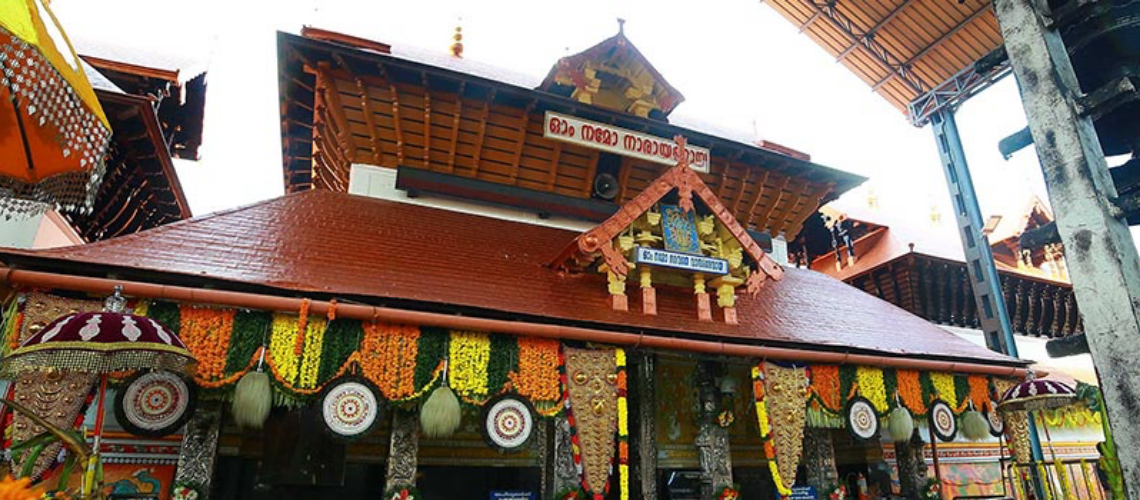
Kerala temple architecture is distinct from the rest of India, characterised by sloping, multi-tiered roofs (often covered in copper plating), circular or square sanctums, and extensive use of wood carving alongside stone. The style evolved to suit Kerala’s heavy monsoon rainfall, with steep roofs designed to shed water quickly, and shaded corridors that keep interiors cool through Kerala’s humid climate.
Dress codes at Kerala temples are generally strict. Men are typically required to remove their shirts and wear a traditional mundu (dhoti), often with a white cloth (angavasthram) draped over the shoulders. Women are expected to wear sarees or other traditional dress; western clothing and revealing garments are not permitted. Several of Kerala’s most significant temples, including Sabarimala and Padmanabhaswamy, restrict entry to practising Hindus.
The Most Famous and Sacred Temples in Kerala
This guide covers the most famous temples in Kerala, the traditions specific to Kerala temple architecture and what visitors need to know before planning a temple-focused itinerary.
Sree Padmanabhaswamy Temple, Thiruvananthapuram
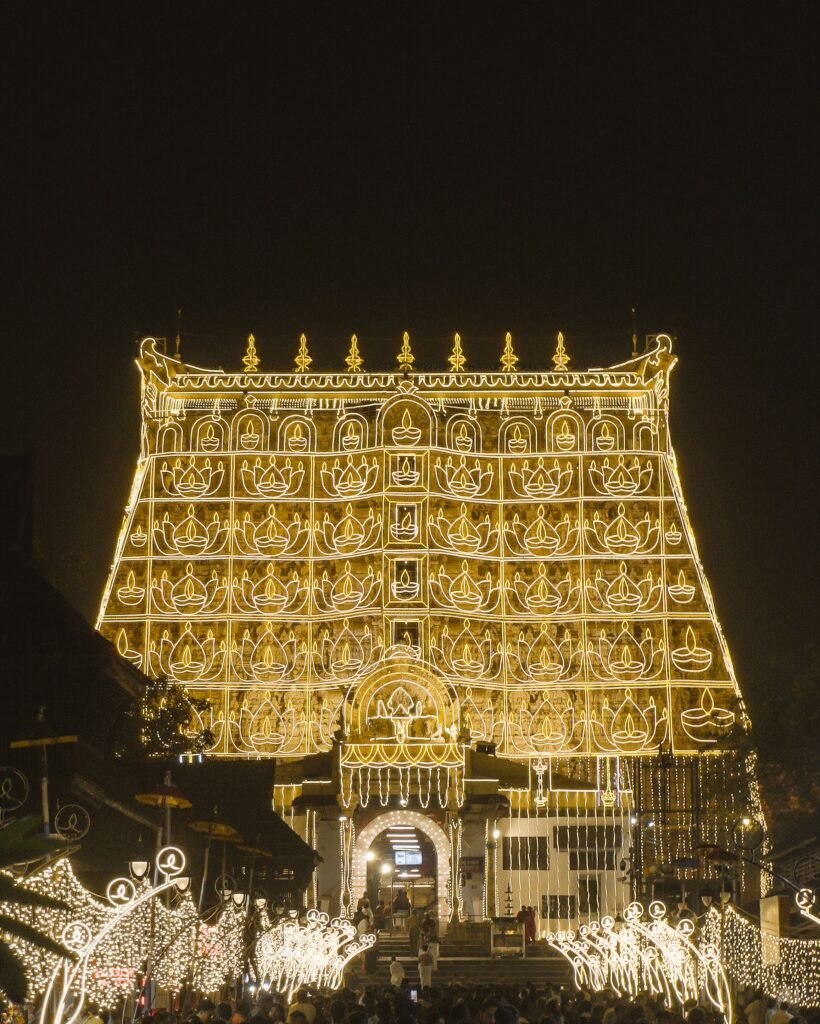
The Sree Padmanabhaswamy Temple in the heart of Thiruvananthapuram is widely considered the world’s richest temple, with treasures discovered in its underground vaults in 2011 valued at billions of dollars. The temple’s history dates back to at least the 8th century, with significant renovations carried out in the 16th century and again under King Marthanda Varma of Travancore in the 18th century, who dedicated the entire Travancore kingdom to the temple’s deity in 1750. Every subsequent Travancore king bore the title Padmanabha Dasa, “servant of Lord Padmanabha.”
The temple’s architecture blends Kerala and Dravidian styles, with a seven-tiered gopuram (entrance tower) and a corridor of 365 and a quarter intricately carved granite pillars leading to the sanctum. The presiding deity, Lord Vishnu, reclining on the serpent Anantha, gives Thiruvananthapuram its name (meaning “the city of Lord Anantha”). The temple is one of the 108 Divya Desams, the most sacred Vishnu temples recognised in the Tamil devotional tradition. Entry is restricted to Hindus, with strict dress requirements enforced.
Guruvayur Sree Krishna Temple
The Guruvayur Temple, in Thrissur district, is one of the most important Krishna temples in India and is referred to as “Bhooloka Vaikunta” (the abode of Vishnu on earth) by devotees. The idol, carved from a stone known as Patalanjana Sila, is believed to possess medicinal properties. The temple is also notable for housing the largest collection of domesticated elephants in India at its associated Punnathur Kotta elephant sanctuary. Guruvayur Ekadasi, typically falling in November, is the temple’s most significant festival, drawing enormous crowds of devotees. The temple opens at 3 AM for the first ritual (Palliyunarthal) and remains active with rituals throughout the day until 8 PM.
Sabarimala Sree Ayyappa Temple
Sabarimala, nestled deep within the Western Ghats forest in Pathanamthitta district, is one of the most significant pilgrimage destinations in India, drawing millions of devotees annually, particularly during the Makaravilakku festival period (mid-January). The temple is dedicated to Lord Ayyappa and is uniquely notable for its tradition in which devotees undertake a rigorous 41-day vratham (period of penance and abstinence) before making the pilgrimage. The final approach to the temple requires a trek through forest terrain, and the temple complex includes a mosque dedicated to Vavar, believed to be an associate of Lord Ayyappa, reflecting an unusual and historically significant element of religious coexistence in the pilgrimage tradition.
Vadakkunnathan Temple, Thrissur
The Vadakkunnathan Temple in Thrissur is the largest Shiva temple in Kerala and one of the oldest temples in the state, believed to date back over a thousand years. The temple complex follows the classical Kerala architectural style, with multiple shrines arranged within a fortified compound. It is the venue for Thrissur Pooram, widely considered the grandest temple festival in India, held annually in April or May with elaborately decorated elephants, traditional percussion ensembles, and a spectacular fireworks finale.
Ambalappuzha Sree Krishna Temple
The Ambalappuzha Sree Krishna Temple, near Alleppey, is renowned for the legendary Paal Payasam offered as prasad, a rice pudding tied to a legend involving a chess game between Lord Krishna and a local king. The temple’s architecture follows the traditional Kerala style, and the annual festival, along with performances of the classical art form Ottamthullal, draws devotees and cultural enthusiasts alike. Our Alleppey travel guide covers the temple and its surroundings in more detail.
Chottanikkara Devi Temple
Chottanikkara Devi Temple, near Kochi, is dedicated to the Goddess Bhagavathy and is particularly renowned for the Makom Thozhal ritual, which devotees believe provides healing for mental and emotional ailments. The golden-hued temple complex and its tranquil surroundings make it a significant pilgrimage destination for both spiritual seekers and those drawn to its specific reputation for healing rituals.
Parassinikkadavu Muthappan Temple
The Parassinikkadavu Muthappan Temple, near Kannur, is unique in Kerala as the only temple where Theyyam, the ancient ritual performance tradition, is performed daily as part of the regular temple ritual rather than seasonally. The temple, dedicated to the deity Muthappan, sits on the banks of the Valapattanam River and offers visitors a rare opportunity to witness this extraordinary tradition year-round. Our guide to things to do in Kannur covers this temple in more detail.
Thirunelli Temple
Thirunelli Temple, in the forests of northern Wayanad, is one of the most ancient Vishnu temples in Kerala, believed by some scholars to be over a thousand years old. Its remote setting in the Brahmagiri Hills, surrounded by dense forest, gives it an atmosphere of genuine sanctity. The sacred Papanasini River, which flows through the temple grounds, is considered significant for ancestral rites. Our Wayanad travel guide covers this temple’s setting in full.
Attukal Bhagavathy Temple
The Attukal Bhagavathy Temple in Thiruvananthapuram, dedicated to Goddess Kannaki, is known as the “Sabarimala of Women” and hosts the Attukal Pongala, recognised as the world’s largest annual gathering of women for a single religious activity. The festival, typically held in February or March, sees women from across Kerala and beyond preparing the pongala (a rice offering) on improvised hearths lining the streets around the temple, in a display of devotion and scale that is genuinely remarkable to witness.
Planning a temple tour in Kerala
Respect dress codes strictly. Many Kerala temples enforce traditional dress requirements without exception. Carry or rent appropriate clothing (mundu for men, saree or similar for women) before arriving.
Check entry restrictions. Several major temples, including Padmanabhaswamy and Sabarimala, restrict entry to Hindus. Confirm access requirements before planning a visit.
Time your visit around festivals where possible. Thrissur Pooram, Guruvayur Ekadasi, Attukal Pongala, and the Sabarimala Makaravilakku season each offer a uniquely intense experience of Kerala’s temple culture, though they also require significant advance planning for accommodation and transport.
Allow time for the architecture, not just the ritual. Kerala’s distinctive temple architecture, with its sloping copper roofs, carved wooden interiors, and traditional construction techniques, rewards careful attention beyond the central act of worship.
Plan your Kerala Temple Tour with Immersive Trips
At Immersive Trips, we help travellers build temple-focused itineraries that respect local customs while giving genuine access to the architectural and spiritual richness of Kerala’s most significant sites. Get in touch with our team or explore our Kerala tour packages.
Frequently asked questions about temple tours in Kerala
1. Which is the most important temple to visit in Kerala?
The Sree Padmanabhaswamy Temple in Thiruvananthapuram is the most historically and architecturally significant, though entry is restricted to Hindus. Guruvayur Temple is the most important Krishna temple and is more broadly known across India. Vadakkunnathan Temple in Thrissur is significant both for its antiquity and for hosting Thrissur Pooram.
2. Can non-Hindus visit Kerala temples?
It varies by temple. Sree Padmanabhaswamy Temple and Sabarimala restrict entry to practising Hindus. Many other significant temples, including Guruvayur (with some restrictions on the inner sanctum) and several others, welcome visitors of all backgrounds in the outer precincts while reserving the innermost areas for Hindu devotees. Always check the specific temple’s policy before visiting.
3. What should I wear to visit a Kerala temple?
Men are typically expected to wear a mundu (dhoti), often without a shirt, sometimes with a white cloth (angavasthram) over the shoulders. Women should wear sarees or other traditional modest dresses. Western clothing, shorts, and revealing garments are generally not permitted at any significant Kerala temple.
4. When is the best time to visit for Thrissur Pooram?
Thrissur Pooram is held annually in April or May at the Vadakkunnathan Temple in Thrissur. Accommodation in Thrissur should be booked well in advance, as the festival draws enormous crowds from across Kerala and beyond.
5. What is special about the Sabarimala pilgrimage?
Sabarimala is unique in its 41-day vratham (period of penance) that devotees undertake before the pilgrimage, regardless of caste or social status, reflecting an egalitarian aspect of the tradition. The pilgrimage also includes a visit to a mosque dedicated to Vavar, an associate of Lord Ayyappa, representing a historically significant element of religious coexistence.
6. Is the Attukal Pongala festival worth attending?
Yes, for those interested in witnessing one of the world’s largest religious gatherings of women. The festival, typically held in February or March at the Attukal Bhagavathy Temple in Thiruvananthapuram, sees enormous numbers of women preparing ritual offerings on the streets surrounding the temple. The scale and devotion on display are genuinely remarkable, though the crowds are correspondingly large.
7. Can I see Theyyam at a temple year-round?
Yes, at the Parassinikkadavu Muthappan Temple near Kannur, which performs a daily Theyyam as part of its regular ritual, the only temple in Kerala to do so. Most other Theyyam performances follow seasonal temple calendars between November and May.
8. What makes Kerala temple architecture different from other parts of India?
Kerala’s temple architecture is characterised by sloping, multi-tiered roofs (often copper-plated) designed to manage the state’s heavy monsoon rainfall, extensive wood carving, and a generally more horizontal and low-rise profile compared to the towering Dravidian gopurams of Tamil Nadu. The style reflects both the climate and the locally available building materials, particularly timber.
9. Are there entry fees at Kerala temples?
Most major Kerala temples do not charge a general entry fee, though specific rituals, offerings, and special darshan (viewing) arrangements often carry charges. The Padmanabhaswamy Temple and a few others may have museum or vault-related fees for associated heritage sites.
10. How do I plan a multi-temple itinerary in Kerala?
A well-structured temple tour might combine Thiruvananthapuram (Padmanabhaswamy, Attukal), a stop at Ambalappuzha near Alleppey, Guruvayur and Vadakkunnathan in the Thrissur area, and Parassinikkadavu near Kannur for those including a northern Kerala extension. Spacing these out across a broader Kerala itinerary, rather than attempting them all in a few days, allows for a more considered and respectful experience of each site.