
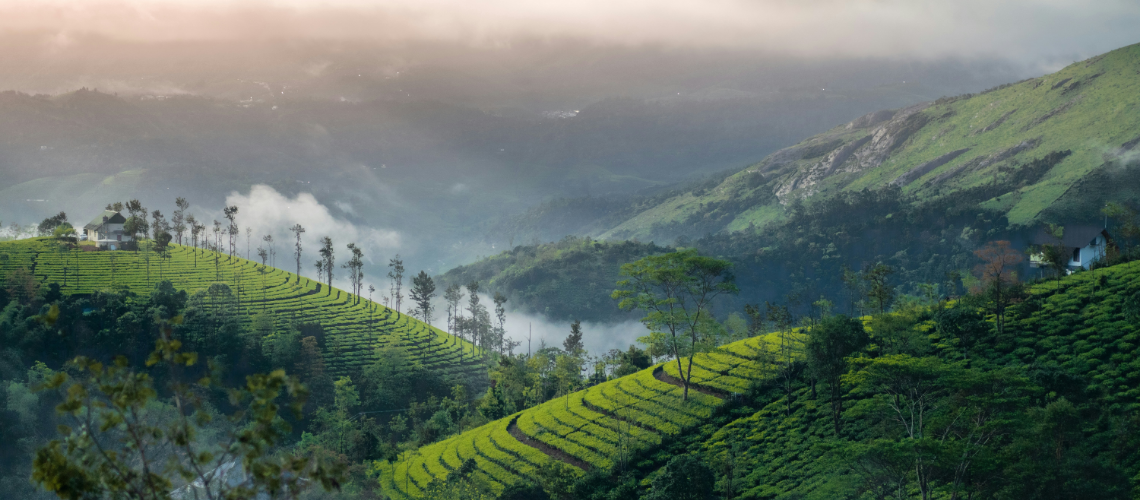
Most visitors to Kerala follow a well-worn route: Kochi, Munnar, Thekkady, Alappuzha, and perhaps Varkala. It is a good route, and for good reason. But Kerala is far larger, far stranger, and far more rewarding than this circuit suggests. The offbeat places in Kerala that sit beyond the standard itinerary are where the state reveals itself most honestly: in fishing villages that have barely changed in generations, in forest sanctuaries accessible only with advance permits, in ancient ritual performances that take place by torchlight in temple courtyards, and in hill hamlets where the only sounds are birdsong and wind through the tea bushes. This guide is for travellers who want Kerala.
Why offbeat places in Kerala reward the extra effort
Kerala’s most visited destinations are genuinely beautiful, but they are also genuinely busy. Houseboats in Alappuzha queue on the main canal. Munnar’s town centre is congested with traffic. The beaches of Varkala and Kovalam are lined with cafes serving the same menus to the same crowd.
Step thirty minutes off the main tourist trail in almost any direction, and Kerala transforms. The rural landscape, the community-based tourism ethos, the spice-rich cooking of family kitchens, and the depth of cultural life that continues entirely apart from tourism all become accessible. These places require a little more planning and, in some cases, a local contact or a specialist travel partner. The return on that investment is considerable.
Kumbalangi: India’s first model ecotourism village
Just 15 kilometres from the centre of Kochi, Kumbalangi is one of the most genuinely immersive destinations in Kerala and one of the least visited by independent travellers who simply do not know it exists. Declared India’s first model ecotourism village, this backwater island in Ernakulam district is home to farmers, fishermen, coir weavers, crab farmers, and toddy tappers who continue traditional occupations within a community that has specifically organised itself around responsible tourism.
Visitors can participate in bait fishing near the mangroves, watch traditional Chinese fishing nets in operation, visit working crab and prawn farms, observe coir-making on hand looms, and eat freshly caught seafood prepared in village homestays. The bioluminescence of the backwaters, known locally as kavaru, is a phenomenon that draws those who time their visit for the months after the monsoon.
Plastic is banned in Kumbalangi. There are no resort hotels. The accommodation is in village homestays, and the experience is one of genuine cultural exchange rather than packaged tourism.
Gavi: a forest sanctuary inside Periyar Tiger Reserve
Gavi is one of Kerala’s best-kept secrets. Located deep inside the Periyar Tiger Reserve in Pathanamthitta district and managed by the Kerala Forest Development Corporation, this pristine forested area limits visitor numbers through an advance-booking permit system, which is both why it remains unspoilt and why most casual travellers miss it entirely.
The rewards for those who plan ahead are considerable. The forest here is home to wild elephants, gaur, sambar deer, lion-tailed macaques, and over 260 species of birds. Visitors can canoe across the emerald Gavi Lake, take guided treks through dense shola forests, and stay overnight in forest rest houses where the only sounds after dark are the forest itself. It is among the most complete wildlife immersion experiences available anywhere in South India.
Kolukkumalai: the world’s highest tea plantation
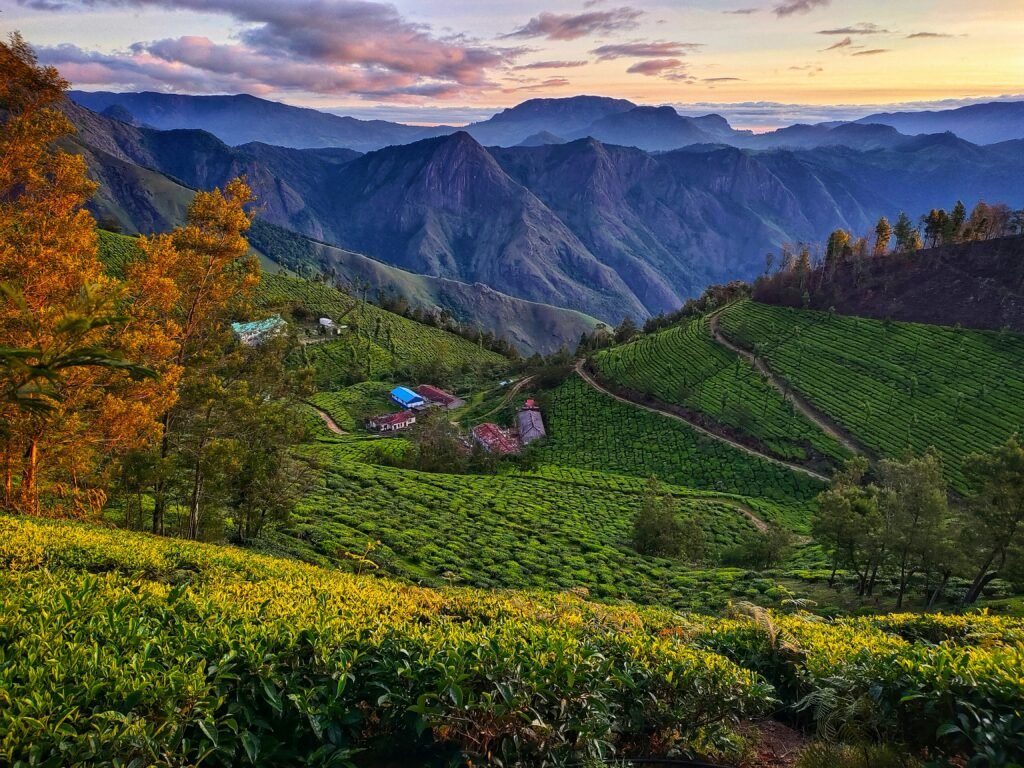
Located at approximately 7,900 feet above sea level and accessible only by rugged jeep track from Suryanelli near Munnar, Kolukkumalai is home to what is widely considered the world’s highest tea plantation. The tea factory here, built in the 1930s, still processes leaves using traditional orthodox methods rather than the modern CTC (crush-tear-curl) technique, producing teas of a distinct character that reflect the extreme altitude at which they are grown.
The jeep journey up is an experience in itself: a steep, narrow track winding through plantation and cloud. At the top, the views on clear days extend across the Western Ghats and as far as the plains of Tamil Nadu. Watching the sunrise above the cloud line from Kolukkumalai, cup of freshly brewed estate tea in hand, is one of those experiences that travellers describe for years afterwards.
Kannur: where Theyyam is a living ritual
Kannur, in northern Kerala, is known to most travellers only as a transit point. Those who stop here discover something genuinely extraordinary: Theyyam, one of India’s oldest and most compelling ritual performance traditions.
Theyyam in kerala is a form of ritual possession in which performers, drawn from specific communities, embody deities through elaborate costumes, makeup, and movement. The performances take place in local temple courtyards, typically overnight and between November and May, and are attended by village communities as acts of religious devotion rather than as entertainment. Visitors are generally welcome to observe. Unlike the Kathakali performances staged for tourists in Kochi, Theyyam takes place entirely on its own terms, in its own time, and for its own purposes.
Kannur also sits on a stretch of coastline that remains largely undeveloped, with long empty beaches and a series of Portuguese-era forts that most travellers drive past without stopping. The Malabar food culture of Kannur, including its distinctive Thalassery biryani, is worth the journey on its own.
Munroe Island: the quietest backwaters in Kerala
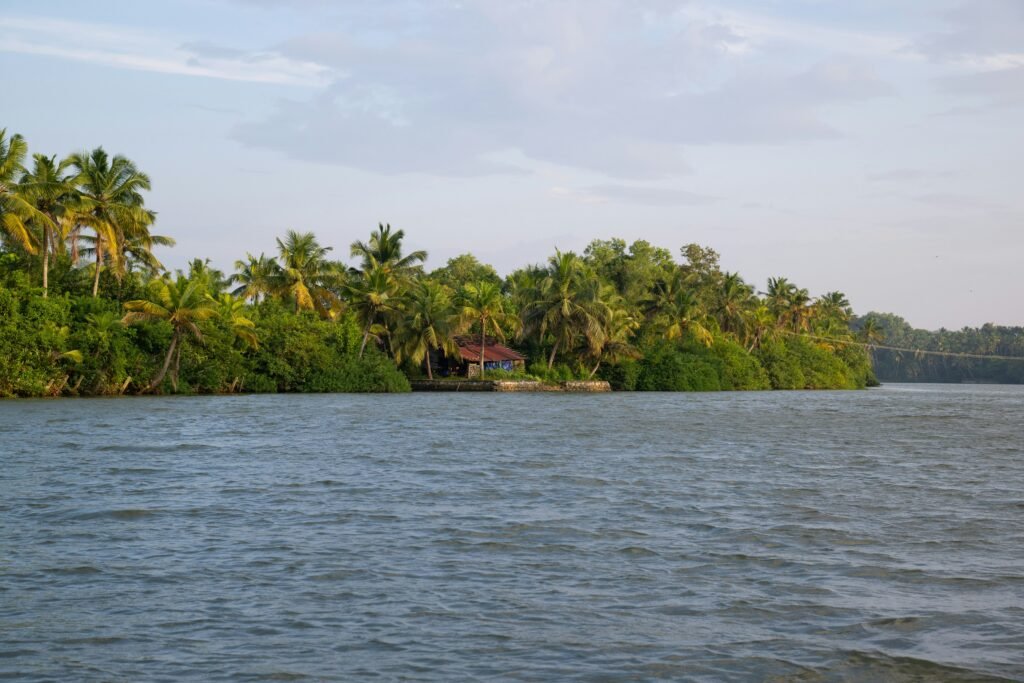
While Alappuzha draws the houseboat crowds, Munroe Island in the Kollam district offers a backwater experience of an entirely different character. This cluster of eight small islands, connected by canals and surrounded by the waters of Ashtamudi Lake, is named after Colonel John Munroe, the British Resident of Travancore in the early 19th century.
The island is home to a small fishing community and can be explored by canoe or country boat through narrow waterways lined with coconut palms and mangroves. There is no traffic. There are almost no tourist facilities. The handful of homestays available are run by local families, and the meals served are some of the most authentic backwater cooking you will find anywhere in Kerala. Munroe Island is the kind of place that reminds you why you travel.
Vagamon: mist, meadows, and pine forests
Vagamon sits at around 1,100 metres in the Idukki district, between Kochi and Thekkady, and remains largely unknown to international visitors despite being a weekend destination for travellers within Kerala. The landscape here is distinctive: rolling green meadows interspersed with pine forests and rocky outcrops, regularly swathed in low cloud.
The activities available in Vagamon reflect its character: paragliding over the meadows, trekking through the pine forests, and long walks across open grassland with views towards the distant hills. There is a quietness here that the more famous hill stations of Kerala cannot offer, and the tea estates and spice gardens surrounding the town are almost entirely free of tourist traffic.
Thenmala: India’s first planned eco-tourism destination
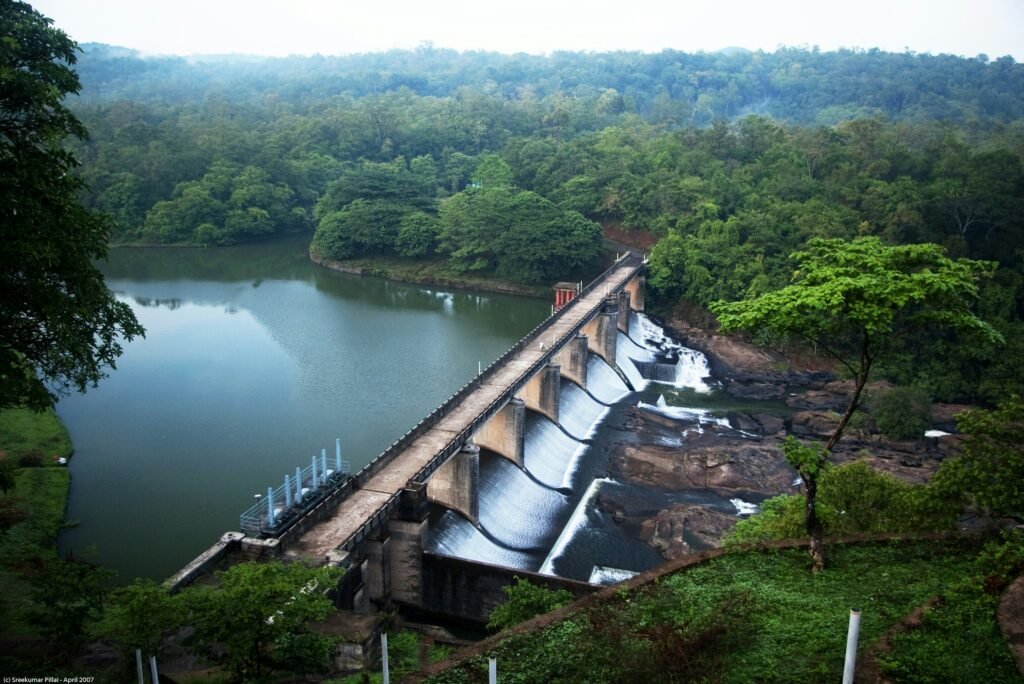
Thenmala in Kollam district holds a specific distinction: it was India’s first planned eco-tourism destination. The project, developed by the Kerala Forest Department in the late 1990s, combines forest trekking, mountain biking, river boating, a rock-cut sculpture garden, and a butterfly sanctuary within a managed natural area, developed with an explicit commitment to sustainable travel.
Thenmala in Kollam district holds a specific distinction: it was India’s first planned eco-tourism destination. The project, developed by the Kerala Forest Department in the late 1990s, combines forest trekking, mountain biking, river boating, a rock-cut sculpture garden, and a butterfly sanctuary within a managed natural area, developed with an explicit commitment to sustainable travel.
Mararikulam: the beach Kerala keeps to itself
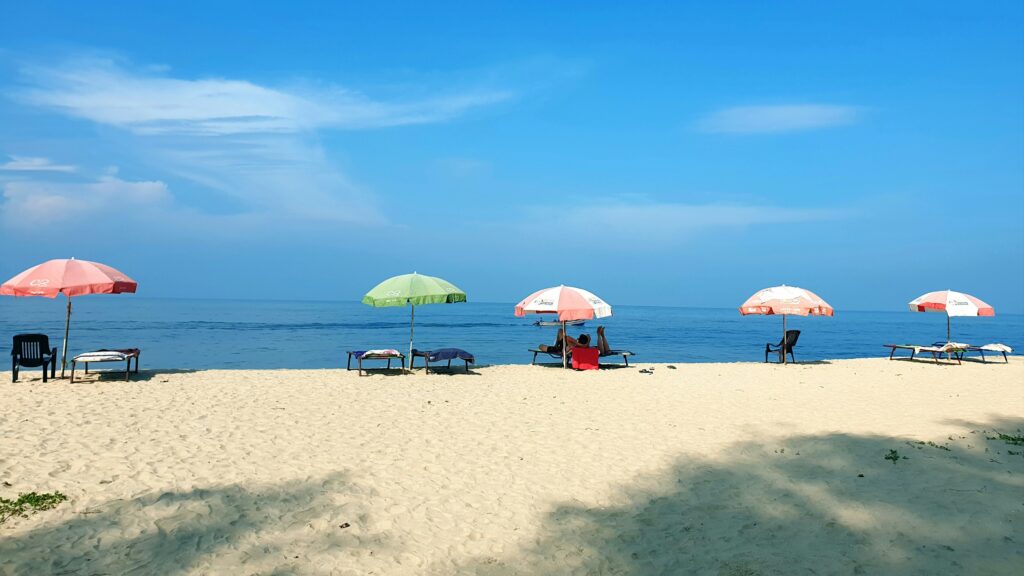
Mararikulam (Marari) is a fishing village on the central Kerala coast, a short drive south of Alappuzha. While Varkala and Kovalam have become established tourist destinations, Mararikulam retains the character of a working fishing village. The beach here is long, clean, and quiet, lined with traditional fishing boats rather than beach bars.
A handful of sensitively designed beachfront homestays and small resorts operate along the Marari coastline, most of them offering an experience built around the fishing village rather than separate from it. Watching the early-morning catch come in, eating fresh seafood prepared the same day it left the water, and cycling through the coconut groves and paddy fields behind the beach are among the pleasures Mararikulam offers. They are simple and lasting.
Plan your offbeat Kerala journey with us
The destinations in this guide require more planning than a standard Kerala itinerary: advance permits for Gavi, local contacts for Theyyam schedules in Kannur, knowledge of the jeep operators serving Kolukkumalai, and an understanding of which homestays in Munroe Island and Kumbalangi are worth booking. This is precisely the kind of local knowledge that makes the difference between a good trip and an exceptional one.
At Immersive Trips, we do offbeat Kerala tour packages. Get in touch with our team and tell us what kind of experience you are looking for. We will build an itinerary around Kerala that most travellers never find.
Frequently asked questions about offbeat places in Kerala
What makes a place genuinely offbeat in Kerala?
A genuinely offbeat destination in Kerala is one that sits outside the standard package tour routes, sees relatively low visitor numbers, and offers an experience shaped by local life rather than by tourist infrastructure. Places like Kumbalangi, Munroe Island, and Gavi qualify because access requires some planning, accommodation options are limited to homestays or small local properties, and the experience is community-centred rather than resort-centred.
Is it safe to visit offbeat places in Kerala independently?
Most offbeat destinations in Kerala are safe for independent travel. Some, such as Gavi, require advance permits from the Forest Department and cannot be visited without prior booking. Others, such as villages around Kannur for Theyyam, benefit enormously from having a local contact who can advise on schedules and appropriate conduct. Working with a travel specialist removes the uncertainty from the planning process.
When is the best time to visit offbeat places in Kerala?
October to March is the most comfortable period for most offbeat destinations. Theyyam in Kannur runs from November to May, making this the ideal window for visiting northern Kerala. Gavi and the forest sanctuaries are best visited outside the monsoon months of June to September, when access roads can be difficult. The bioluminescence at Kumbalangi is most visible in the months immediately after the monsoon.
How do I get a permit for Gavi?
Gavi is managed by the Kerala Forest Development Corporation, and entry requires advance booking through their official channels. Visitor numbers are limited to protect the forest environment, which means popular dates book out weeks in advance. A travel specialist who regularly works with Kerala’s forest department can navigate this process more efficiently than independent research
Can I see Theyyam as an outsider?
Yes. Theyyam performances in Kannur and surrounding areas are generally open to respectful visitors. However, they follow temple and community calendars that are not published in standard travel guides, and the schedules change each year. Visiting with local guidance ensures you attend a genuine performance rather than a staged demonstration, and helps you understand the context and conduct expected of observers.
How far is Kolukkumalai from Munnar town?
Kolukkumalai is approximately 38 kilometres from Munnar town, but the jeep journey takes about 90 minutes due to the steep, narrow track. The approach road passes through Suryanelli. Most visitors depart very early in the morning to catch the sunrise above the cloud line, which means an overnight stay in or near Munnar the previous night is strongly recommended.
Is Munroe Island suitable for families with children?
Munroe Island is well-suited to families who are comfortable with a quiet, nature-focused experience. The canoe and country boat tours are gentle and safe for older children. The island has no traffic, and the environment is calm and unhurried. The limited accommodation options mean advance booking is essential, particularly during school holiday periods.
What is the difference between Mararikulam and Varkala as beach destinations?
Varkala is a clifftop beach town with an established tourist infrastructure: restaurants, cafes, yoga studios, surf hire, and a wide range of accommodation. Mararikulam is a working fishing village with a long, quiet beach, minimal tourist facilities, and a handful of well-chosen homestays and small resorts. Varkala suits travellers who want activity and social energy. Mararikulam suits those who want solitude, fishing village culture, and genuine local life.
Are offbeat destinations in Kerala suitable for solo travellers?
Most are well-suited to solo travel. Homestays in villages like Kumbalangi and Mararikulam tend to offer particularly warm hospitality to solo visitors. Forest destinations like Gavi and Thenmala require guided trekking regardless of group size, which makes them straightforward for solo travellers to navigate. Theyyam in Kannur is an especially rich experience for solo travellers who want to observe Kerala cultural life without the mediation of a group itinerary.
How do I combine offbeat destinations with the classic Kerala circuit?
The most effective approach is to build offbeat stops into a longer itinerary rather than treating them as a separate trip. Kumbalangi pairs naturally with a Kochi base. Munroe Island sits neatly between Alappuzha and Thiruvananthapuram. Kolukkumalai can be added as a day from Munnar. Kannur for Theyyam works as part of a northern Kerala extension. A travel specialist who knows the state well can weave these stops into a coherent route that makes geographic and logistical sense.