
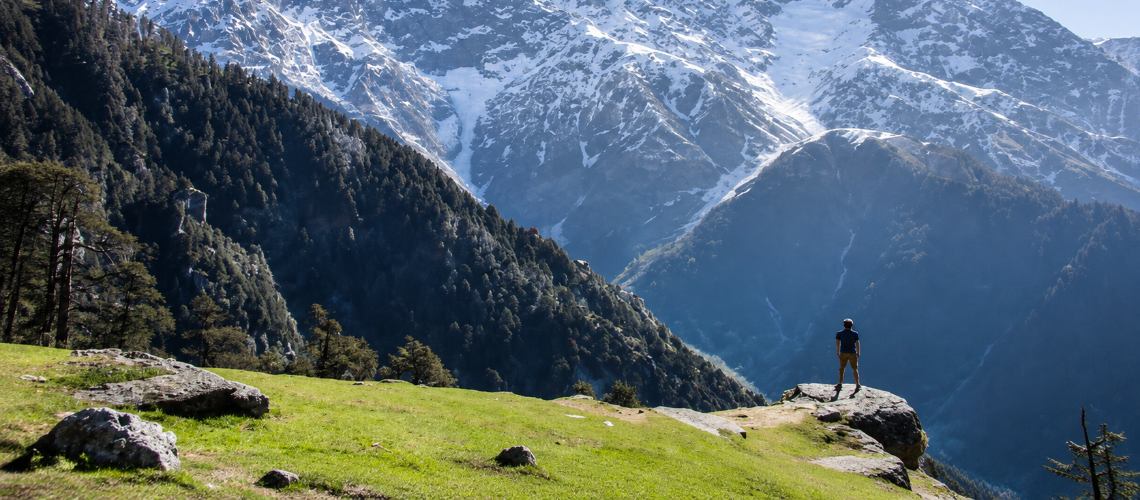
Dharamshala spreads across a hillside rather than one neat cluster, so the best places to visit in Dharamshala fall into a handful of natural groups rather than one tidy walking route. From the temples and monasteries of McLeod Ganj to viewpoints, cultural centres and historic sites across the Kangra Valley, this guide covers the best places to visit in Dharamshala and how to fit them into a realistic first trip.
Tsuglagkhang Complex and the Dalai Lama Temple
The Tsuglagkhang complex in McLeod Ganj holds the Dalai Lama’s temple and residence, along with the Kalachakra temple and a series of prayer halls used daily by monks and pilgrims. It functions as an active place of worship, not a static monument, and circling it alongside the crowd gives a better sense of the place than a quick pass through.

The adjoining Tibet Museum documents the 1959 uprising and the decades of exile that followed, and it adds useful context for the rest of a Dharamshala visit. Namgyal Monastery, attached to the complex, is the personal monastery of the Dalai Lama and one of the largest Tibetan monasteries outside Tibet itself.
Gyuto Monastery: A Quieter Tibetan Experience
Gyuto Monastery, in lower Dharamshala and not McLeod Ganj, sees far fewer visitors than the Tsuglagkhang complex, despite housing an active community of monks and regular prayer sessions open to the public. It suits anyone who wants a calmer look at monastic life without the crowds of the main temple.
Photography is generally allowed in the outer courtyards of both Namgyal and Gyuto monasteries, though prayer halls commonly restrict cameras during active sessions, so checking with a monk or attendant before taking pictures avoids any awkwardness.
Bhagsunag Temple and Waterfall
Bhagsunag is one of the most visited places near McLeod Ganj, combining an old Shiva temple with a waterfall and a short, scenic walk through the hills. The Bhagsunag Temple, dedicated to Lord Shiva, is centred around a sacred water tank where pilgrims traditionally take a dip before continuing towards the waterfall.
The path from the temple to Bhagsunag Waterfall passes through cafes, small shops and rocky hillside scenery. The waterfall is at its most impressive after the monsoon when rainfall increases the flow, although the walk remains enjoyable through much of the year. Early morning is generally a quieter time to visit, particularly for travellers who want to experience the area before the day-tripping crowds arrive.
Naddi Village and Dal Lake
Naddi is a small hillside village above McLeod Ganj and one of the best places to visit in Dharamshala for panoramic views of the Kangra Valley and the Dhauladhar range. Its elevated position makes it particularly popular around sunset when the mountains and valley take on changing colours as the light fades.
Nearby Dal Lake, a small lake surrounded by deodar trees, provides another reason to explore this quieter part of Dharamshala. It is considerably smaller than the famous Dal Lake in Kashmir and has no connection with it beyond the name. Naddi works well as a relaxed afternoon or evening stop after exploring McLeod Ganj, especially for travellers who want mountain views without committing to a full trek.
Triund Trek and Dhauladhar Views
Triund is one of the most popular places to visit near Dharamshala for travellers looking to combine mountain scenery with an active day outdoors. The trail climbs through forests of oak, deodar and pine before reaching an open ridge with wide views across the Dhauladhar range and the Kangra Valley.

Most visitors attempt Triund as a long day hike from the McLeod Ganj and Dharamkot side, while those with more time can stay overnight and experience the ridge after sunset. The weather can change quickly at higher elevations, so sturdy walking shoes, layered clothing and sufficient water are important. An early start is also advisable, particularly during warmer months when clouds can build around the mountains later in the day.
For more activity-focused experiences, see our guide to the best things to do in Dharamshala.
More Places to Visit in Dharamshala Beyond the Hills
Lower Dharamshala holds a different set of places to visit in Dharamshala, built around the town and not the hills above it. The Himachal Pradesh Cricket Association Stadium sits at more than 1,400 metres above sea level, among the highest grounds used for international cricket anywhere, with the Dhauladhar range as a backdrop.
A short drive from central Dharamshala, the Norbulingka Institute was built to preserve Tibetan art forms, with workshops in thangka painting and wood carving open to visitors alongside a temple and landscaped gardens. Visitors can watch artisans at work in the studios, and a small shop on site sells finished pieces, from painted scrolls to hand carved wooden furniture, made by the institute’s own students and staff.
Kotwali Bazaar, the older commercial heart of lower Dharamshala, holds a War Memorial and a mix of everyday shops that give a different picture of the town than McLeod Ganj’s cafes and prayer flags. It works well as a stop on the way to or from the cricket stadium, since both sit within easy reach of each other in lower Dharamshala.
These lower town sights work well folded into a longer Dharamshala itinerary, and Immersive Trips builds this stretch into its wider Himachal tour packages as an optional extension, added when a traveller’s own interest in cricket, craft or local history calls for the extra time and not a standard fixed add on.
Beyond McLeod Ganj and the surrounding hills, lower Dharamshala has several attractions that reveal a different side of the town. These include sporting landmarks, Tibetan cultural institutions and older parts of the city that are easy to overlook when most visitors concentrate on the upper slopes.
HPCA Stadium
The Himachal Pradesh Cricket Association Stadium is one of Dharamshala’s most distinctive landmarks, largely because of its dramatic setting beneath the Dhauladhar mountains. Sitting at more than 1,400 metres above sea level, the stadium is among the highest international cricket grounds in the world.
When a match is being played, the combination of cricket and mountain scenery makes for a memorable experience. Even outside match days, the stadium and its surroundings are worth considering for travellers interested in Indian cricket or unusual sporting architecture. Its location in lower Dharamshala also makes it easy to combine with other sights in the town.
Norbulingka Institute
The Norbulingka Institute offers one of the best opportunities to explore Tibetan art and craftsmanship around Dharamshala. The institute was established to preserve traditional Tibetan arts including thangka painting, wood carving, embroidery and tailoring, and visitors can see artisans working in the studios.
The landscaped grounds, temple and workshops make Norbulingka more than a conventional museum visit. It is particularly worthwhile for travellers interested in Tibetan culture, traditional craftsmanship and the story of the Tibetan community in Dharamshala. The institute can be visited as a half-day stop while exploring the lower parts of the valley.
Kotwali Bazaar and War Memorial
Kotwali Bazaar represents the more everyday side of Dharamshala, away from the cafes and Tibetan cultural attractions of McLeod Ganj. The market has a mix of local shops, restaurants and everyday businesses and offers a glimpse of how residents experience the town beyond its tourism circuit.
Nearby, the War Memorial sits among pine-covered surroundings and commemorates soldiers from Himachal Pradesh who lost their lives in different conflicts. The site is quieter than many of Dharamshala’s major attractions and can be combined with a visit to the cricket stadium and other lower-town sights.
Day Trips Into the Wider Kangra Valley
Kangra Fort, once held by the Katoch dynasty and counted among the oldest forts in India, sits close enough to Dharamshala for a half day visit, with sweeping views over the surrounding valley from its upper walls. The Masroor rock cut temples, a cluster of monolithic shrines carved directly from the hillside around forty kilometres away, suit travellers with a strong interest in ancient architecture and enough time for a fuller day out.
Both sights pair naturally with a stop at a local dhaba for a Himachali thali on the return drive, turning a monument visit into a fuller taste of the Kangra Valley beyond Dharamshala itself. Hiring a car and driver for the day works out simpler than arranging separate transport to each site, particularly since both roads wind through hill terrain that rewards an unhurried pace.
Dharamkot and the Cafe Scene
Dharamkot sits above McLeod Ganj and has developed a distinctly relaxed atmosphere that sets it apart from the busier centre. Surrounded by forest and mountain views, the village attracts travellers staying for longer periods, particularly those interested in trekking, meditation, yoga and slower-paced mountain life.
Its small cafes are part of the experience, with menus ranging from Tibetan staples to Israeli, Italian and other international dishes. Some have outdoor seating overlooking the valley, making Dharamkot a good place to spend an unhurried afternoon rather than simply ticking off another attraction.
Dharamkot also works well as a base or starting point for walks towards Triund trek and other trails in the surrounding hills. For travellers who want to experience Dharamshala beyond its temples and viewpoints, the village offers a useful glimpse of the area’s contemporary traveller culture.
Best Day Trips from Dharamshala
Dharamshala’s location in the Kangra Valley makes it a useful base for exploring several historic and archaeological sites beyond the town. If you have three or more days available, these excursions can add a different dimension to a Dharamshala itinerary.
Kangra Fort
Kangra Fort is one of the most important historical sites near Dharamshala and was once the stronghold of the Katoch dynasty, one of India’s oldest royal families. The fort occupies a dramatic position above the confluence of the Manjhi and Banganga rivers, with views extending across the surrounding Kangra Valley.
Its long history includes periods of rule by regional kingdoms and later conflicts involving the Mughals, Sikhs and British. Walking through its gateways, courtyards and surviving structures gives a sense of the scale and strategic importance the fort once held.
Kangra Fort can be visited as a half-day excursion from Dharamshala and works particularly well for travellers interested in Himachal Pradesh’s history, architecture and royal heritage.
Masroor Rock-Cut Temples
The Masroor Rock-Cut Temples, around 40 kilometres from Dharamshala, are among the most unusual historical attractions in the Kangra Valley. The complex consists of a group of monolithic temples carved directly from the sandstone rock, with architectural details associated with the early medieval period.
Often described as the Himalayan counterpart to India’s great rock-cut temple traditions, Masroor is especially interesting for travellers who enjoy ancient architecture and less-visited heritage sites. The temples sit against a dramatic mountain landscape, and the journey through the Kangra countryside is part of the experience.
The site is best approached as a dedicated day trip or combined with other Kangra Valley stops rather than rushed into a short sightseeing schedule. A private car and driver can make the excursion considerably easier, particularly when combining Masroor with Kangra Fort.
Sequencing a Visit Around Dharamshala’s Best Sights
Two days give enough room for the Tsuglagkhang complex, Bhagsunag and a slower look at McLeod Ganj, with Naddi added for sunset. An extra day suits the cricket stadium, Norbulingka or a half day trip to Kangra Fort, depending on what interests the traveller most.
Altitude and mountain weather matter more here than distance alone. Mornings suit temple visits and walks, while afternoons can bring sudden cloud or rain, particularly during the monsoon months, so building some flexibility into any day’s plan is worth doing.
Frequently Asked Questions
What are the top places to visit in Dharamshala?
The Tsuglagkhang complex, Bhagsunag and the Triund trailhead are the three places to visit in Dharamshala that most itineraries build around. Naddi, the HPCA Stadium and the Norbulingka Institute commonly follow as a second layer for travellers with more than a single day in town.
How many days do I need to see Dharamshala properly?
Two days cover the Tsuglagkhang complex, Bhagsunag and a good look at McLeod Ganj, with an evening added at Naddi. A further day suits the cricket stadium, Norbulingka or a half day trip to Kangra Fort, though it is not essential for a satisfying first visit.
Is the Dalai Lama’s temple free to enter?
The Tsuglagkhang complex has no entry charge, though security checks are routine and bags may be inspected at the gate. Some sections, including certain prayer halls, may close to visitors during specific ceremonies or teachings, so checking on the day is sensible.
What is the best time of day to visit Naddi?
Late afternoon into early evening is the best time to visit Naddi, timed for sunset over the Dhauladhar range and the Kangra Valley below. Mornings bring fewer crowds and cooler air, which suits travellers who prefer a calmer visit over the views.
Are the monasteries in Dharamshala worth visiting?
Yes, the monasteries are among the best places to visit in Dharamshala for anyone interested in Tibetan Buddhism and daily monastic life. Namgyal Monastery and Gyuto Monastery both welcome visitors, with Gyuto giving a noticeably calmer experience than the busier Tsuglagkhang complex.
What is Kangra Fort known for?
Kangra Fort is known for its age and scale, having been held by the Katoch dynasty and counted among the oldest forts in India. It sits close enough to Dharamshala for a half day visit and gives wide views over the surrounding valley from its upper sections.
Do I need a car to see Dharamshala’s outer sights?
A car and driver make sense for Kangra Fort, the Masroor rock cut temples and Norbulingka Institute, since all three sit a meaningful distance from McLeod Ganj. The Tsuglagkhang complex, Bhagsunag and Naddi, by contrast, are close enough together to manage on foot or with short local taxi rides.
Is Dal Lake in Dharamshala the same as Dal Lake in Kashmir?
No, the small lake near Naddi known locally as Dal Lake shares only its name with the much larger and better known Dal Lake in Srinagar, Kashmir. The two are separate bodies of water in entirely different parts of North India.
How to Plan a Dharamshala Sightseeing Itinerary
A list of sights only becomes a trip once it is set against real distances, altitude and how a traveller wants to spend their days. Immersive Trips fits Dharamshala places to visit into a wider Dharamshala tour package built around those specifics, not a fixed route decided in advance, so a slower three day version and a tighter two day version can both work equally well. Anyone ready to start mapping a Dharamshala itinerary is welcome to begin that conversation directly.