
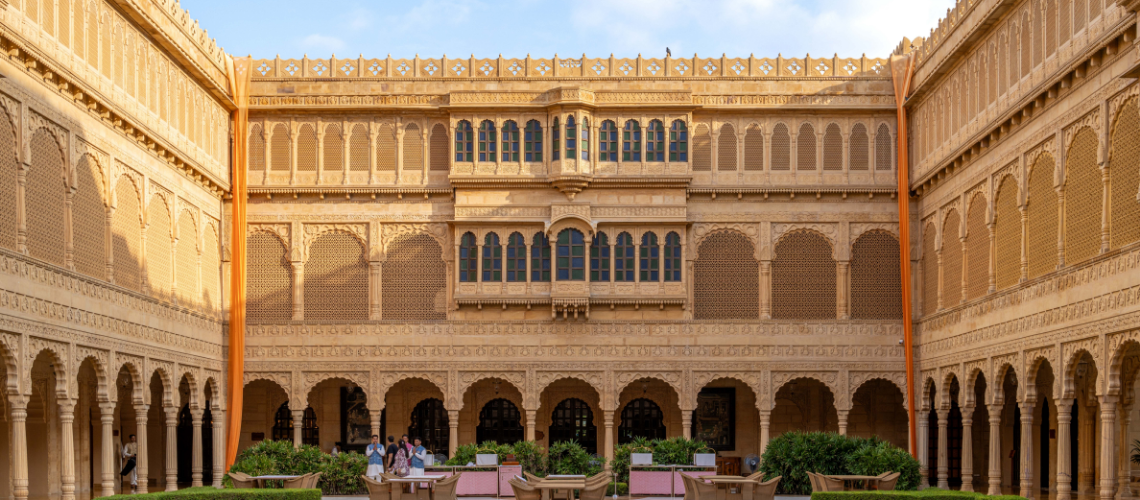
The places to visit in Jaisalmer range from one of the world’s few living forts to intricately carved merchant havelis, from a serene desert lake to the rolling golden dunes of the Thar Desert, and from an eerie abandoned village to hilltop royal cenotaphs. Rising from the desert in honey-coloured sandstone, the Golden City packs an extraordinary concentration of heritage and desert beauty into a compact and atmospheric destination. This guide covers every significant place worth visiting, with the historical context and practical details you need to plan your time in Jaisalmer.
For activity ideas and trip planning, see our things to do in Jaisalmer and Jaisalmer travel guide.
Places to Visit in Jaisalmer: Jaisalmer Fort (Sonar Quila)
The Jaisalmer Fort, known as the Sonar Quila (Golden Fort), is the crowning glory of the city and one of the largest forts in India. Built in 1156 by the Bhati Rajput ruler Maharawal Jaisal Singh on Trikuta Hill, this UNESCO World Heritage Site is one of the very few “living forts” in the world, where roughly a quarter of the old city’s population still lives, works, and worships within the walls.
Within the fort lie the Raj Mahal (the royal palace, now a museum), a group of exquisitely carved Jain temples dating from the 12th to 15th centuries, shops, cafes, guesthouses, and the homes of the families who continue to live inside. The fort glows golden at sunrise and sunset, and its ramparts offer spectacular views over the desert city. Walking through its lanes, with children racing past and temple bells echoing, is a unique and unforgettable experience.

Patwon Ki Haveli
Patwon Ki Haveli, the most famous and important of Jaisalmer’s merchant mansions, is a cluster of five intricately decorated havelis built between roughly 1805 and 1860 by a wealthy trader for his sons. It was the first haveli built in Jaisalmer and remains one of the largest. Renowned for its yellow sandstone facade, ornate carved balconies, delicate latticework, mirror work, wall paintings, and frescoes, it offers a fascinating glimpse into the luxurious lifestyle of the desert trading families. The top floor of the main haveli offers panoramic views of the fort that many visitors miss.
Salim Singh Ki Haveli
Salim Singh Ki Haveli is famous for its distinctive peacock-shaped roof and its beautifully carved arched balconies. Built in the 18th century, this haveli belonged to a powerful prime minister of Jaisalmer, and its unique design and elaborate stonework make it a masterpiece of Rajput architecture and a favourite of architecture enthusiasts.
Nathmal Ki Haveli
Nathmal Ki Haveli, built in the late 19th century, is renowned for its fascinating blend of symmetry and subtle difference: it was built by two architect brothers working simultaneously on the two halves of the facade, resulting in a structure that is almost, but not quite, symmetrical. Its intricate carvings, including sandstone elephants guarding the entrance, make it one of the most charming havelis in the city.
Gadisar Lake
Gadisar Lake, built in the 14th century by Maharawal Gadsi Singh as the city’s primary water reservoir, is a serene desert oasis surrounded by temples, shrines, cenotaphs, and ghats. The lake is entered through the beautifully carved yellow sandstone Tilon Ki Pol gateway. Boating on the tranquil water, particularly at sunrise, is a peaceful and photogenic experience, and in winter, the lake attracts migratory birds. An evening laser and light show tells the story of Jaisalmer on a water screen.
Sam Sand Dunes
The Sam Sand Dunes, about 40 to 45 kilometres from the city, are the quintessential Thar Desert destination and one of the most important places to visit in the Jaisalmer region. This stretch of rolling golden dunes offers camel safaris, jeep safaris, spectacular sunsets, folk music and dance, and overnight desert camps under the stars. Sunset is the most magical time to visit. The quieter Khuri dunes, about 50 kilometres from the city, offer a similar experience with fewer crowds. Our desert safari in Rajasthan guide covers the desert experience in detail.
Kuldhara
Kuldhara, an abandoned village about 20 kilometres from Jaisalmer, was deserted overnight nearly 200 years ago by its Paliwal Brahmin residents, according to legend to escape a tyrannical minister, leaving behind a curse. Its ruined sandstone homes, barren streets, and eerie silence make it one of the most atmospheric and intriguing places to visit near Jaisalmer, easily combined with a desert safari. Our offbeat places in Rajasthan guide covers Kuldhara in detail.

Bada Bagh
Bada Bagh is a complex of royal cenotaphs (chhatris) set on a hillside a short distance from the city, commemorating the Bhati rulers of Jaisalmer. Set against the desert landscape, the golden sandstone cenotaphs are particularly beautiful at sunset, making Bada Bagh a favourite for photography.
Vyas Chhatri and Desert National Park
Vyas Chhatri, an assemblage of golden sandstone cenotaphs built to honour the sage Vyasa (who compiled the Mahabharata), is the city’s popular sunset point, offering a bird’s-eye view of Jaisalmer. The Desert National Park protects the Thar’s unique ecosystem, including black buck, chinkara, desert fox, and the endangered Great Indian Bustard, along with migratory raptors in winter.
Plan your Jaisalmer visit with us
At Immersive Trips, we help travellers experience the best of Jaisalmer’s extraordinary sights, from the living golden fort and the carved havelis to the desert dunes and the ghost village, with the local knowledge to get the timing and logistics right. Get in touch with our team to plan your Golden City visit.
Frequently asked questions about places to visit in Jaisalmer
What are the must-visit places in Jaisalmer?
The essential places to visit are Jaisalmer Fort (Sonar Quila), the Sam Sand Dunes (for the desert experience), Patwon Ki Haveli, Gadisar Lake, and Bada Bagh. Beyond these, Kuldhara (the abandoned village), the other havelis, and Vyas Chhatri (the sunset point) are the most rewarding additions.
What is special about Jaisalmer Fort?
Jaisalmer Fort (Sonar Quila) is one of the very few “living forts” in the world, where roughly a quarter of the old city’s population still lives, works, and worships within the walls. Built in 1156 on Trikuta Hill and now a UNESCO World Heritage Site, it houses the Raj Mahal palace museum, exquisite Jain temples, shops, and homes, making a visit feel like stepping into daily life.
Which havelis should I visit in Jaisalmer?
The three essential havelis are Patwon Ki Haveli (a cluster of five intricately carved mansions, the most famous and rewarding), Salim Singh Ki Haveli (with its distinctive peacock-shaped roof), and Nathmal Ki Haveli (known for its symmetry and subtle differences). Together, they showcase the extraordinary wealth and artistry of the desert merchant families.
How far are the Sam Sand Dunes from Jaisalmer?
The Sam Sand Dunes are about 40 to 45 kilometres from Jaisalmer city, roughly an hour by road. They offer the quintessential Thar Desert experience of camel safaris, jeep safaris, sunsets, folk performances, and overnight desert camps. The quieter Khuri dunes, about 50 kilometres away, offer a similar experience with fewer crowds.
Is Gadisar Lake worth visiting?
Yes, particularly at sunrise. Gadisar Lake, built in the 14th century as the city’s water reservoir and surrounded by temples, shrines, and the carved Tilon Ki Pol gateway, is a serene desert oasis. A sunrise boat ride is peaceful and photogenic, and in winter the lake attracts migratory birds. An evening laser and light show adds another dimension.
Why is Kuldhara called a ghost village?
Kuldhara, about 20 kilometres from Jaisalmer, was deserted overnight nearly 200 years ago by its Paliwal Brahmin residents, according to legend to escape a tyrannical minister, leaving behind a curse. It has stood empty ever since, and its ruined sandstone homes, barren streets, and eerie silence have earned it a reputation as one of Rajasthan’s most famous ghost villages.
How much time do I need to see Jaisalmer’s sights?
Two to three days is ideal. One day covers the fort, the Jain temples, and the three main havelis (all within walking distance), plus Gadisar Lake. A second day (and night) covers the Sam Sand Dunes desert experience, often combined with Kuldhara and Bada Bagh on the way.
What is Bada Bagh?
Bada Bagh is a complex of royal cenotaphs (chhatris) set on a hillside near Jaisalmer, commemorating the Bhati rulers of the city. Set against the desert landscape, the golden sandstone cenotaphs are particularly beautiful at sunset, making Bada Bagh a favourite spot for photography.
Is there wildlife to see near Jaisalmer?
Yes. The Desert National Park protects the Thar Desert’s unique ecosystem and wildlife, including black buck, chinkara, desert fox, and the endangered Great Indian Bustard, one of the world’s heaviest flying birds. In winter, the park hosts migratory raptors including griffon vultures and eagles.
What is the best time to visit Jaisalmer’s sights?
October to March offers the most comfortable weather, ideal for exploring the fort, havelis, and desert. The fort and dunes are best in the golden light of sunrise and sunset. February adds the Jaisalmer Desert Festival. The summer months (April to June) are extremely hot given the desert location and are best avoided.