
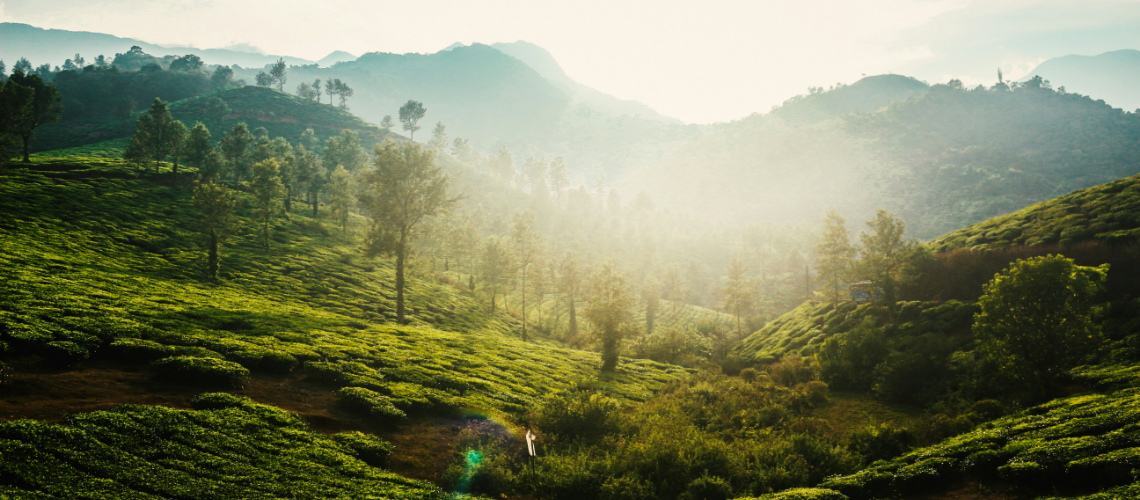
Wayanad sits in the Western Ghats of northern Kerala, a district of coffee and tea plantations, dense forests, prehistoric caves, wildlife sanctuaries, and a resident tribal population whose presence in these hills extends back thousands of years. The Wayanad travel guide below is for travellers who want something more than another hill station circuit: this is a destination where the landscape is extraordinary, the history is ancient, the wildlife is genuinely wild, and the pace of life in the villages and plantations invites a quality of attention that most busy travel itineraries do not allow.
For the broader Kerala context, read our Kerala travel guide and our guide to offbeat places in Kerala, which covers Wayanad as part of Kerala’s most rewarding lesser-known destinations.
Wayanad Travel Guide: Understanding the District
Wayanad is the northernmost hill district of Kerala, bordering Karnataka and Tamil Nadu. Its name derives from Vayal Nadu, meaning “land of paddy fields” in Malayalam, a reference to the terraced rice cultivation that has characterised parts of the district for centuries. The district headquarters is Kalpetta, though most visitors base themselves in or around the towns of Vythiri, Mananthavady, or Sulthan Bathery, each of which gives access to a different cluster of the district’s attractions.
Wayanad has some remarkable geographical and historical distinctions. The Banasura Sagar Dam, located 21 kilometres from Kalpetta, is the largest earth dam in India and the second largest in Asia. The Edakkal Caves on Ambukuthi Hill near Sulthan Bathery contain rock carvings estimated to be 6,000 to 8,000 years old, representing one of the oldest pieces of evidence of human settlement in Kerala. The district’s forests are home to a significant population of wild Asian elephants, and the Wayanad Wildlife Sanctuary is one of the most important elephant corridors in India.
The district also holds several other distinctions: Wayanad has the only pine forest in Kerala, at Chandanathode near Mananthavady; the only Jain mirror temple (Kannadi Ambalam) in Kerala, in Vythiri taluk; and the historically significant Thirunelli Temple, one of the most ancient Vishnu temples in Kerala.

Best places to visit in Wayanad
Edakkal Caves
The Edakkal Caves on Ambukuthi Hill, about 12 kilometres from Sulthan Bathery, are one of the most historically significant sites in Kerala. Strictly speaking, they are not caves but two natural rock shelters formed by a large boulder wedged between two hillsides, creating covered chambers. Inside these chambers are over 400 rock carvings (petroglyphs), including human figures, animals, tools, and script-like symbols. The carvings are estimated to span the Neolithic, Mesolithic, and early historic periods, with the oldest believed to be between 6,000 and 8,000 years old. Some patterns are thought by archaeologists to resemble symbols of the Indus Valley Civilisation, suggesting connections to early civilisations on the subcontinent.
The caves sit at approximately 1,200 metres above sea level. Reaching them requires a 45-minute to one-hour uphill trek through coffee plantation trails and stone steps. The caves were brought to wider attention in 1901 when British Malabar Police superintendent Fred Fawcett published an article about them in the journal Indian Antiquary. The Archaeological Survey of India and the State Archaeological Department have declared the caves a protected monument.
Practical note: The caves are closed on Mondays. Entry requires tickets. The trek involves some steep sections and is not suitable for those with significant mobility limitations.
Banasura Sagar Dam
Banasura Sagar Dam, 21 kilometres from Kalpetta at the base of the Banasura Hills, is the largest earth dam in India and the second largest in Asia. Constructed in 1979 on the Karamanathodu River (a tributary of the Kabini River), it serves irrigation and drinking water needs across the district. The dam and its reservoir are set against the dramatic backdrop of Banasura Peak, and the combination of still water, forested hills, and the mountain ridgeline creates one of the most scenic views in the Western Ghats.
Boating is available on the reservoir, and the dam is a popular point for camping in the adjacent forest area. The name Banasura derives from the legendary Asura king Banasura, son of Mahabali, who is said to have ruled this region according to local tradition.
Chembra Peak
Chembra Peak at 2,100 metres above sea level is Wayanad’s highest point and one of the most popular trekking destinations in the Western Ghats. The peak is located about 8 kilometres from Kalpetta. The trek to the summit passes through shola forests and open grassland and takes approximately four to five hours for a full ascent and return. The most photographed feature of the route is the heart-shaped lake near the summit, a small natural lake whose shape, visible from the approach, has made it one of the most Instagrammed sights in Wayanad.
Trekking to Chembra Peak requires a permit from the Forest Department and a registered guide. The trek is best attempted between October and May, when the weather is stable. It is not recommended during the monsoon months when the trail becomes hazardous.

Wayanad Wildlife Sanctuary
The Wayanad Wildlife Sanctuary, comprising two sections, Tholpetty in the north and Muthanga in the south, covers over 344 square kilometres of forest and forms part of the Nilgiri Biosphere Reserve, the largest protected area network in South Asia. The sanctuary is one of the most important elephant corridors in India, with a significant resident elephant population and regular elephant sightings on jeep safaris.
The sanctuary is also home to tigers, leopards, gaur, sambar deer, spotted deer, Indian wild dogs (dholes), and sloth bears, as well as over 200 bird species. The Tholpetty Wildlife Sanctuary in the north borders the Nagarhole National Park in Karnataka and offers jeep safaris through dense forests with high wildlife-sighting rates. The Muthanga Wildlife Sanctuary near Sulthan Bathery is the more accessible of the two and offers jeep safaris at dawn and dusk.
Pookode Lake
Pookode Lake, about 15 kilometres from Kalpetta near Vythiri, is a natural freshwater lake set within the forest, at an altitude of approximately 770 metres. The lake is surrounded by forest on all sides and supports a significant population of migratory water birds. Boating is available on the lake, and a small aquarium on the shore houses specimens of the freshwater fish species found in the Wayanad district. Pookode is one of the more family-friendly attractions in Wayanad and is accessible by road with minimal physical effort.
Soochipara Waterfalls
Soochipara Falls (also known as Sentinel Rock Waterfalls), about 22 kilometres from Kalpetta, is a three-tiered waterfall set in dense forest accessible by a short trek. The falls drop approximately 200 metres through three stages, with the base pool suitable for swimming. The trek to the falls passes through coffee and cardamom plantations and takes about 45 minutes each way. It is most impressive during and immediately after the monsoon (July to October) when water volume is at its highest.
Thirunelli Temple
Thirunelli Temple, in the forests of northern Wayanad near Mananthavady, is one of the most ancient Hindu temples in Kerala, dedicated to Lord Vishnu and believed by some scholars to date back over a thousand years. The temple is situated in a remote forest valley surrounded by the Brahmagiri Hills and is considered one of the most sacred pilgrimage sites in the Western Ghats. The setting, deep within the forest at the foot of the hills, gives the temple an atmosphere of genuine sanctity. The nearby Papanasini River is considered sacred for ancestral rites.
Kuruva Island
Kuruva Island, in the Kabini River near Mananthavady, is a cluster of uninhabited forest islands in the middle of the river, accessible only by bamboo raft. The island is home to rare orchids, freshwater fish, and a variety of bird species. Bamboo raft crossings are arranged at the riverbank, and the experience of floating through the river to reach a forested island in the middle of the Kabini is one of Wayanad’s more unusual and enjoyable experiences. The island is best visited between November and May when the river is manageable.
Food and accommodation in Wayanad
Wayanad’s most distinctive accommodation experiences are the treehouse resorts and plantation homestays set within working coffee and spice estates. Our “where to stay in Kerala” guide covers these in detail. The food culture in Wayanad reflects both the Kerala Nair tradition and the tribal communities of the district, with fresh produce from the surrounding farms and spices sourced directly from the estates, characterising the best meals available.
Plan your Wayanad visit with us
At Immersive Trips, we design Wayanad itineraries that combine the major attractions with the plantation stays, forest walks, and local community encounters that make the district genuinely memorable. Get in touch with our team or explore our Kerala tour packages.
Frequently asked questions about visiting Wayanad
1. How many days should I spend in Wayanad?
Three to four days comfortably cover the main attractions: Edakkal Caves, Chembra Peak (or a wildlife safari), Banasura Sagar Dam, Pookode Lake, Soochipara Falls, and Thirunelli Temple. Two days is the minimum for a first visit. Four or five days allows a more relaxed pace, a plantation walk, and a visit to Kuruva Island.
2. What is the best time to visit Wayanad?
October to May is the most comfortable period. October and November offer the lushest green landscapes after the monsoon. December to February is the coolest and clearest period, ideal for trekking and wildlife safaris. The monsoon (June to September) brings heavy rain and makes some trekking routes dangerous, though the waterfalls are at their most spectacular.
3. Is Chembra Peak suitable for beginners?
Chembra Peak is a moderate-to-strenuous trek that suits travellers with a reasonable level of fitness. The four to five-hour round trip involves significant elevation gain and some steep sections. It is not suitable for those with mobility concerns or very young children. A registered forest guide is compulsory. October to January offers the best trekking conditions.
4. What wildlife can I expect to see in Wayanad?
Wild Asian elephants are the most commonly sighted large mammals on most wildlife safaris at both the Tholpetty and Muthanga sanctuaries. Gaur (Indian bison), sambar deer, spotted deer, and langur monkeys are frequently seen. Leopards and tigers are resident but rarely sighted. Over 200 bird species have been recorded in the sanctuary, including the Malabar pied hornbill and the great Indian hornbill.
5. How old are the Edakkal Cave carvings?
The carvings in the Edakkal Caves span multiple periods, with the oldest estimated at between 6,000 and 8,000 years old. The caves contain carvings from the Neolithic, Mesolithic, and early historic periods. Some symbols have been compared by scholars to those of the Indus Valley Civilisation. The caves were declared a protected monument by the State Archaeological Department.
6. What makes the Banasura Sagar Dam significant?
The Banasura Sagar Dam is the largest earth dam in India and the second largest in Asia, constructed in 1979 on the Karamanathodu River. It is a significant engineering feat and one of the most scenic viewpoints in Wayanad, with the dam and reservoir set against the backdrop of the Banasura Hills. Boating and camping are available at the site.
7. Is a treehouse stay in Wayanad worth the cost?
For travellers who want an immersive natural experience, a treehouse stay in a working coffee or spice plantation is one of the most memorable accommodation choices in Kerala. The combination of waking up in the forest canopy, hearing the forest come alive at dawn, and eating home-cooked plantation food makes the experience difficult to replicate elsewhere. See our where to stay in Kerala guide for more.
8. Is Wayanad accessible from Kochi?
Wayanad is approximately five to six hours from Kochi by road, through Kozhikode (the nearest major city, about 110 kilometres from Kalpetta). The most scenic approach is from Kozhikode through the Lakkidi Ghat, which descends dramatically into the Wayanad plateau through a series of hairpin bends. The nearest airports are Kozhikode (120 kilometres) and Kannur (approximately 58 kilometres from Mananthavady).
9. Can I see elephants outside the wildlife sanctuaries in Wayanad?
Yes. Wild elephant crossings on roads through Wayanad’s forest areas are a regular occurrence, particularly along routes passing through the Muthanga and Tholpetty forest corridors. Evening drives on these roads, with a local driver who knows the routes, can produce sightings. Responsible observation from a safe distance is essential: wild elephants are unpredictable and must not be approached.
10. Is Wayanad suitable for families with children?
Yes, for families with children aged eight and above. Pookode Lake and Banasura Sagar Dam offer gentle, family-friendly experiences. Kuruva Island bamboo rafting is enjoyable for children. Wildlife safaris in open jeeps are suitable for older children. The Chembra Peak trek is too strenuous for young children. The Edakkal Caves trek, while steep, is manageable for older children with reasonable fitness.