
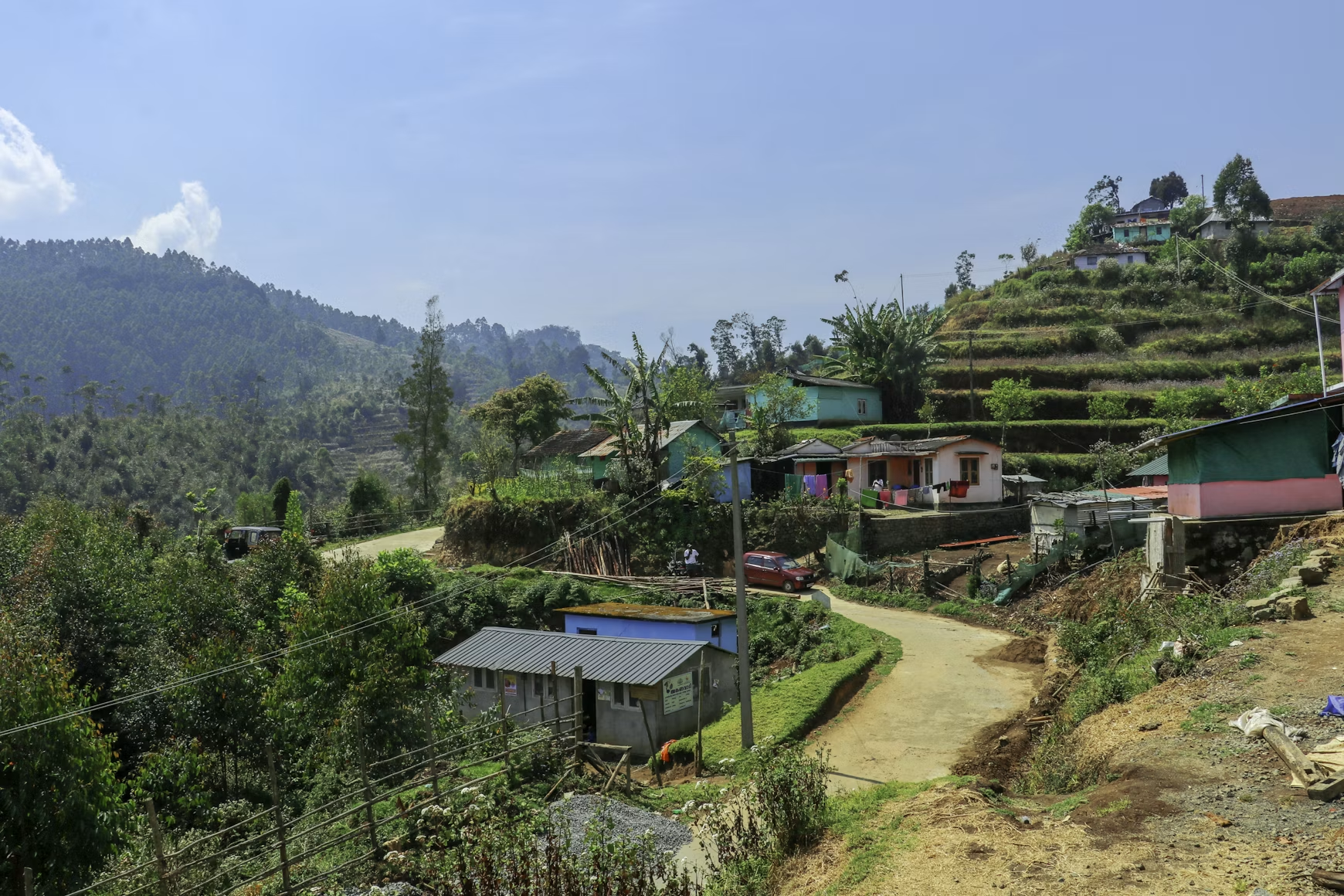
Munnar sits at the confluence of three mountain streams in the Idukki district of Kerala, at approximately 1,600 metres above sea level, and it is one of the most visually dramatic hill stations in India. The landscape of rolling hills, entirely covered in tea bushes, punctuated by forest-clad peaks, mist, and waterfalls, is unlike anything in the subcontinent. A proper Munnar travel guide needs to go beyond the top ten viewpoints, however, because the real Munnar is found in its working tea estates, its wildlife sanctuary, its market town, and the mountain roads that connect them. This guide covers it all.
Our Kerala travel guide and the best time to visit Kerala provide the wider planning context.
Munnar Travel Guide: Understanding Kerala’s Tea Heritage and Hill Station Charm
Munnar’s modern identity is shaped almost entirely by tea. The tea estates that now cover most of the hillsides were established by British planters in the late 19th century, initially by the Finlay Muir company, which eventually became Tata Tea (now Tata Consumer Products). Today, the estates are managed by several companies, with the distinctive dark-green rows of low tea bushes stretching across virtually every slope in view.
The town of Munnar itself is functional rather than pretty: a busy hill market town with a main bazaar, a concentration of hotels and shops catering to domestic tourists, and the logistical infrastructure of a regional centre. The best accommodation and most memorable experiences are found outside the town, in plantation-edge resorts and homestays that put you directly into the landscape.

Best places to visit in Munnar
Eravikulam National Park
Eravikulam National Park is Kerala’s first national park, declared in 1978, and it is one of the finest wildlife destinations in South India. Covering 97 square kilometres along the crest of the Western Ghats in the Idukki district, the park is home to the world’s largest population of the endangered Nilgiri tahr, a mountain goat species found only in this part of the Ghats. Anamudi, the highest peak in South India at 2,695 metres, rises within the park boundary.
The park is located approximately 8 kilometres from the town of Munnar. Visitors access the main area of the Rajamalai Hills via a shuttle bus from the entrance gate. The Nilgiri tahr are accustomed to human presence and can often be observed at close range on the grassland slopes. The park is closed during the Nilgiri tahr calving season, typically from February through April.
The park is also the site of the Neelakurinji (Strobilanthes kunthiana), a flowering plant that carpets the hillsides in vivid blue once every twelve years. The next bloom is due in 2030.
Mattupetty Dam
Mattupetty Dam, located 13 kilometres from Munnar town at an altitude of 1,700 metres, is a concrete arch gravity dam built in 1953 as part of the Pallivasal hydroelectric project. The dam creates a scenic reservoir set against the backdrop of tea-covered hills, with boating facilities available on the lake. Adjacent to the dam is the Indo-Swiss Livestock Project, established in 1963 as part of a bilateral agreement between India and Switzerland to improve cattle breeding in the region. The dairy farm, now managed by the Kerala Livestock Development and Milk Marketing Board, maintains a herd of high-quality cattle on the rolling lakeside meadows.

Top Station
Top Station is Munnar’s highest accessible viewpoint, located 35 kilometres from the town, at an elevation of approximately 1,700 metres above sea level. On clear days, the views from Top Station stretch across the valleys of the Western Ghats into Tamil Nadu, with the mist-covered ridges reaching as far as the eye can see. The road to Top Station, passing through Mattupetty and Echo Point, is one of the most scenic drives in Kerala.
Tea Museum and tea estates
The Tata Tea Museum (now the Tea Museum) near Munnar town is a well-organised introduction to the history of tea cultivation in the Munnar region, from the first plantation established in the 1870s to the current industrial-scale production. The museum houses original plantation machinery, photographs, and artefacts from the British planter era. A guided tour through a working tea factory to watch the withering, rolling, fermentation, and drying process is available at several estates around Munnar and is one of the most genuinely educational experiences the hill station offers.
Kolukkumalai tea estate
Kolukkumalai, approximately 38 kilometres from Munnar and accessible only by jeep over a steep, narrow track, is home to what is considered the world’s highest tea plantation at around 7,900 feet above sea level. The factory here, built in the 1930s, still processes leaves using traditional orthodox methods. Watching the sunrise above the clouds from Kolukkumalai is one of the most memorable experiences in Kerala. Our offbeat places in Kerala guide covers Kolukkumalai in detail.
Echo Point and Kundala Lake
Echo Point, about 15 kilometres from Munnar, sits on the banks of a serene lake and offers the natural phenomenon of an echo produced by the surrounding hills. Nearby Kundala Lake is the largest lake in Munnar and offers shikara (boat) rides on its still waters, surrounded by tea-covered hillsides. Both are peaceful stops along the Mattupetty-to-Top Station route.
Pothamedu Viewpoint
Pothamedu Viewpoint, about 6 kilometres from Munnar town, offers panoramic views across tea, coffee, and cardamom plantations in the valley below. It is a quieter, less crowded alternative to the more famous viewpoints and is best visited early in the morning, before the mist lifts.
Chinnar Wildlife Sanctuary
Chinnar Wildlife Sanctuary, located in the rain-shadow region of the Western Ghats about 60 kilometres from Munnar, is a less-visited but exceptionally interesting protected area. The sanctuary is notable for its dry, thorny scrub forest habitat, unusual in Kerala, and is home to the Grizzled Giant Squirrel (found nowhere else in Kerala), the Indian star tortoise, and mugger crocodiles. River trekking through the Chinnar River is one of the most distinctive activities available in the Munnar region.

Food and eating in Munnar
Munnar’s food culture is relatively simple compared to the coastal cities of Kerala, reflecting its character as a hill station and plantation town. The best meals are often found in the most unpretentious places.
Rapsy Restaurant in Mini Bazaar is the most consistently recommended local restaurant in Munnar, known for its beef fry, parotta, and a range of Kerala and international dishes. It is busy, casual, and represents good value. The morning puttu and kadala curry here is a solid start to a day in the hills.
Saravanaa Bhavan in Munnar offers reliable South Indian vegetarian food: dosas, idlis, and sambar prepared to the standards of this well-known national chain. It is the most dependable vegetarian option in the town.
KTDC Tea County Restaurant, part of the government-managed hotel complex, offers a comfortable setting with views across the valley and a menu of Kerala and Indian dishes. It is a safe and pleasant option for families or those seeking a more formal lunch setting.
Tea estates and plantation homestays across the Munnar region offer meals using ingredients sourced from the surrounding farms: fresh vegetables, eggs from the property, and spices grown in adjacent cardamom gardens. These meals, eaten at a table overlooking the tea-covered hillside, are consistently among the most memorable of a Munnar visit.
Cardamom tea and spice shopping: The bazaar in Munnar town has numerous stalls selling freshly packaged cardamom tea, black pepper, cinnamon, and other spices from the surrounding estates. The quality is generally very good and prices are reasonable.
For more on what to eat and where to eat, see our complete guide to places to eat in Munnar.

Local experiences in Munnar
Tea estate walks: Most plantation resorts and several independent operators offer morning guided walks through working tea estates, where knowledgeable guides explain the tea-making process, the ecology of the plantation, and the history of the British planter era. Walking through the tea rows in the early morning mist is a genuinely lovely experience.
Spice garden visits: Several cardamom and spice plantations near Munnar offer guided visits that explain the cultivation, harvesting, and processing of black pepper, cardamom, cinnamon, and nutmeg. The walks through these gardens are aromatic and informative.
Sunrise jeep trips to Kolukkumalai: Departing before dawn from Munnar, the jeep journey to Kolukkumalai for the sunrise above the clouds takes about 90 minutes each way and is one of the most sought-after experiences in the region.
Attukal and Lakkam Waterfalls: Several waterfalls in the hills around Munnar are accessible by road and a short walk. Attukal Waterfalls is one of the most accessible, about 9 kilometres from the town. The monsoon months significantly increase the volume and drama of the falls.
Plan your Munnar trip with us
Munnar rewards travellers who go beyond the viewpoints and spend time in the estates, the wildlife sanctuary, and the quieter corners of the hills. At Immersive Trips, we design Munnar stays that give you access to the best of the hill station without the crowds. Get in touch with our team or view our tour Kerala packages.
Frequently asked questions about visiting Munnar
How many days should I spend in Munnar?
Three to four days is ideal for a first visit. This gives time to explore Eravikulam National Park, drive to Mattupetty and Top Station, visit a working tea estate, and make the pre-dawn jeep trip to Kolukkumalai for the sunrise. Two days is the comfortable minimum.
What is the best time to visit Munnar?
October to March offers the most pleasant weather, with clear skies, cool temperatures, and excellent visibility for viewpoints. September and October, just after the monsoon, produce vivid green hillsides and full waterfalls. April and May are warm but manageable at altitude. The monsoon (June to August) makes some roads and viewpoints inaccessible but creates dramatic atmosphere.
Is Eravikulam National Park worth visiting?
Absolutely. The park offers the rare opportunity to observe the endangered Nilgiri tahr at close range in their natural habitat. The landscape of the Rajamalai Hills is itself spectacular. The park is closed during the calving season (typically February to April), so check opening status before planning.
What is the Neelakurinji and when does it bloom?
The Neelakurinji (Strobilanthes kunthiana) is a flowering plant that carpets the hillsides of the Western Ghats in vivid blue once every twelve years. The last bloom was in 2018. The next bloom is due in 2030. Eravikulam National Park and the surrounding hills are the best place to see it.
How do I get from Kochi to Munnar?
The drive from Kochi to Munnar takes approximately four hours (about 130 kilometres) and passes through progressively dramatic hill scenery. Taxis and hired cars are the most comfortable option. KSRTC buses also serve the route. The Attukal Waterfalls and Cheeyapara Waterfalls on the Kochi to Munnar road are worth a stop en route.
What are the best accommodation options in Munnar?
Properties outside the main town, set directly among the tea estates or in forested hillside locations, offer the most memorable Munnar experience. Tea estate homestays, plantation bungalows, and small boutique resorts with estate views are the strongest choices. Large hotels in the town centre are more convenient but less atmospheric.
Is Munnar suitable for elderly travellers?
Yes, with appropriate planning. The main viewpoints (Top Station, Echo Point, Mattupetty) are accessible by road and require minimal walking. The Eravikulam National Park shuttle bus reduces physical exertion. The cool climate is comfortable for most people and the roads, while winding, are generally well maintained.
What should I pack for Munnar?
Warm layers for evenings and early mornings, particularly between November and February when temperatures can drop to 10 degrees Celsius or below. Comfortable walking shoes for plantation walks. A light waterproof layer is useful year-round in the hills. Sunscreen for higher altitude daytime sun.
Can I see wildlife in Munnar besides the Nilgiri tahr?
Yes. Eravikulam National Park also has populations of wild Asian elephants, gaur (Indian bison), sambar deer, and lion-tailed macaques. Over 130 species of birds have been recorded in the park. Chinnar Wildlife Sanctuary, about 60 kilometres from Munnar, adds the Grizzled Giant Squirrel and Indian star tortoise to the wildlife list.
Is Munnar crowded?
The main town and the most popular viewpoints can be crowded during peak season (October to February) and on weekends throughout the year. The crowds are primarily domestic tourists. Arriving at viewpoints early in the morning significantly reduces congestion. Plantation walks and the Chinnar Sanctuary see far fewer visitors than the main Munnar circuit.