
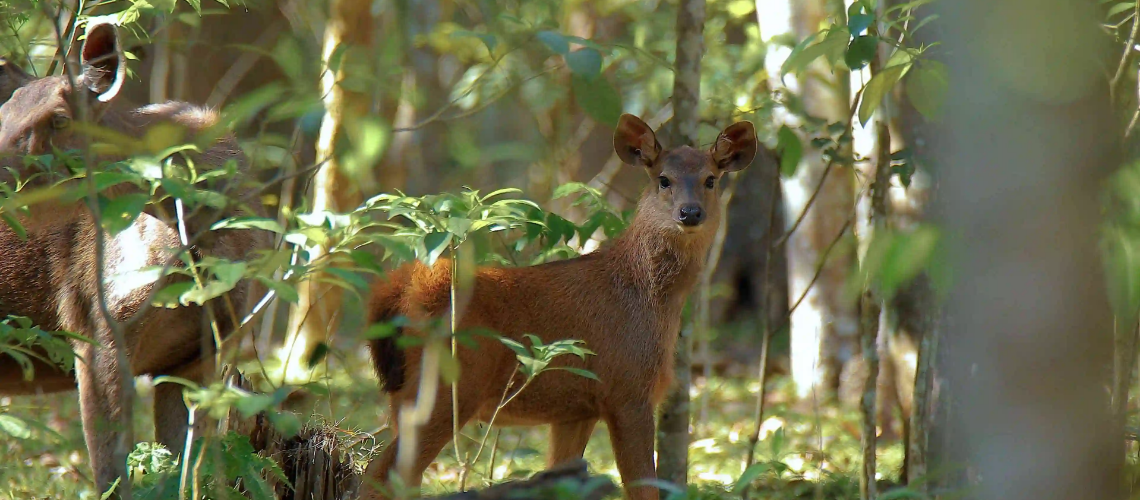
Kerala’s position along the Western Ghats, a UNESCO World Heritage mountain range and one of the world’s eight biodiversity hotspots, gives the state an exceptional concentration of protected wildlife areas within a relatively compact geography. Wildlife tours in Kerala range from gentle boat safaris spotting elephants from the water to multi-day forest treks in search of rare endemic species, and the variety of habitats, from tropical evergreen forest to high-altitude grassland to dry rain-shadow scrub, means the wildlife on offer is correspondingly diverse. This guide covers the major sanctuaries and national parks, what to expect, and how to plan a wildlife-focused itinerary in Kerala.
For broader trip planning, see our Kerala travel guide and our guides to Munnar and Wayanad, home to several of the state’s most significant wildlife areas.
Periyar Wildlife Sanctuary, Thekkady
Periyar Wildlife Sanctuary, surrounding the Periyar Lake near Thekkady in Idukki district, is one of the most visited and most accessible wildlife destinations in Kerala. Established as a tiger reserve, the sanctuary covers approximately 925 square kilometres of forest in the Cardamom Hills. The signature experience here is the Periyar Lake boat cruise, which allows visitors to observe wild elephants, gaur (Indian bison), sambar deer, and a range of bird species from the comfort and safety of a boat, often at close range as animals come to the water’s edge to drink.
Beyond the boat safari, Periyar offers guided bamboo rafting, border hiking trails along the edge of the core forest area, and the well-regarded Periyar Tiger Trail, a multi-day trekking programme run in partnership with former poachers who have been retrained as conservation guides, offering a particularly rich and informed perspective on the forest. Tiger sightings are rare given the dense forest cover, but the overall wildlife density and ease of access make Periyar an excellent introduction to Kerala’s protected areas.
Eravikulam National Park, Munnar
Eravikulam National Park, Kerala’s first national park (declared in 1978), covers 97 square kilometres along the crest of the Western Ghats near Munnar and is home to the world’s largest population of the endangered Nilgiri tahr, a mountain goat species found only in this part of the Ghats. The park also contains Anamudi Peak, the highest point in South India at 2,695 metres.
Access to the main visitor area, the Rajamalai Hills, is via a shuttle bus from the entrance gate, and the Nilgiri tahr here are notably accustomed to human presence, allowing closer observation than is typical in most wildlife reserves. The park also supports populations of elephants, gaur, and over 130 recorded bird species, though the tahr remains the primary draw. The park closes annually during the calving season, typically from February to April.
Wayanad Wildlife Sanctuary
The Wayanad Wildlife Sanctuary, comprising the Tholpetty section in the north and the Muthanga section in the south, covers over 344 square kilometres and forms part of the Nilgiri Biosphere Reserve, the largest protected area network in South Asia. The sanctuary is one of the most significant elephant corridors in India, bordering Karnataka’s Nagarhole National Park and Tamil Nadu’s Mudumalai Tiger Reserve, together forming a vast contiguous forest landscape that supports some of South India’s largest wild elephant populations.
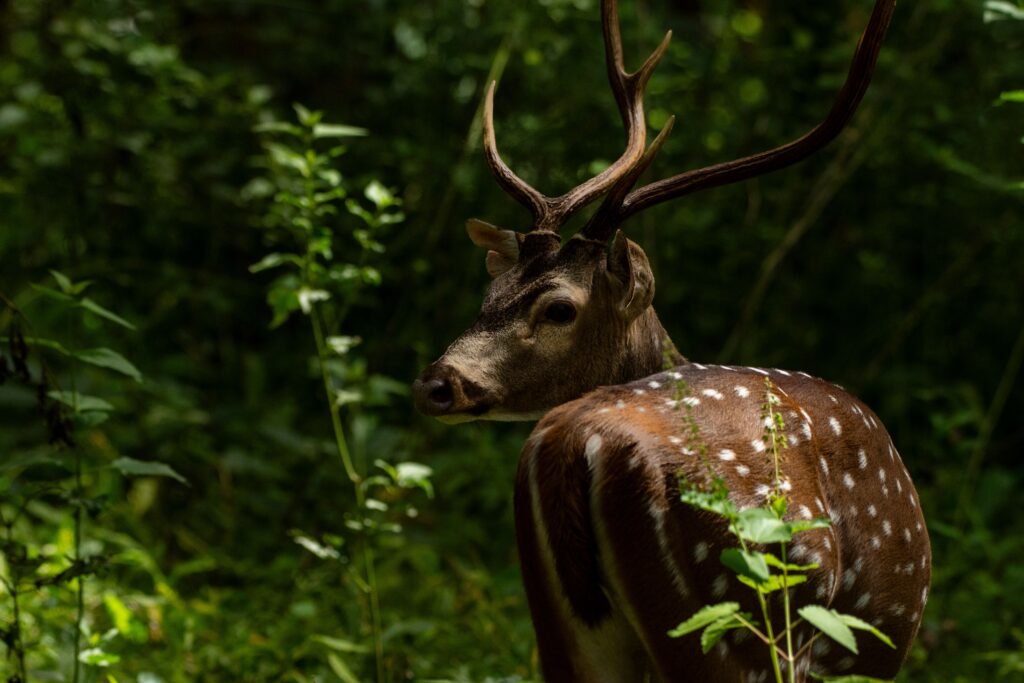
Jeep safaris at dawn and dusk through both sections offer a high probability of elephant sightings, along with gaur, sambar deer, spotted deer, Indian wild dogs (dholes), sloth bears, and leopards (rarely sighted). Over 200 bird species have been recorded, including the Malabar pied hornbill and the great Indian hornbill. Our Wayanad travel guide and things to do in Wayanad cover the sanctuary in further detail.
Silent Valley National Park
Silent Valley National Park, in the Palakkad district, is renowned for protecting one of the last remaining tracts of genuinely undisturbed tropical evergreen rainforest in the Western Ghats. The park escaped a major hydroelectric dam project in the 1970s and 1980s following one of India’s most significant environmental conservation campaigns, and this history of protection has preserved an exceptionally biodiverse ecosystem with minimal human disturbance.
Silent Valley is home to the lion-tailed macaque, one of the world’s most endangered primates, as well as Nilgiri langurs, tigers, leopards, and an extraordinary diversity of plant and insect life. Access is more restricted than at Periyar or Wayanad, with visitor numbers limited and guided treks required, which preserves both the ecological integrity of the park and the quality of the visitor experience for those who make the effort to visit.
Chinnar Wildlife Sanctuary
Chinnar Wildlife Sanctuary, near Munnar in the rain-shadow region of the Western Ghats, offers a distinctly different ecological experience from Kerala’s typically lush forest reserves: dry, thorny scrub forest more reminiscent of parts of peninsular India than the wet evergreen forest found elsewhere in the state. The sanctuary is home to the Grizzled Giant Squirrel, found nowhere else in Kerala, as well as Indian star tortoises, mugger crocodiles, leopards, and wild elephants. The river trekking programme through the Chinnar River, wading through shallow water with a forest guide while watching for crocodiles and birds, is one of the most distinctive wildlife activities available in the state.
Kumarakom Bird Sanctuary
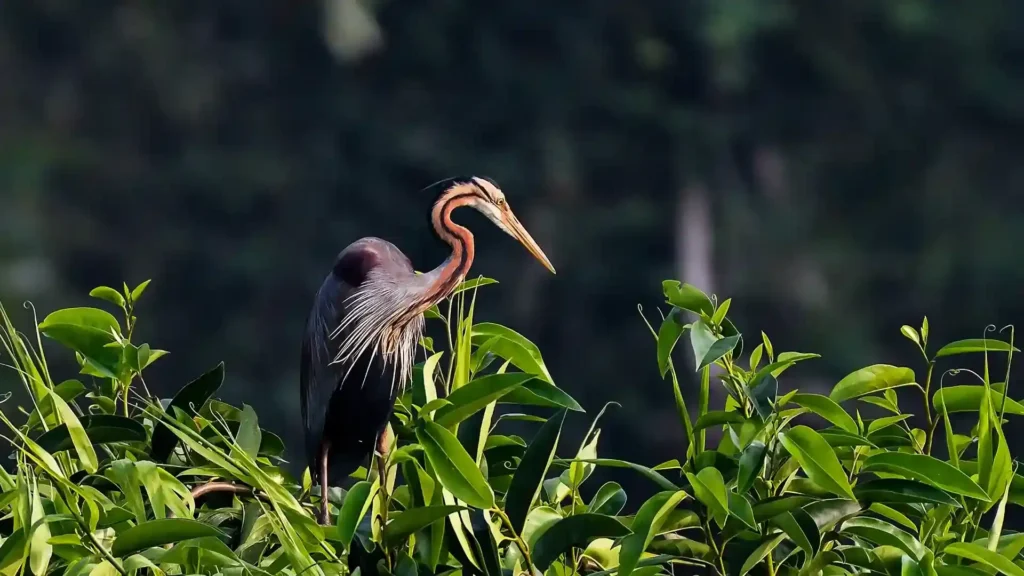
The Kumarakom Bird Sanctuary, on the eastern shore of Vembanad Lake, is Kerala’s most significant dedicated bird-watching destination. The sanctuary, a compact reed-and-mangrove reserve, attracts resident species including egrets, herons, and darters, along with migratory visitors during the November to February season, occasionally including rare species such as the Siberian crane. Boat-based bird watching tours through the sanctuary offer a calm and accessible introduction to Kerala’s avian diversity.
Parambikulam Tiger Reserve
Parambikulam Tiger Reserve, in the Palakkad district bordering Tamil Nadu, is one of Kerala’s lesser-known yet ecologically significant protected areas, combining dense forests with a large reservoir and offering jeep safaris, guided treks, and overnight stays in designated forest accommodation. The reserve is known for its tiger and elephant populations and offers a quieter, less commercialised wildlife experience than the more visited Periyar sanctuary.
Planning a wildlife tour in Kerala
Book jeep and boat safaris in advance. Periyar’s lake cruise tickets, Wayanad’s jeep safari slots, and Silent Valley’s restricted-entry permits should all be booked in advance, particularly during the October to February peak season.
Go early in the morning. Wildlife activity is highest in the early morning and late afternoon across all of Kerala’s sanctuaries. Arriving at the sanctuary gate before dawn gives the best chance of significant sightings.
Manage expectations on big cat sightings. Tiger and leopard sightings are possible but rare across all Kerala reserves, owing to the dense forest cover. Elephants, gaur, deer, and a wide range of birds are far more reliably seen and should be the primary expectation for most visitors.
Hire knowledgeable local guides. The quality of a wildlife safari depends heavily on the guide’s knowledge of animal behaviour and current movement patterns. Programmes like the Periyar Tiger Trail, which employs reformed poachers as guides, offer a particularly informed perspective.
Respect safety guidelines around elephants. Wild elephants encountered on safari or on forest roads should always be observed from a safe distance inside a vehicle. They are unpredictable and must never be approached on foot.
Plan your Kerala wildlife tour with us
At Immersive Trips, we know which sanctuaries suit which interests, how to time visits for the best wildlife activity, and how to combine wildlife experiences with the rest of a Kerala itinerary. Get in touch with our team or explore our Kerala tour packages.
Frequently asked questions about wildlife tours in Kerala
1. Which is the best wildlife sanctuary to visit in Kerala?
Periyar Wildlife Sanctuary in Thekkady is the most accessible and offers a reliably good wildlife experience through its lake boat safari. Eravikulam National Park in Munnar is best for guaranteed close encounters with the endangered Nilgiri tahr. Wayanad’s Tholpetty and Muthanga sanctuaries offer the highest probability of elephant sightings on a jeep safari.
2. Can I see tigers in Kerala?
Tigers are present in several Kerala reserves, including Periyar, Parambikulam, Wayanad, and Silent Valley, but sightings are rare given the dense forest cover typical of the Western Ghats. Visitors should approach a Kerala wildlife tour with the expectation of reliably seeing elephants, deer, gaur, and birds, with a tiger sighting as a rare bonus rather than a guaranteed outcome.
3. What is the best time of year for wildlife tours in Kerala?
October to March offers the most comfortable weather and the highest likelihood of good wildlife sightings, as animals tend to congregate near water sources during the drier months. The monsoon season (June to September) makes some areas inaccessible but produces a particularly lush forest environment.
4. Is the Periyar Lake boat safari worth doing?
Yes. It is one of the most accessible and consistently rewarding wildlife experiences in Kerala, offering close-range views of elephants, gaur, and deer from a safe vantage point on the water. Morning and afternoon cruises are both available, with morning generally offering the best wildlife activity.
5. What makes Silent Valley National Park different from other Kerala sanctuaries?
Silent Valley protects one of the last genuinely undisturbed tracts of tropical evergreen rainforest in the Western Ghats, having been saved from a major dam project following a landmark environmental campaign. It supports the endangered lion-tailed macaque and an exceptional diversity of plant and insect life, with more restricted access than Kerala’s other major sanctuaries, preserving both the ecology and the quality of the visitor experience.
6. Can I see elephants on a wildlife tour in Kerala?
Yes, elephants are the most reliably sighted large mammal across most of Kerala’s wildlife areas, particularly at Periyar, Wayanad (Tholpetty and Muthanga), and Chinnar. Sightings are common on both boat and jeep safaris, and wild elephant crossings on forest roads are regular occurrences in several districts.
7. What is the Periyar Tiger Trail?
The Periyar Tiger Trail is a multi-day trekking programme within Periyar Wildlife Sanctuary, run in partnership with reformed poachers who have been retrained as conservation guides. It offers a particularly informed and unusual perspective on the forest and its wildlife, combining trekking, camping, and a genuinely unique guiding history.
8. Is Chinnar Wildlife Sanctuary worth visiting alongside Eravikulam?
Yes, for travellers with sufficient time. Chinnar offers a completely different ecological experience from Eravikulam: dry, thorny scrub forest rather than high-altitude grassland, with the distinctive Grizzled Giant Squirrel and the unusual river trekking programme as highlights. The two parks complement each other well within a Munnar-based itinerary.
9. Do I need permits for wildlife safaris in Kerala?
Most standard jeep and boat safaris at Periyar and Wayanad can be booked directly at the sanctuary entrance, though advance booking is recommended during peak season. Access to Silent Valley National Park and certain restricted trekking routes elsewhere requires Forest Department permits arranged in advance.
10. How do I combine wildlife tours with the rest of a Kerala itinerary?
Periyar (Thekkady) sits naturally between Munnar and Alleppey on the classic Kerala circuit, making it easy to include without a significant detour. Wayanad and Silent Valley are best combined with a northern Kerala itinerary, alongside Kozhikode and Kannur. Most wildlife-focused stops require one to two nights to do justice to the available safaris and treks.