Rajasthan Travel Guide: Food, Culture & Experiences
Introduction
Rajasthan is often introduced through its forts and palaces, but that is only the surface. The real character of the state reveals itself slowly, in seasonal rhythms shaped by desert life, in food traditions born out of scarcity and ingenuity, and in everyday cultural practices that continue uninterrupted by tourism.
This Rajasthan travel guide looks beyond monument hopping. It is written for travellers who want to understand how people live, eat, celebrate, and adapt across landscapes that range from arid deserts to forested hills. From the food of Rajasthan, which relies on preservation and dairy, to immersive experiences in Rajasthan that connect travellers with local communities, this Rajasthan travel guide focuses on depth rather than checklists.
Understanding the state Before You Travel - A brief Rajasthan travel guide
Why Rajasthan Feels Different From Other Indian States
Rajasthan’s geography plays a defining role in how life unfolds. Large parts of the state lie within the Thar Desert, where water scarcity historically shaped architecture, agriculture, clothing, and cuisine. Towns developed around stepwells, trade routes, and fortified hills rather than rivers, giving Rajasthan a rhythm distinct from India’s fertile plains.
Layered onto this landscape is the Rajput legacy. Kingdoms once ruled independently, each developing its own court culture, military traditions, and artistic styles. This history explains why Rajasthan feels less uniform than many Indian states. Jaipur, Jodhpur, Udaipur, and Jaisalmer may share royal roots, but their cultural expressions, food habits, and built environments differ noticeably. In this Rajasthan travel guide, we explore these differences in depth, helping travellers appreciate why each region feels distinct despite shared royal roots.
Regions of Rajasthan at a Glance
A well-planned Rajasthan travel guide treats the state as a collection of distinct regions rather than a single destination, each shaped by its landscape, history, and way of life. Geography plays a central role in how settlements developed, how people adapted, and how cultural traditions evolved, making regional understanding essential to experiencing Rajasthan meaningfully.
The desert belt in western Rajasthan includes towns such as Jaisalmer and Barmer, where sand dunes, camel culture, and seasonal festivals define life shaped by arid conditions and extreme climates. Running diagonally across the state, the Aravalli range influences cities like Jaipur, Ajmer, and Udaipur, creating greener terrain and historically strategic locations for forts and trade routes. In the south, lake and forest zones around Udaipur, Mount Abu, and the tribal belt introduce lakes, forests, and wildlife into the landscape, offering a softer counterpoint to the desert imagery most commonly associated with Rajasthan.
Food of Rajasthan – A Cuisine Shaped by the Desert
The
food of Rajasthan is deeply practical, shaped by limited water, harsh summers, and the need to preserve ingredients for long periods. What emerges is a cuisine that is rich, bold, and surprisingly varied, relying on technique as much as flavour.
What Defines Rajasthani Cuisine
Preservation lies at the heart of Rajasthani cooking. Drying, pickling, and slow cooking allowed food to last through seasons of scarcity. This explains the frequent use of dried beans, berries, and lentils. Ghee and dairy are central ingredients, not just for flavour but for sustenance. Meals are designed to be filling and energy-rich, reflecting the demands of desert life.
Vegetarian dishes dominate most households, influenced by climate and religious practices. Select meat dishes exist, often cooked intensely with spices, and were historically reserved for royalty or special occasions.
Iconic Vegetarian Dishes
Dal Baati Churma is perhaps the most recognisable Rajasthani dish. Hard-baked wheat balls are paired with lentils and finished with ghee and crushed, sweetened bread, offering a balanced mix of textures and flavours.
Gatte ki Sabzi uses gram flour dumplings cooked in a tangy yoghurt-based gravy. It is a dish born entirely from pantry staples, requiring no fresh vegetables.
Ker Sangri reflects desert ingenuity at its finest. Made from dried desert beans and berries, it delivers sharp, earthy flavours that are unlike most Indian vegetable preparations.
Signature Non-Vegetarian Dishes
Laal Maas stands out as Rajasthan’s most famous meat dish. Traditionally cooked with mutton and fiery chillies, it reflects both the hunting culture of Rajput courts and the need for robust flavours.
Regional meat preparations vary by region, often shaped by local availability and spice blends, and are best enjoyed in small towns rather than in hotel restaurants.
Rajasthani Sweets and Festive Specialities
Ghewar is closely tied to festivals and seasonal celebrations. Crisp, honeycombed, and soaked in syrup, it appears prominently during monsoons and weddings.
Mawa Kachori from Jodhpur combines crisp pastry with a rich, milk-based filling, showcasing Rajasthan’s love for indulgent desserts despite its austere landscape.
Where to Experience Authentic Rajasthani Food
Cultural villages bring regional cooking traditions to life by pairing food with folk music, crafts, and performances, while street food hubs in cities like Jaipur and Jodhpur show how traditional flavours adapt to modern urban rhythms through freshly prepared snacks and sweets.
For travellers seeking deeper connection, our Rajasthan travel guide highlights food-focused experiences that explore local markets, home kitchens, and regional recipes alongside local hosts. Skipping this food story means missing how climate, scarcity, and survival have shaped everyday life across the state.
Culture and Heritage of Rajasthan from our Rajasthan travel guide
A well-rounded Rajasthan travel guide looks at this living heritage not as a museum display, but as something travellers actively encounter through people, rituals, and daily life. Rajasthan’s cultural identity is not frozen in the past. It lives on in rituals, architecture, festivals, and everyday practices that continue to shape how people inhabit the land. Heritage here is not only preserved but also experienced, making Rajasthan one of India’s most culturally immersive regions.
Rajputana Legacy and Fort Culture
The forts of Rajasthan were never meant to be silent monuments. Built as strategic strongholds, royal residences, and centres of administration, they once governed trade routes, defended kingdoms, and hosted elaborate courtly life. Even today, many forts remain active cultural spaces, hosting festivals, ceremonies, and community events. Our Rajasthan travel guide covers it all.
Several of these fort complexes form part of the UNESCO-listed Hill Forts of Rajasthan, including Amber, Chittorgarh, Kumbhalgarh, Jaisalmer, and Mehrangarh. Each reflects a different regional adaptation to terrain, climate, and political ambition, offering insight into how Rajput rulers shaped architecture around defence, water management, and symbolism rather than ornament alone. Understanding these forts as living systems rather than static landmarks is essential to any Rajasthan travel guide that aims to go beyond surface-level sightseeing.
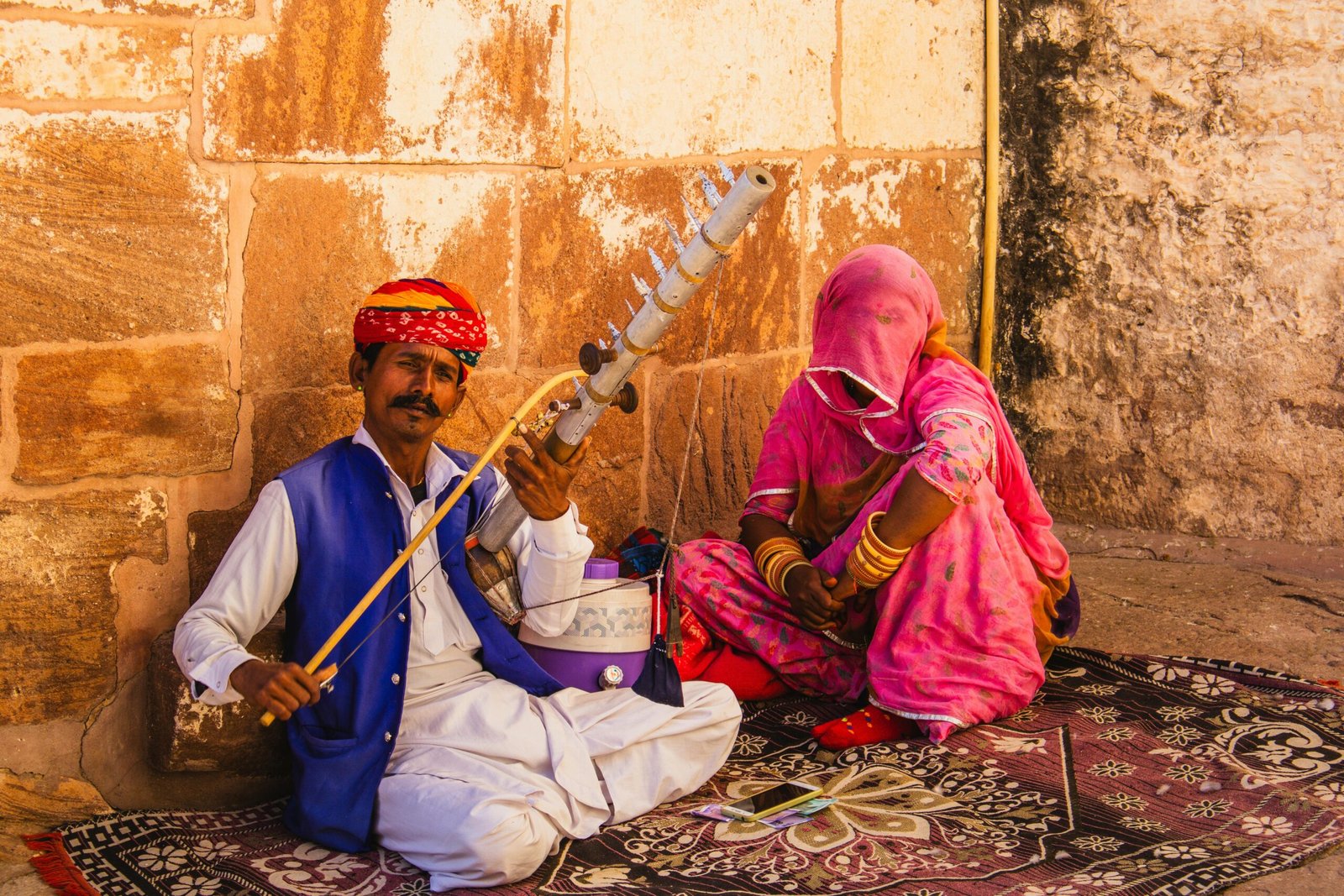
Folk Arts, Music, and Dance Traditions
Rajasthan’s folk traditions are closely tied to storytelling. Performances were historically a way to preserve history, celebrate seasons, and pass on social values. A thoughtful Rajasthan travel guide pays close attention to this festival calendar, as timing often shapes the cultural depth of a visit more than destinations alone.
Ghoomar, often performed during festivals and weddings, originated in Bhil communities and was later adopted by royal courts. Its circular movements and layered skirts echo themes of grace and continuity.
The Kalbeliya dance is performed by the Kalbeliya community, traditionally associated with snake charming. Fast footwork and fluid movements reflect desert life and nomadic rhythms.
Puppetry remains one of Rajasthan’s most accessible storytelling forms. Wooden puppets, music, and humour bring epics, local legends, and moral tales to life, especially in village settings.
Festivals That Define Rajasthan’s Calendar
Festivals in Rajasthan are deeply seasonal and community-driven. They mark agricultural cycles, monsoons, harvests, and religious devotion rather than serving purely as spectacles.
The Jaisalmer Desert Festival transforms the dunes into a cultural stage, featuring camel competitions, folk performances, and desert rituals.
Teej celebrates the monsoon and marital devotion, particularly in Jaipur, where processions and temple rituals dominate the city.
Gangaur honours Goddess Gauri and reflects women’s cultural participation through songs, fasting, and public celebrations.
The Kumbhalgarh Festival blends history and performance, using the fort as a backdrop for music, dance, and heritage showcases.
Village Life and Artistic Traditions
Away from cities, Rajasthan’s villages preserve artistic traditions shaped by geography and caste-based craft systems.
Shekhawati towns are known for their painted havelis, where frescoes narrate stories of trade, mythology, and colonial influence.
Craft clusters specialise in textiles, pottery, metalwork, and leather, often passed down through generations.
Tribal communities in southern Rajasthan bring distinct musical styles, rituals, and visual art forms, adding another layer to the state’s cultural diversity.
Things to Do in Rajasthan Beyond Sightseeing from our Rajasthan travel guide
In any Rajasthan travel guide that prioritises meaningful travel, the most rewarding things to do in Rajasthan involve participation rather than observation. While forts and palaces dominate first-time itineraries, the most meaningful things to do in Rajasthan involve participation rather than observation. Experiences here are rooted in landscape, tradition, and everyday life.
Desert Experiences
Camel safaris from our Rajasthan travel guide remain one of the most iconic ways to understand desert life, offering slow journeys across dunes and rural settlements.
Desert camping introduces travellers to night skies, silence, and local hospitality, often accompanied by traditional meals.
Folk performances under the stars bring music and dance back to their natural setting, far removed from formal stages.
Wildlife and Nature Encounters
Rajasthan’s natural diversity is often overlooked. Ranthambore offers tiger safaris within a dramatic landscape of lakes, ruins, and forests, blending wildlife with history.
Elsewhere, forest and lake ecosystems in southern Rajasthan support birdlife, tribal communities, and seasonal agriculture, offering a quieter contrast to the desert regions.
Adventure and Active Experiences
Adventure in Rajasthan is shaped by terrain rather than adrenaline alone. Zip-lining across forts offers aerial views of historic landscapes.
Hot air ballooning over cities like Jaipur reveals the scale and planning of royal towns from above.
Jeep safaris and dune bashing provide access to remote desert areas while showcasing how modern adventure adapts to traditional environments.
Slow Travel and Cultural Walks
Heritage walks in old cities reveal layered neighbourhoods, stepwells, temples, and markets that monuments alone cannot explain.
Temple towns offer insight into ritual life and pilgrimage culture, especially in the early mornings and on festival days.
Market explorations connect travellers with local trade, seasonal produce, and everyday social exchange.
Offbeat Places in Rajasthan Worth Exploring
Rajasthan rewards those who step away from established routes. Offbeat places in Rajasthan offer quieter landscapes, stronger local interaction, and stories that feel personal rather than packaged. Any Rajasthan travel guide that looks beyond headline destinations will point travellers toward these quieter regions, where the experience feels more personal and unfiltered.
Shekhawati and Painted Towns
Mandawa is known for its fort and frescoed havelis, reflecting the wealth of merchant families who once controlled regional trade.
Mahansar offers a more intimate experience, with gold leaf frescoes and heritage homes that retain their original character.
Desert Mysteries and Forgotten Settlements
Kuldhara village stands abandoned near Jaisalmer, surrounded by folklore and unanswered questions. Visiting it provides a glimpse into rural desert planning and community life that once thrived here.
Lesser-Visited Cultural Regions
Bundi retains a quiet charm, with an unconquered fort and stepwells woven into daily life.
Barmer reflects western Rajasthan’s folk traditions, crafts, and desert festivals away from heavy tourism.
Banswara introduces tribal culture and greener landscapes, shaped by hills and seasonal water bodies.
Kuchaman combines palace architecture with small-town rhythms, offering heritage without crowds.
Deeper cultural access comes through conversations, shared meals, and unhurried exploration, making offbeat Rajasthan ideal for travellers seeking authenticity over familiarity. For many seasoned travellers, this slower, more grounded way of exploring forms the most rewarding chapters of a Rajasthan travel guide.
Best Time to Visit Rajasthan
Choosing the best time to visit Rajasthan directly affects comfort, access, and the kinds of experiences possible. Climate here is not a minor detail. It shapes festivals, daily routines, and how much of the state you can realistically explore. A practical Rajasthan travel guide treats timing as central to the journey, as seasons here influence not just weather but access, pace, and cultural immersion.
Winter Season (October to March)
As per each Rajasthan travel guide, winter is the most popular and practical season for travelling across Rajasthan. Daytime temperatures remain pleasant, making it ideal for fort explorations, walking tours, desert safaris, and outdoor dining. Evenings can be cool, especially in desert regions, but conditions remain comfortable for most travellers.
This season also coincides with Rajasthan’s festival calendar. Cultural events, desert festivals, and temple celebrations bring towns and villages to life, offering rich opportunities for travellers interested in photography, music, and local traditions.
Summer Season (April to June)
Summer in Rajasthan is intense, particularly in desert regions where temperatures can rise sharply. Outdoor sightseeing during the day can be challenging, and travel requires careful pacing.
This season suits travellers who are heat-tolerant, interested in quieter attractions, or focused on forested and hill regions such as Mount Abu. Wildlife enthusiasts may also consider this period, as animals gather near water sources, increasing chances of sightings.
Monsoon Season (July to September)
Monsoon transforms Rajasthan in unexpected ways. Landscapes turn greener, lakes fill, and southern regions appear lush. However, humidity increases, and travel can be affected by uneven rainfall.
The advantage of monsoon travel lies in fewer crowds and a softer visual palette. The downside includes occasional disruptions and limited desert activities. This season suits slow travellers who value atmosphere over extensive sightseeing.
Suggested Rajasthan Itinerary (7–10 Days)
A well-paced itinerary allows Rajasthan to unfold gradually, balancing cities, landscapes, and cultural experiences without rushing. A well-structured Rajasthan travel guide focuses on pacing just as much as destinations, helping travellers experience the state without fatigue or overload.
Classic Rajasthan Circuit
Experience-Led Extensions
Ranthambore adds wildlife encounters and forest landscapes to the itinerary.
Mount Abu offers relief from the heat and showcases Rajasthan’s hill-station ecology.
Offbeat additions can be woven in to replace or supplement major cities, depending on interests. These choices allow deeper engagement with local life, food traditions, and lesser-known cultural regions.
This flexibility is central to a Rajasthan travel guide that prioritises personal interests over fixed routes.
Practical Travel Tips for Rajasthan
Thoughtful planning makes a significant difference in Rajasthan, where distances are large and conditions vary sharply by season. A reliable Rajasthan travel guide treats logistics and seasonal planning as essential parts of the journey, not afterthoughts.
Getting There and Getting Around
Major cities like Jaipur, Udaipur, and Jodhpur are well-connected by flights. Trains remain a reliable and scenic option for intercity travel.
Private drivers are often the most efficient way to navigate multi-city routes, offering flexibility and comfort, especially in rural and desert areas.
Accommodation Planning
Heritage hotels provide a distinctive way to experience Rajasthan’s architectural legacy, often housed in former palaces or havelis.
Booking seasons matter. Accommodation fills quickly between October and March, particularly around festivals, making advance planning essential.
Cultural Etiquette and Local Awareness
Modest dress is appreciated at temples and in rural areas. Photography should always be respectful, especially during rituals or in village settings.
Engaging politely and patiently with locals enhances travel experiences and opens doors to genuine interactions.
Final Thoughts – Experiencing Rajasthan Beyond the Obvious
Rajasthan is not a destination to be consumed quickly. Its depth lies in small moments, shared meals, quiet villages, and landscapes shaped by centuries of adaptation. Travellers who slow down, listen, and engage will find that Rajasthan offers far more than grandeur. It offers understanding, continuity, and stories that linger long after the journey ends.
At
Immersive Trips, travel is designed around these deeper connections. Our thoughtfully curated
India tour packages focus on cultural immersion, local experiences, and unhurried journeys focus on cultural immersion, local experiences, and unhurried journeys that allow Rajasthan to reveal itself gradually. This Rajasthan travel guide reflects the same philosophy, travelling beyond checklists, with curiosity, respect, and time to truly experience the destination.
Frequently Asked Questions