
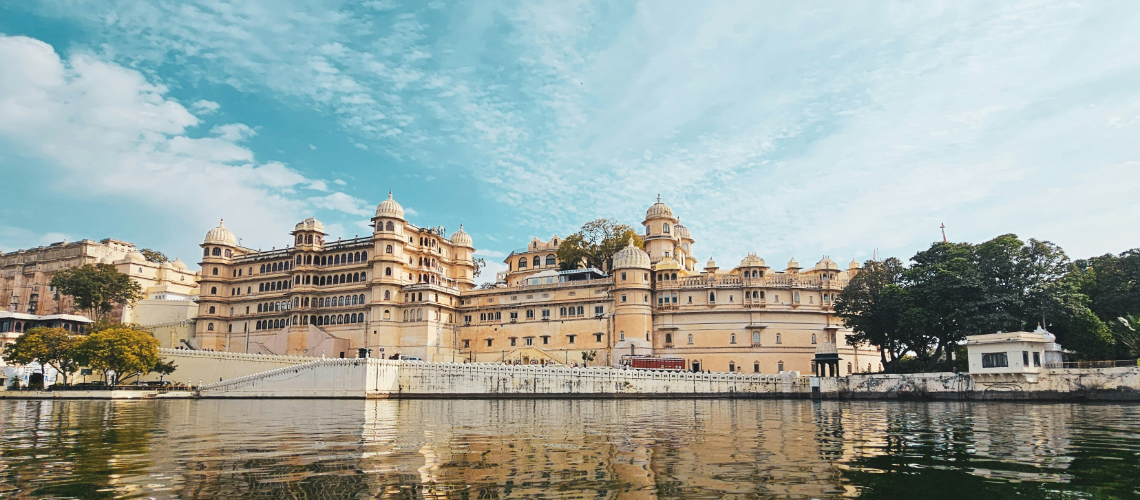
The places to visit in Udaipur span one of the most beautiful urban landscapes in India: the largest palace complex in Rajasthan, marble island palaces that appear to float on shimmering lakes, tranquil royal gardens, ancient temples, and hilltop palaces with panoramic views. Founded in 1559 as the capital of the Mewar kingdom, Udaipur weaves water, architecture, and the green Aravalli hills into a single extraordinary picture. This guide covers every significant place worth visiting, with the historical context and practical details you need to plan your time in the City of Lakes.
For activity ideas and trip planning, see our things to do in Udaipur and Udaipur travel guide.
City Palace
The City Palace of Udaipur is the crown jewel of the city and the largest palace complex in Rajasthan. Built over several centuries by successive rulers of the Mewar dynasty on the banks of Lake Pichola, it is an enormous complex of eleven interconnected palaces, linked by mazelike passageways and courtyards. The architecture blends Mughal and Rajput styles, with intricate mirror work, marble courtyards, mosaics, wall paintings, and panoramic terraces.
The museum within displays royal artefacts, weapons, costumes, and preserved rooms reflecting centuries of Mewar heritage, while the Crystal Gallery houses a remarkable collection of crystal furniture and artefacts once owned by the Maharana. The views of Lake Pichola from the palace balconies are among the most beautiful in India, especially in the early morning light. Allow three to four hours, and start early to avoid the crowds.
Lake Pichola
Lake Pichola, the heart of Udaipur, is one of the oldest and largest lakes in the city, surrounded by grand palaces, temples, and ancient ghats. The lake, which lent the city its identity as the Venice of the East, is home to the island palaces of Jag Niwas (the Lake Palace) and Jag Mandir. A boat ride on the lake, particularly at sunset, is the essential Udaipur experience, offering breathtaking views of the palaces and the City Palace reflected in the water. Boats depart from Rameshwar Ghat and Lal Ghat near the City Palace.
Lake Palace (Taj Lake Palace)
The Lake Palace, originally built as Jag Niwas between 1743 and 1746 as a royal summer retreat, is a masterpiece of white marble that appears to float ethereally on Lake Pichola. Accessible only by boat, it has been transformed into one of the most romantic luxury hotels in the world, operated by the Taj Group. While reserved for its guests, it can be admired from a boat ride on the lake, and its ivory-white facade reflected in the shimmering water is one of the iconic images of India.
Jag Mandir
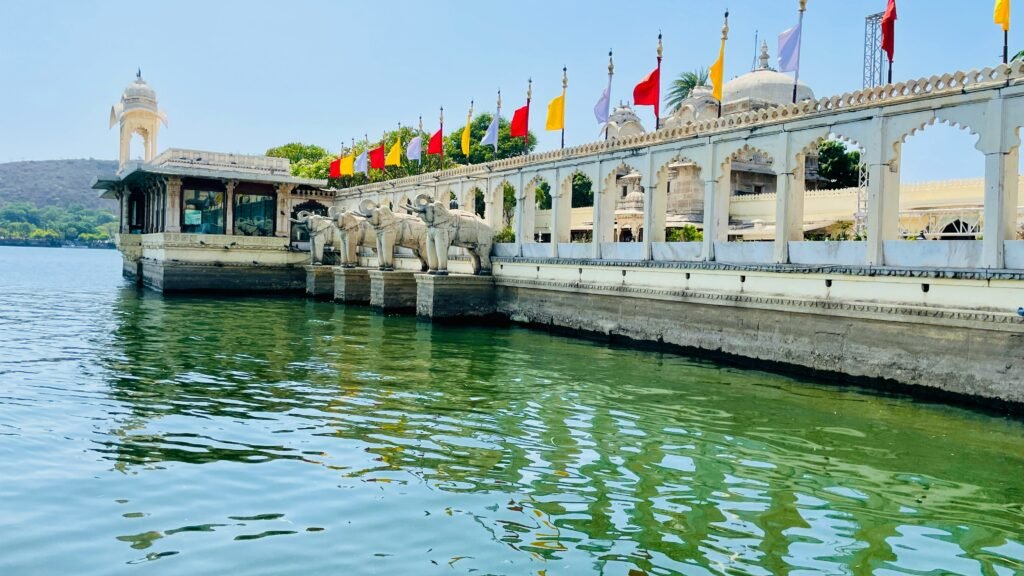
Jag Mandir, the island palace on Lake Pichola also known as the Lake Garden Palace, was built by the Mewar Maharanas between 1620 and 1652. It served as a royal summer retreat and party venue, and famously sheltered the exiled Mughal prince Khurram (later Emperor Shah Jahan), who is said to have drawn inspiration from it for the Taj Mahal. Accessible by boat, the palace features marble elephants, ornate courtyards, lakeside gardens, and a peaceful, floating perspective on the city. A meal or drink at the island restaurant is a memorable experience.
Jagdish Temple
The Jagdish Temple, in the heart of the old city near the City Palace, is a magnificent Indo-Aryan temple built in 1651 by Maharana Jagat Singh, dedicated to Lord Vishnu. This three-storey structure is renowned for its intricately carved bell roof, columns, and exterior sculptures, and remains an active place of worship where regular devotional singing adds to the atmosphere. It is one of the most important and beautiful temples in Udaipur.
Saheliyon Ki Bari
Saheliyon Ki Bari (Garden of the Maidens), built in the 18th century by Maharana Sangram Singh II for the royal ladies of the court, is a tranquil garden of fountains, lotus pools, marble pavilions, kiosks, and marble elephants. The fountains operate using an ingenious ancient hydraulic system powered by gravity, requiring no pumps. It is a peaceful, green oasis and a perfect place to relax after visiting the palaces, particularly beautiful just after the monsoon when the greenery is lush.
Monsoon Palace (Sajjangarh)
The Monsoon Palace (Sajjangarh), built in 1884 by Maharana Sajjan Singh on a hilltop about 10 kilometres from the city, offers the most breathtaking panoramic views over Udaipur, its lakes, and the surrounding Aravalli hills. Originally planned as an astronomical centre and later used as a monsoon retreat and hunting lodge, it is a striking sight on the Udaipur skyline and is at its most spectacular at sunset. It appeared in the James Bond film Octopussy. The surrounding Sajjangarh Wildlife Sanctuary adds to the experience.
Fateh Sagar Lake
Fateh Sagar Lake, to the north of Lake Pichola and connected to it by a canal, was built in 1678 and expanded in 1888. This artificial lake, bordered by hills and woodlands, is loved for its breezy promenade, its islands (including Nehru Island), and the Udaipur Solar Observatory (the only island observatory in India). It is a favourite spot for a relaxed lakeside walk, cycle, or cafe stop.
Bagore Ki Haveli
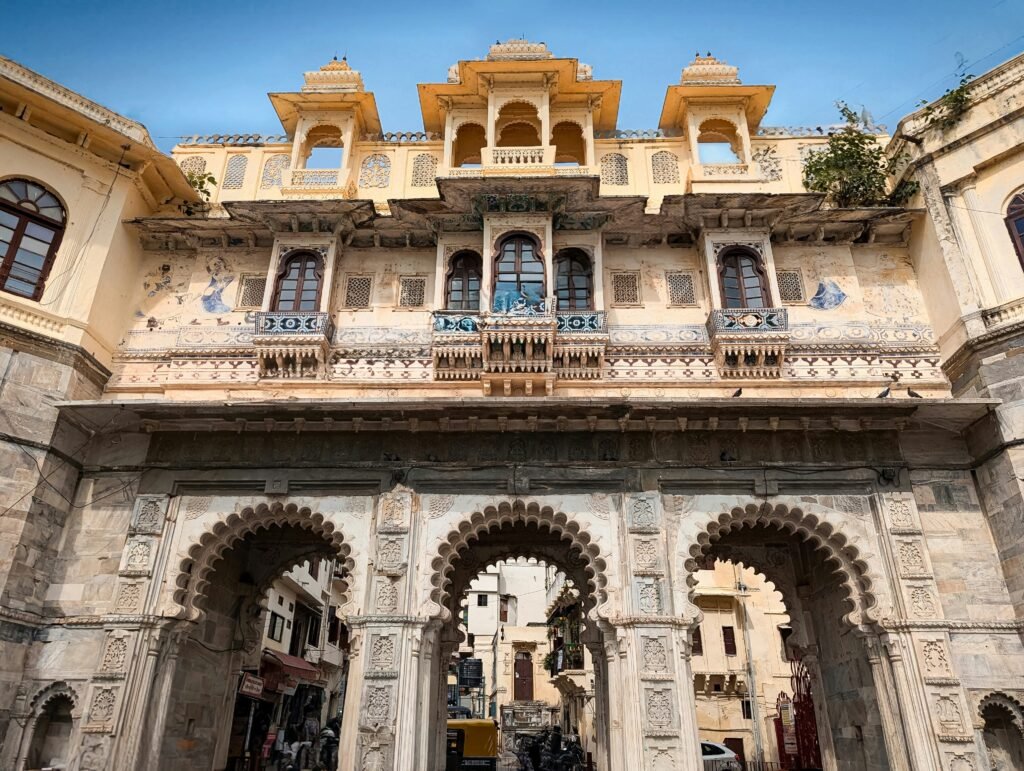
Bagore Ki Haveli, an 18th-century mansion at Gangaur Ghat on the shore of Lake Pichola, was built by the Prime Minister of Mewar and has over a hundred rooms displaying costumes, art, and traditional haveli architecture with glass and mirror work. It hosts the nightly Dharohar cultural show of folk dances and puppetry, one of the best cultural performances in Udaipur.
Shilpgram
Shilpgram, a rural arts and crafts complex about 7 kilometres west of the city near Fateh Sagar Lake, is spread over 70 acres and conceived as a living museum showcasing the traditional architecture, crafts, and lifestyles of the folk and tribal communities of western India. Craft demonstrations, shopping, and the annual December Shilpgram Festival make it a rewarding cultural stop.
Day trips: Kumbhalgarh, Ranakpur, and Chittorgarh
Udaipur is the ideal base for some of Rajasthan’s most spectacular sights. Kumbhalgarh Fort, with its 36-kilometre wall (the second longest in the world), and the Ranakpur Jain Temple (a marble masterpiece of 1,444 carved pillars) can be combined in a single day trip. Chittorgarh Fort, one of the largest forts in India and steeped in Rajput history, is another rewarding excursion. Our offbeat places in Rajasthan guide covers these sights.
Plan your Udaipur visit with us
At Immersive Trips, we help travellers experience the best of Udaipur’s beauty, from its palaces and lakes to its gardens, temples, and spectacular day trips. Get in touch with our team to plan your City of Lakes visit.
Frequently asked questions about places to visit in Udaipur
What is the most important place to visit in Udaipur?
The City Palace, the largest palace complex in Rajasthan, is the most important land-based sight, with its eleven interconnected palaces, mirror work, Crystal Gallery, and stunning views over Lake Pichola. Lake Pichola itself, experienced on a sunset boat ride, is the essential overall experience.
Can I visit the island palaces on Lake Pichola?
Jag Mandir island palace can be visited by boat and offers marble elephants, gardens, and a restaurant. The Lake Palace (Taj Lake Palace) is now a luxury hotel reserved for its guests and cannot generally be visited by non-residents, but it can be admired from a boat ride on the lake.
How much time do I need to see Udaipur’s main sights?
Two to three days allow you to see the main sights comfortably: the City Palace, a Lake Pichola boat ride, Jag Mandir, the Jagdish Temple, Saheliyon Ki Bari, the Monsoon Palace, Fateh Sagar Lake, and Bagore Ki Haveli, plus an optional day trip to Kumbhalgarh and Ranakpur.
What is special about Jag Mandir?
Jag Mandir is a 17th-century island palace on Lake Pichola that famously sheltered the exiled Mughal prince Khurram (later Emperor Shah Jahan) and is said to have inspired elements of the Taj Mahal. Its marble elephants, ornate courtyards, and lakeside gardens, accessible by boat, offer a peaceful and beautiful perspective on the city.
Is the Monsoon Palace worth visiting?
Yes, particularly at sunset. The Monsoon Palace (Sajjangarh), on a hilltop about 10 kilometres from the city, offers the most breathtaking panoramic views over Udaipur, its lakes, and the Aravalli hills. It is one of the best viewpoints in the city and featured in the James Bond film Octopussy.
What is Saheliyon Ki Bari?
Saheliyon Ki Bari (Garden of the Maidens) is an 18th-century garden built for the royal ladies of the Mewar court, featuring fountains, lotus pools, marble pavilions, and marble elephants. Its fountains operate using an ingenious gravity-powered hydraulic system. It is a peaceful, green oasis, ideal for a relaxed break between monument visits.
What day trips can I take from Udaipur?
The best day trip combines Kumbhalgarh Fort (with its 36-kilometre wall, the second longest in the world) and the Ranakpur Jain Temple (a marble masterpiece of 1,444 carved pillars), which can be seen together in a single day. Chittorgarh Fort is another rewarding excursion for those interested in Rajput history.
Which temple should I visit in Udaipur?
The Jagdish Temple, in the heart of the old city near the City Palace, is the most important and beautiful temple in Udaipur. Built in 1651 and dedicated to Lord Vishnu, it is renowned for its intricately carved bell roof and columns, and remains an active place of worship with regular devotional singing.
Is Fateh Sagar Lake worth visiting?
Yes, particularly for a relaxed lakeside experience. Fateh Sagar Lake, connected to Lake Pichola, is loved for its breezy promenade, its islands, and its lakeside cafes. A morning walk or cycle along the promenade, with a coffee at one of the cafes, is one of the most pleasant low-key experiences in Udaipur.
What is the best time to visit Udaipur’s sights?
October to March offers the most comfortable weather for sightseeing. The City Palace is best visited early in the morning for the best light and fewest crowds, and the Monsoon Palace and Ambrai Ghat are best at sunset. Uniquely, Udaipur is also beautiful during the monsoon (July to September), when the lakes fill and the hills turn green.