
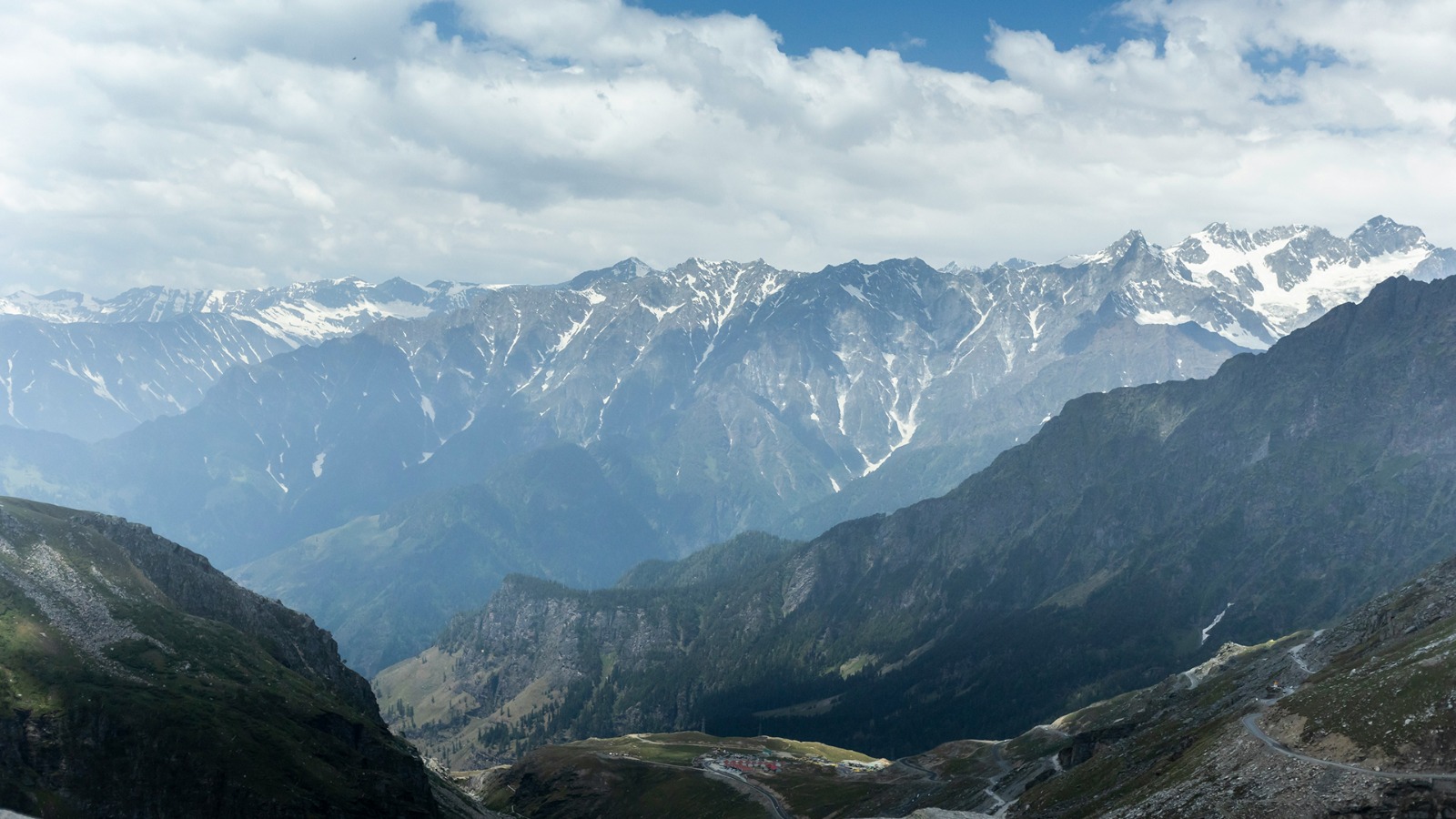
Few Himalayan circuits manage to pack a planned city, a colonial hill station and a snow-country valley into six days without the schedule feeling rushed, and this shimla manali tour package does it by keeping the geography simple. The loop starts and ends in Chandigarh, climbs first to Manali for two nights, then crosses to Shimla for two more, before returning to Chandigarh for departure. This piece walks through what each stop involves and how the route is structured.
What This Shimla Manali Tour Package Covers
Five nights, six days, three cities. Day 1 lands in Chandigarh with the evening free for the city’s planned gardens. Day 2 is a full driving day north to Manali. Day 3 stays in Manali for the Atal Tunnel and Solang Valley excursion. Day 4 crosses over to Shimla. Day 5 is a full day in Shimla itself. Day 6 returns to Chandigarh for departure. Transport is sized to the group, running from a small air-conditioned car for two travellers up to a Tempo Traveller or mini-bus for larger parties, and hotels are booked in advance at each of the three stops with breakfast and dinner included.
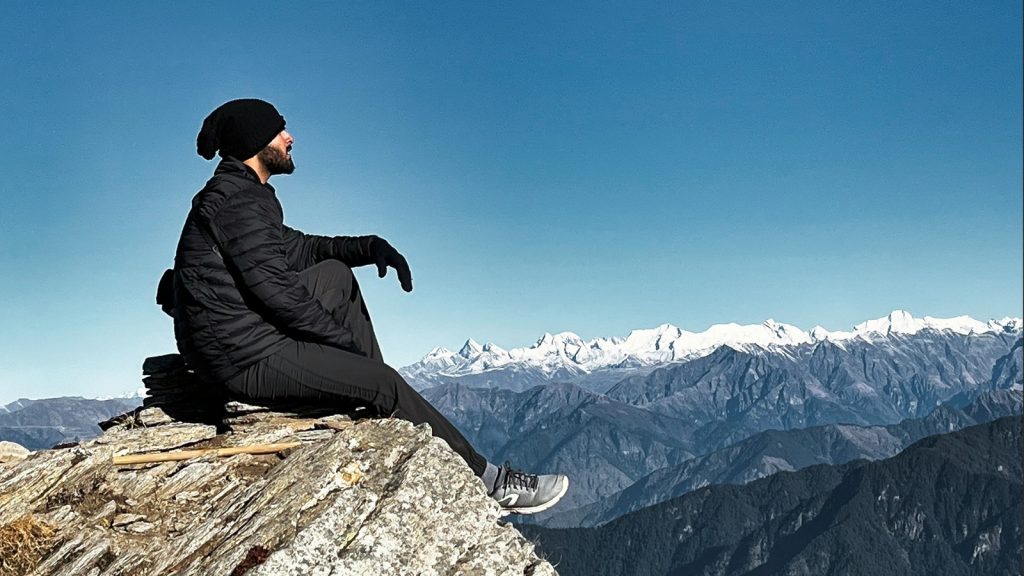
The route order matters here. Climbing to Manali first and coming down through Shimla on the way back means the trip gains altitude steadily and does not zig-zag between the two hill stations, which keeps the driving days more manageable than a route that bounces back and forth.
Chandigarh, Where the Trip Begins and Ends
Chandigarh bookends the trip on both sides, and the city itself is worth more than a passing glance given the chance. Designed in the 1950s by Le Corbusier as independent India’s first fully planned city, Chandigarh remains unusual among Indian cities for its wide sector grid and deliberate use of open space. The Rock Garden Chandigarh, built secretly over nearly two decades by government employee Nek Chand out of industrial waste, broken ceramics and discarded bangles, has grown into one of India’s most visited sculpture gardens and sits alongside.
Sukhna Lake, an artificial lake at the foot of the Shivalik hills that draws locals for evening walks. The Rose Garden, one of Asia’s larger rose gardens by area, rounds out the city sightseeing where the schedule allows.Return visitors to Rock Garden Chandigarh on Day 6 sometimes find a second look changes the impression entirely, since the scale of Nek Chand’s sculptures across the site is difficult to take in fully on a single pass, and the return journey gives a natural window for it if the earlier visit was brief.
The Drive North to Manali
Day 2 covers the full drive from Chandigarh to Manali, a stretch that runs alongside the Beas river for a good part of the way and climbs steadily through Kullu district before the final approach into the valley. The drive typically takes the better part of a day, and the changing scenery, from Punjab’s plains to the pine-covered slopes around Kullu, is as much a part of the day as the destination.
Manali, the Atal Tunnel and Solang Valley
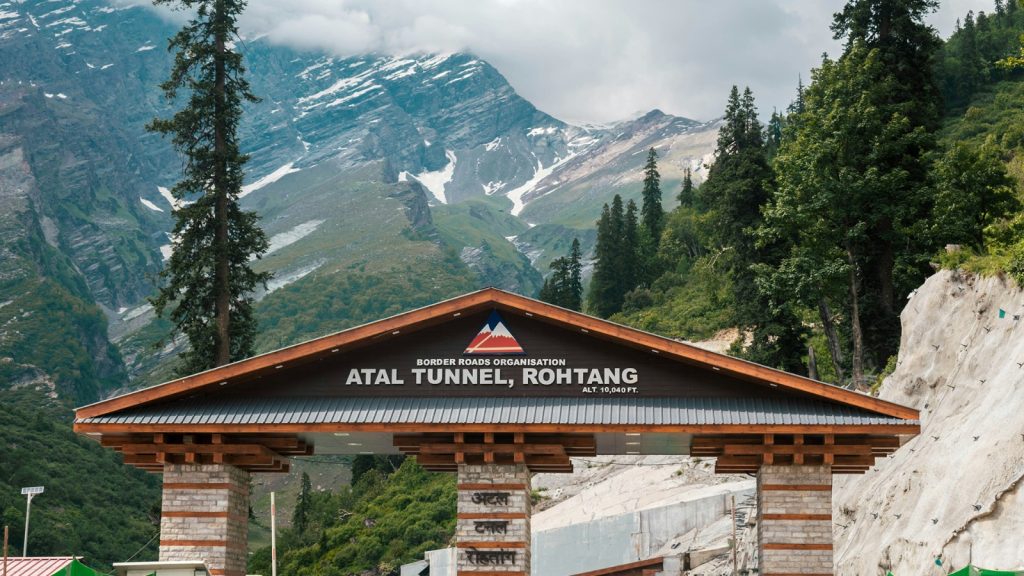
Day 3 is built around the Atal Tunnel and Solang Valley, and the pairing works well together. The Atal Tunnel, running under the Pir Panjal range and opened in 2020, cuts the journey to Lahaul dramatically and sits at a lower altitude than the Rohtang Pass crossing it was built to bypass, which makes it a more comfortable option than the older high-altitude route for most travellers. Solang Valley, a short distance from Manali on the same road, is the valley’s main hub for snow activities in winter and paragliding, zorbing and cable car rides through the warmer months.
Manali town itself holds several stops worth the walk. Hidimba Temple, built in 1553 in a distinctive wooden pagoda style and dedicated to Hidimba Devi from the Mahabharata, sits inside a cedar forest that keeps it cool even in summer. Manu Temple, dedicated to the sage Manu and traditionally linked to the old village of Old Manali, is one of the few temples in India built for this particular figure from Hindu tradition.
Vashisht Kund, a short drive across the river, centres on natural hot sulphur springs that have drawn visitors for their believed therapeutic properties for generations. The Tibetan Buddhist monastery in town, built by the resettled Tibetan community, and the Kullu shawl factory, where the valley’s long weaving tradition is demonstrated firsthand, both fit naturally into a half-day around the main stops.
The Journey to Shimla
Day 4 crosses from Manali to Shimla, a drive that trades the high valley scenery of Kullu for the greener, more forested terrain around the old Anglo-Indian hill stations. The road passes through Mandi and climbs back up into Himachal’s central hill belt before reaching Shimla’s ridge-top setting.
Shimla, the Former Summer Capital
Shimla served as the summer capital of British India for over a century, and the town’s layout still carries that history in its promenades and timber-framed buildings. Christ Church, consecrated in 1857 and one of the oldest churches in North India, anchors the eastern end of The Ridge, the open pedestrian space that has served as Shimla’s social centre since colonial times. Scandal Point, at the junction where The Ridge joins Shimla Mall Road, takes its name from a colonial-era rumour involving a Maharaja and a British woman, and remains the town’s busiest meeting point today.
Shimla Mall Road itself runs the length of the town centre, closed to private vehicles and lined with shops, cafes and the old colonial-era buildings that give Shimla its particular character. A short ride on the Kalka-Shimla toy train, the narrow-gauge railway that UNESCO listed as a World Heritage Site in 2008, is included as part of the Shimla stay, passing through some of the line’s 102 tunnels on a track built by the British between 1898 and 1903.
Food Along the Route
Meals shift with the altitude and the local produce on this route. Chandigarh and the drive through Punjab lean toward wheat-based North Indian staples, tandoori breads and dairy-heavy dishes built around the region’s farming base. Himachali cooking in both Manali and Shimla takes a different turn, with dishes such as siddu, a steamed wheat bun stuffed with poppy seed or walnut paste, and dham, a festive thali built around lentils, rice and yoghurt-based curries cooked with minimal oil to suit the mountain climate. Apple orchards line much of the approach to both hill stations, and roadside stalls selling fresh and dried apple products are a regular feature of the Manali to Shimla drive in season.
Why This Route Works as a Shimla Manali Tour Package
Plenty of operators run some version of Chandigarh, Manali and Shimla. What sets a well-built shimla manali tour package apart from a rushed version is whether Manali and Shimla each get two full nights and are not reduced to overnight stops squeezed between drives. This itinerary gives both hill stations that time, which means the Atal Tunnel excursion in Manali and the Shimla town circuit both get a full day each and neither is compressed into arrival-afternoon sightseeing.
Best Time to Take This Route
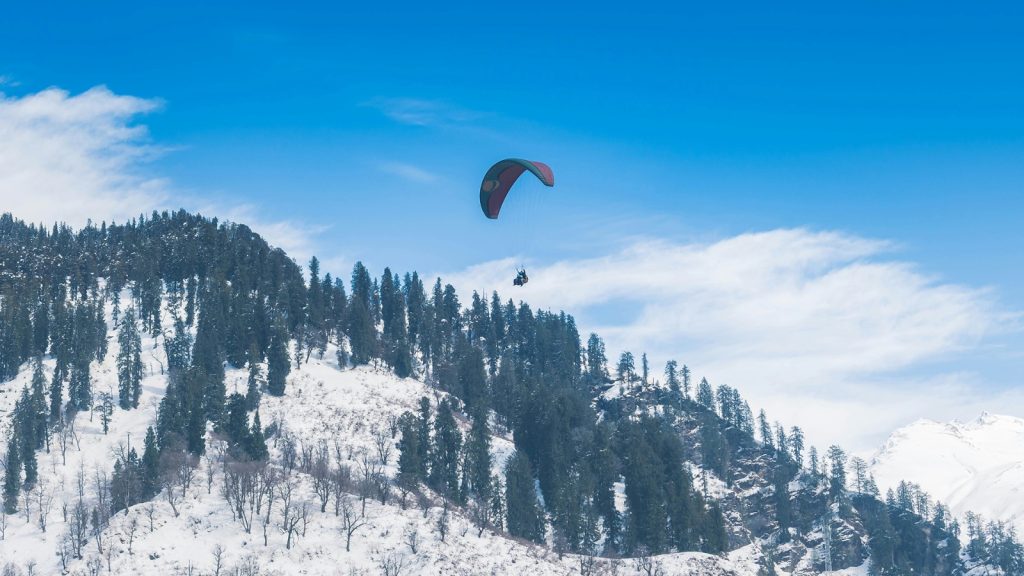
March through June gives the most comfortable travelling weather, with Manali still cool enough for the Solang Valley excursion and Shimla settling into pleasant spring and early-summer temperatures. September through November brings clear mountain air and fewer crowds than the peak summer season, though nights turn cold earlier in Manali than in Shimla. December through February brings snow to both hill stations, which suits travellers specifically chasing snowfall but adds cold-weather planning to the trip, and the monsoon months from July to August bring landslide risk on the hill roads that can affect the Chandigarh-Manali and Manali-Shimla driving days.
Planning the Trip
Group departures on this route run through the travel season with batch sizes capped at 12 to 15 travellers, and private departures can be arranged for smaller or larger parties on request. The full day-by-day breakdown and current departure dates sit on the route’s own page, which is the fastest way to check availability for a given month. Specific questions about hotel categories, vehicle sizing for a particular group, or adjusting the split between the Manali and Shimla nights are best directed straight to the Immersive Trips team at info@immersivetrips.in or 98219 94800.
Frequently Asked Questions
How many nights are spent in each city?
One night in Chandigarh at the start, two nights in Manali, two nights in Shimla, and the final night’s stay is skipped in favour of departure from Chandigarh on Day 6 after the drive down.
Is the Rohtang Pass part of this route?
No. The Manali excursion runs through the Atal Tunnel instead, which sits at a lower altitude and avoids the permit requirements and higher-altitude conditions that come with the Rohtang Pass crossing.
Is the toy train ride the full Kalka to Shimla journey?
No. A shorter joyride segment is included during the Shimla stay in place of the full multi-hour Kalka to Shimla run, which better suits a group itinerary on a fixed schedule.
What kind of vehicle is used for the drives?
Transport is sized to the group, ranging from a small air-conditioned car for two travellers to an Innova for four to six, up to a Tempo Traveller or mini-bus for larger parties of eight to ten.
Which meals are included?
Breakfast and dinner are included at each hotel across all five nights, typically served buffet-style with fixed timings at the hotel restaurant or coffee shop.
Does the itinerary include Kufri?
No, Kufri is not part of this particular route. The Shimla stay centres on the town itself, including Christ Church, The Ridge, Scandal Point and Shimla Mall Road, alongside the toy train ride.