
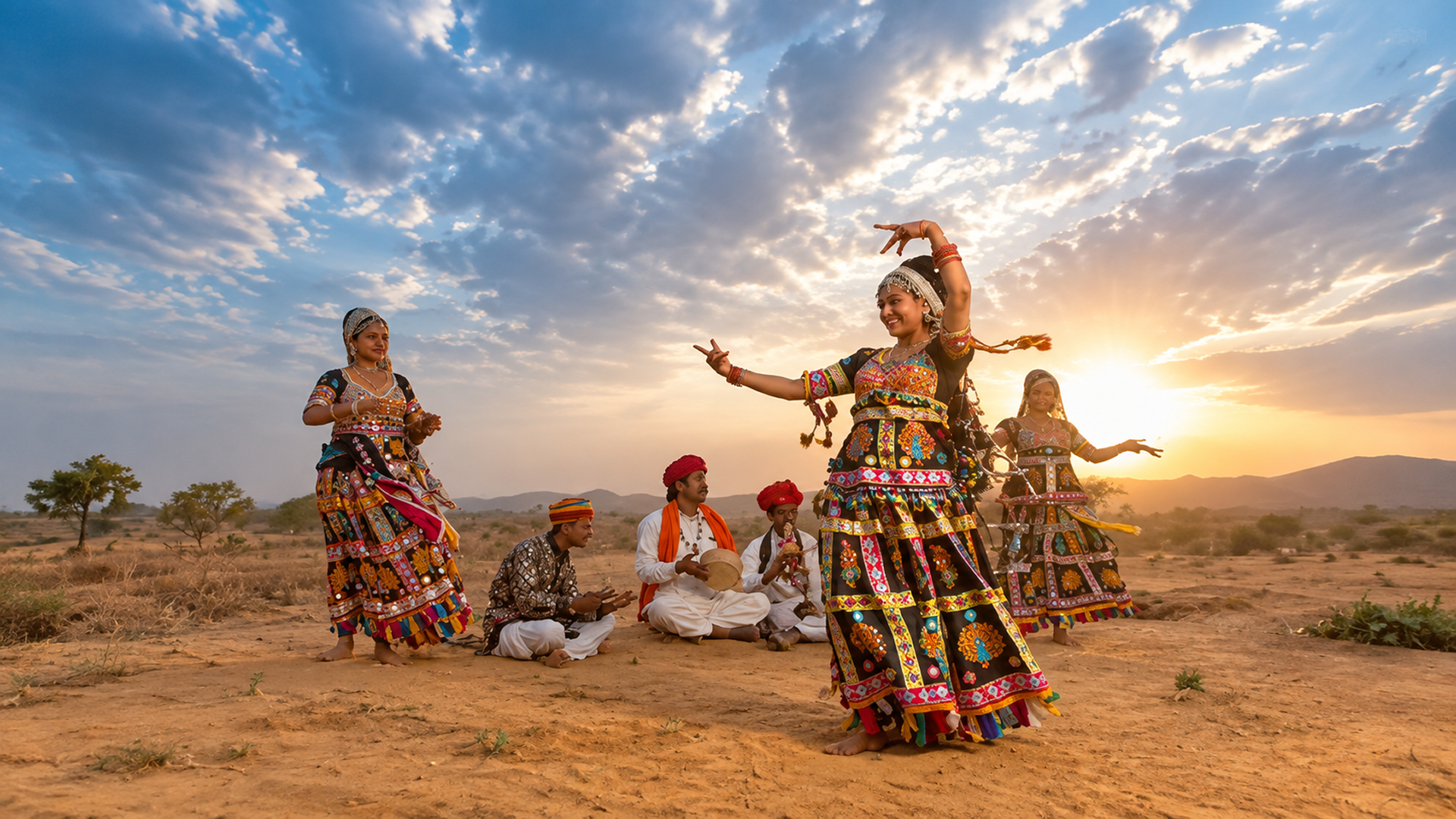
Gujarat rarely gets the same first-visit attention as Rajasthan next door, though the two states share a fair bit of the same historical thread and diverge in interesting ways once looked at more closely. Among Gujarat tour packages built to cover the state properly, the Jewels of Gujarat tour from Immersive Trips runs across twelve days and gives roughly equal time to the places to visit in Ahmedabad, a Little Rann of Kutch safari, a Dwarka Somnath temple tour along the Saurashtra coast and the modern icons around Kevadia. Prices start from ₹71,200 per person and that figure reflects the ground the trip covers, not a compressed weekend version of the same idea.
For anyone comparing Gujarat tour packages, this piece walks through what each stop involves, why the sequence works the way it does and who tends to book this particular route.
What the Jewels of Gujarat Route Covers
The route runs as a long loop starting and finishing in Ahmedabad, which keeps arrival and departure flights simple. From Ahmedabad, the road turns north-west to Bajana on the edge of the Little Rann, then further west to Bhuj for two nights and a day given over to the Banni grasslands. From Bhuj, the route drops south to Dwarka on the western coast for two nights, continues along the coast to Somnath via Porbandar, and then swings back east through Bhavnagar and Lothal on the way to Vadodara.
Kevadia and the Statue of Unity fill the final full day before the drive back to Ahmedabad. Twelve days sound like a lot on paper, and they are, though the geography of Gujarat is spread out enough that a shorter version would end up feeling like a highlight reel of long drives with brief stops at the end.
Accommodation stays consistent through the trip, with 3-star hotels booked in advance at every stop, and meals are handled on a bed, breakfast and dinner basis at most places, with lunch added in Bajana given the remote setting of the tented camp there. Private transport runs across the whole route in an air-conditioned vehicle sized to the group, and one open shared jeep safari at the Little Rann is built in as standard. That consistency across every stop is what separates well-planned Gujarat tour packages from routes stitched together on the fly.
Places to Visit in Ahmedabad, Where the Journey Starts
Ahmedabad opens the trip with two full nights, which is worth noting since a lot of Gujarat itineraries treat the city as a single arrival day. Places to visit in Ahmedabad on this section usually include the old walled city and its pols, the tightly packed traditional residential quarters that have earned Ahmedabad its UNESCO World Heritage City status, along with the Sidi Saiyyed Mosque and its famous stone lattice window, one of the most photographed pieces of Indo-Islamic craftsmanship in western India.
The Ahmedabad heritage walk, run each morning through the old town, gives the clearest single introduction to how the city has layered temples, mosques, havelis and community squares across the same tight grid of streets over roughly six hundred years.
For anyone building a list of places to visit in Ahmedabad beyond the heritage walk, Kankaria Lake and the Sabarmati riverfront give a look at the city’s more contemporary side, and the drive out toward Modhera and Rani ki Vav on a following day starts to introduce the wider Solanki-era heritage that Gujarat is quietly known for among architecture-focused travellers.
Modhera and Rani ki Vav, the Solanki-Era Wonders

Modhera Sun Temple and Rani ki Vav sit north of Ahmedabad and are covered as excursions on this route. Both date to the Solanki dynasty of the eleventh century, and both rank among Gujarat’s most significant heritage sites. The Sun Temple at Modhera was built so that the first rays of the equinox sun fall directly on the presiding deity, an alignment that speaks to the astronomical and religious sophistication of the era. Rani ki Vav, an intricately carved stepwell in Patan, was added to UNESCO’s World Heritage list in 2014 and is easily the most photographed stepwell in India, with seven levels of sculpted panels descending toward the water below.
Bajana and the Little Rann of Kutch Safari
Bajana sits on the edge of the Little Rann, an area of salt-encrusted flats and grassland that dries and floods with the seasons. The one shared jeep safari built into the itinerary here targets the Indian Wild Ass Sanctuary, the only place in the world where the Indian wild ass, known locally as the khur, still survives in the wild. A Little Rann of Kutch safari also gives strong chances of sighting nilgai, blackbuck, desert foxes, and large flocks of flamingos, cranes and pelicans that use the seasonal wetlands as a wintering ground.
The tented camp at Bajana handles all meals given the remote setting, and the pre-dawn safari start times mean the day here runs to a different clock than the rest of the trip.

A Little Rann of Kutch safari also gives a first look at the salt-panning that has driven the local economy for generations, with the Agariya community working the flats through the drier months in a way that has changed remarkably little in living memory.
Bhuj and the Banni Villages
Bhuj, the old capital of Kutch, gets two nights, with one full day given over to an excursion into the Banni grasslands north of the town. Banni is home to a scatter of small villages inhabited by the Meghwal, Ahir, Rabari and Jat communities, each with their own distinct embroidery, mirror work, and leather craft traditions passed down through the women of the community. The circular thatched bhungas built here were designed for the region’s earthquakes and seasonal winds, and the visit gives an increasingly rare look at a craft economy still operating close to how it did a century ago.
Bhuj itself carries deep scars from the 2001 earthquake but has rebuilt around its old palaces and city walls, and the town’s markets remain one of the best places in the state to shop for Kutchi textiles directly from makers.
Dwarka and Bet Dwarka

The drive south-west from Bhuj to Dwarka is one of the longer legs on the route, and the two nights at Dwarka give proper time to explore what is arguably western India’s most significant Krishna pilgrimage site. Dwarkadhish Temple, believed to have been founded around 2,500 years ago on the site of Krishna’s ancient city, is one of the four Char Dham sites and draws pilgrims throughout the year. Bet Dwarka, an island a short boat ride offshore, is traditionally identified as Krishna’s residential quarter and fills a second full day of temple visits and coastal drives.
Porbandar and the Dwarka Somnath Temple Tour
The Dwarka Somnath temple tour continues along the coast on Day 8, taking the road south through Porbandar, best known as the birthplace of Mahatma Gandhi and home to Kirti Mandir, the memorial built at his ancestral house. Somnath itself sits on the Arabian Sea coast and holds one of Shiva’s twelve Jyotirlingas, and its temple has been destroyed and rebuilt several times across a thousand years of contested history, with the current temple completed in 1951.
The evening arti at Somnath, held with the sea directly behind the temple, is regularly cited as the most atmospheric of the twelve Jyotirlinga sites, and this Dwarka Somnath temple tour section is a large part of why the Jewels of Gujarat route holds appeal for pilgrimage-focused travellers alongside general visitors.
Bhavnagar, Lothal and the Route to Vadodara
From Somnath, the route turns north-east through Bhavnagar for an overnight stop before continuing to Vadodara via Lothal, the Harappan port city excavated in the 1950s that pushed the accepted timeline of Indian civilization back by roughly a millennium. Lothal’s dockyard remains one of the most complete pieces of Indus Valley engineering yet found, and the small on-site museum gives the context to understand the broader Harappan network. Vadodara, the Gaekwad-ruled princely capital that later became one of India’s major industrial cities, provides the base for the following day’s excursion to Kevadia.
Kevadia and the Statue of Unity
Day 11 is given entirely to Kevadia, roughly 90 kilometres from Vadodara on the Narmada River. The Statue of Unity, at 182 metres the tallest statue in the world since its inauguration in 2018, honours Sardar Vallabhbhai Patel, India’s first Deputy Prime Minister and the man credited with integrating over 500 princely states into the union after independence.
The complex around it includes a viewing gallery inside the statue’s chest, a museum, and the surrounding Sardar Sarovar Dam, one of the largest dams in the world by structural volume. It is a very different register of sightseeing to the temples and stepwells of the earlier days, and the pairing is part of what makes this route feel comprehensive and not single-note.
Why This Sits Among the Stronger Gujarat Tour Packages
Plenty of gujarat tour packages cover Ahmedabad and Kutch, or Dwarka and Somnath, in isolation. Fewer stitch the state together across its heritage, wildlife, pilgrimage, and modern elements in a single trip, and this is where the twelve-day frame earns its length. A shorter route ends up dropping either the Saurashtra coast or the Statue of Unity, and the two together are what give this itinerary its coherence, since both speak to distinct chapters in Gujarat’s identity that a heritage-only or pilgrimage-only trip would miss.
Best Time to Take This Route
Most Gujarat tour packages run between November and February, and for good reason. November through February gives the most comfortable conditions across the whole route, with cooler days along the coast and lower humidity through the Little Rann. Wildlife sightings on a Little Rann of Kutch safari peak between December and February, when the seasonal wetlands hold the largest flocks of migratory birds, and Somnath’s coastal setting suits the same window.
March and April bring heat that makes the sightseeing days more demanding, particularly around Ahmedabad and Vadodara, and the monsoon months from June to September affect road conditions in the salt-flat areas more than the temple stops themselves.
Booking the Jewels of Gujarat Tour With Immersive Trips
Immersive Trips runs this route as a fixed twelve-day itinerary with private transport, hotel bookings, meal plans, and the Little Rann safari handled as one arrangement. As one of the more comprehensive gujarat tour packages currently available, this one earns its place through the sheer range of stops covered in a single trip. Current departure dates, hotel options, and any adjustments to the base itinerary are listed on the Jewels of Gujarat tour page, where the trip can be booked directly, and the team can be reached for a tailored quote or questions before booking.
Immersive Trips also designs customized India tours, so the Gujarat route can be extended into Rajasthan or trimmed to fit a shorter trip.
Frequently Asked Questions
How long does the Jewels of Gujarat tour take?
The tour runs for twelve days and eleven nights, starting and finishing in Ahmedabad and covering Bajana, Bhuj, Dwarka, Somnath, Bhavnagar, Vadodara and Kevadia.
What does the ₹71,200 starting price include?
Accommodation across eleven nights in 3-star hotels, private air-conditioned transport, meals on a bed, breakfast and dinner basis at most stops with all meals in Bajana, and one shared jeep safari at the Little Rann of Kutch.
When is the best time to take this trip?
November to February gives the most comfortable weather and the strongest wildlife sightings at the Little Rann. March to May brings heat, and the monsoon months affect the salt-flat sections.
Is the Statue of Unity included in this itinerary?
Yes. Day 11 is given entirely to a full-day excursion to Kevadia, covering the Statue of Unity and the surrounding Sardar Sarovar Dam complex.
Is a Dwarka Somnath temple tour included?
Yes. The route includes two nights at Dwarka, covering Dwarkadhish Temple and Bet Dwarka island, and one night at Somnath for the Jyotirlinga temple.
Which Gujarat tour packages cover Kutch, Dwarka and Somnath together?
The Jewels of Gujarat tour is one of the few Gujarat tour packages that links Ahmedabad, the Little Rann, Bhuj and the Banni villages, the Dwarka and Somnath coast and the Statue of Unity in a single twelve-day loop.
What kind of vehicle is used for transfers?
Transport is provided in an air-conditioned car, Tempo Traveller, or coach depending on the group size, with the same vehicle covering all inter-city drives and sightseeing on the route.