
Odisha rarely tops a first-time visitor’s list of Indian states, which is exactly why it rewards the traveller who does look into it. Temples carved centuries before most of Europe’s cathedrals stand a short drive apart, one of India’s four sacred Char Dham sites sits on a working beach, and a UNESCO World Heritage temple built as a giant stone chariot rises out of flat coastal land. The Highlights of Odisha tour from Immersive Trips strings these together into a single route, and this piece covers what travel to Odisha on this particular itinerary involves.
What This Odisha Tour Covers
The route runs as a compact circuit built around three cities that sit within a short drive of each other, namely Bhubaneswar, Konark, and Puri. This trio is widely known across Odisha tour packages as the state’s own Golden Triangle, and the geography does most of the work, since none of the three stops is more than a couple of hours from the next. Private transport, hotel bookings, and sightseeing entry at each stop are handled as one package, and Chilika Lake is commonly added on as a half-day or full-day excursion depending on how the itinerary is built.
Exact night counts and pricing shift by season and hotel category, so the current figures for this specific route are best checked on the Highlights of Odisha tour page directly and not repeated here, but the shape of the trip stays consistent across departures, moving from temple architecture in Bhubaneswar, to the Sun Temple at Konark, to the coastal pilgrimage town of Puri.
Bhubaneswar, India’s Temple City
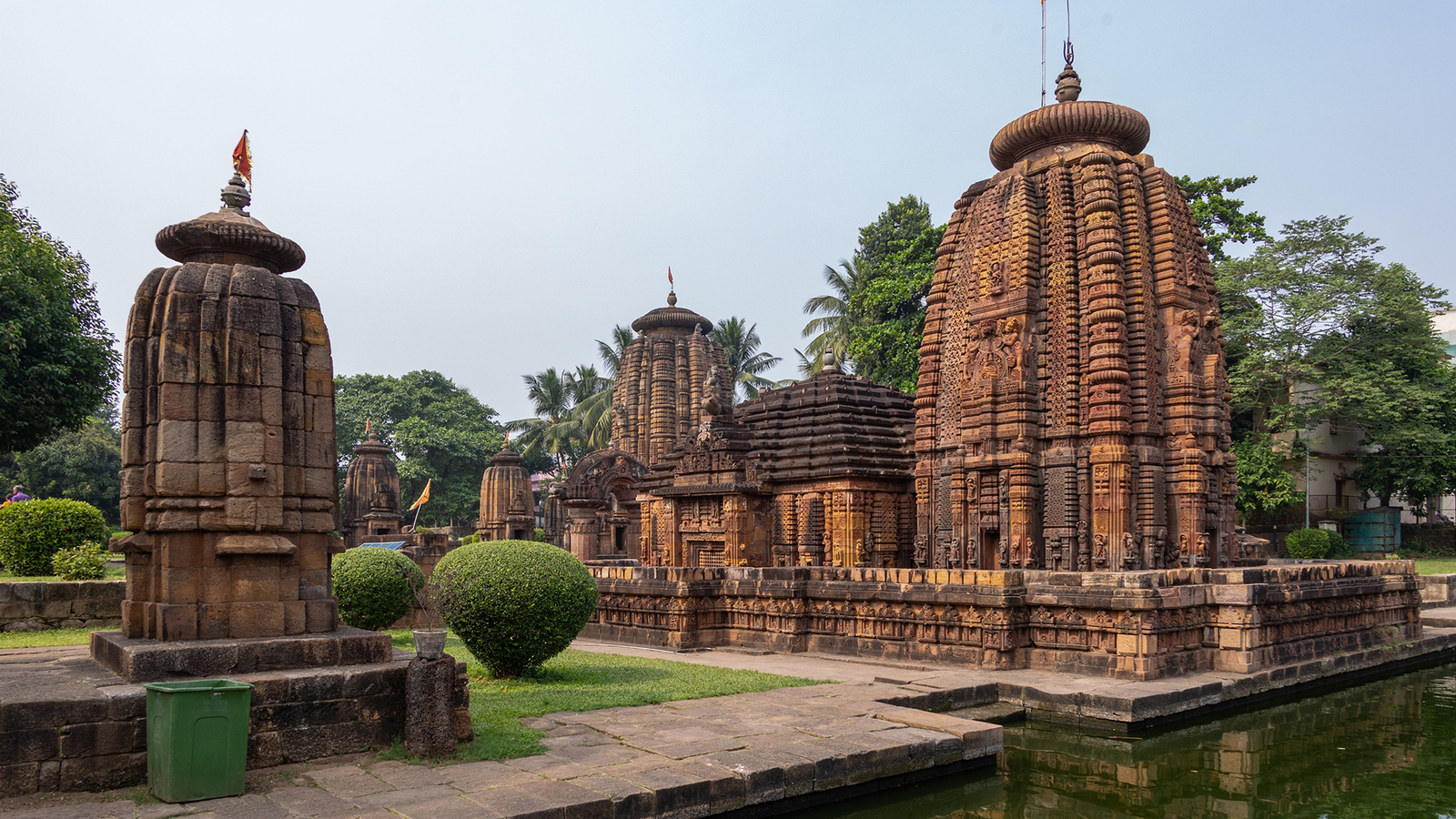
Bhubaneswar earns its nickname honestly. The city holds several hundred temples built between the seventh and thirteenth centuries, and the Lingaraj Temple complex, set around the sacred Bindu Sagar tank, anchors the old town. Non-Hindu visitors cannot enter Lingaraj itself, though a nearby viewing platform gives a clear look at the temple’s tower and courtyard. Mukteshwar Temple, smaller and built around the tenth century, is known for the carved archway at its entrance and is regularly named as one of the finer examples of Kalinga-style temple architecture in the city.
Rajarani Temple, built from a distinctive pink sandstone, adds a further stop for anyone interested in how the style developed over roughly three centuries of construction.
The Khandagiri and Udayagiri caves sit on the edge of the city and predate most of these temples by many centuries. They were cut into the rock as monastic cells for Jain monks under King Kharavela around the second century BCE. Dhauli, a short drive away, marks the site where Emperor Ashoka is said to have seen the aftermath of the Kalinga War before turning to Buddhism. A white peace pagoda now stands on the hill above the Ashokan rock edicts. Our Bhubaneswar travel guide and list of things to do in Bhubaneswar go deeper if you plan to add a spare day here.
Konark and the Sun Temple
Konark exists almost entirely for one building. The Sun Temple, built in the thirteenth century under King Narasimhadeva I, was designed as a colossal stone chariot for the sun god Surya, complete with twenty-four carved wheels and seven stone horses pulling it forward. UNESCO listed it as a World Heritage Site in 1984. The carving covers everything from the wheels to the walls in figures and geometric patterns, which tends to surprise visitors expecting a conventional temple layout.
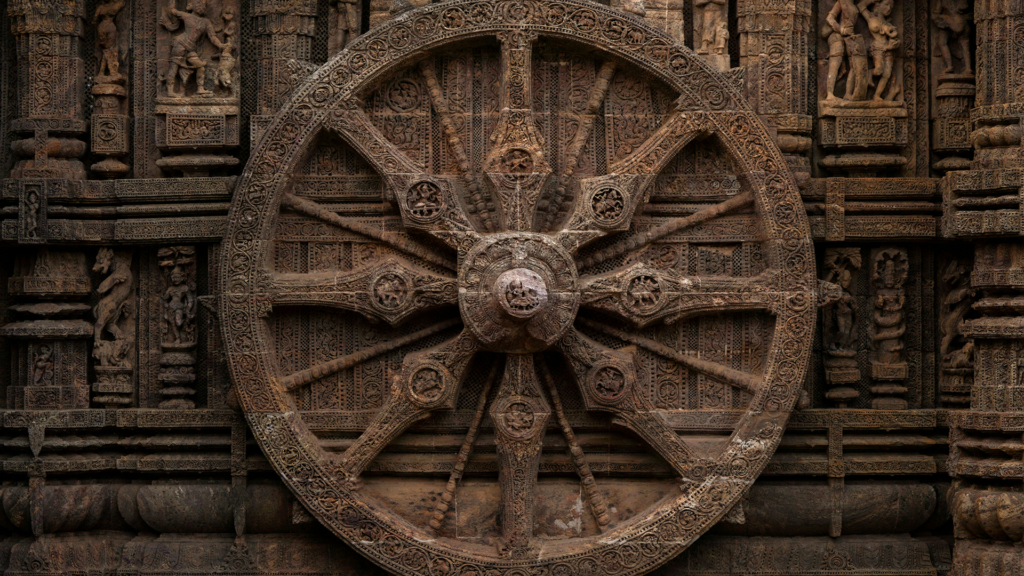
The site earned the nickname Black Pagoda from European sailors, who reportedly used its dark, weathered stone as a navigation marker along the coast.
Konark’s beach sits close by, quieter than Puri’s, and gives a natural break for lunch before the route continues south. Along the way, most itineraries stop briefly in Pipli, a village that has specialised in appliqué craftwork for generations, with brightly stitched umbrellas, wall hangings, and lampshades sold directly from the workshops that make them.
Puri and the Jagannath Temple
Puri closes the loop with a very different atmosphere to Bhubaneswar’s scattered temple sites. The Jagannath Temple sits at the heart of the town, one of India’s four Char Dham pilgrimage sites and home to a kitchen said to be among the largest in the world, cooking food for tens of thousands of devotees on a single day during major festivals. Non-Hindu visitors are not permitted inside, though the temple’s towering spire and the constant movement of pilgrims around its gates give a strong sense of its scale from the surrounding streets. The annual Rath Yatra, when three enormous wooden chariots carry the temple deities through the town, draws crowds from across the country each July.
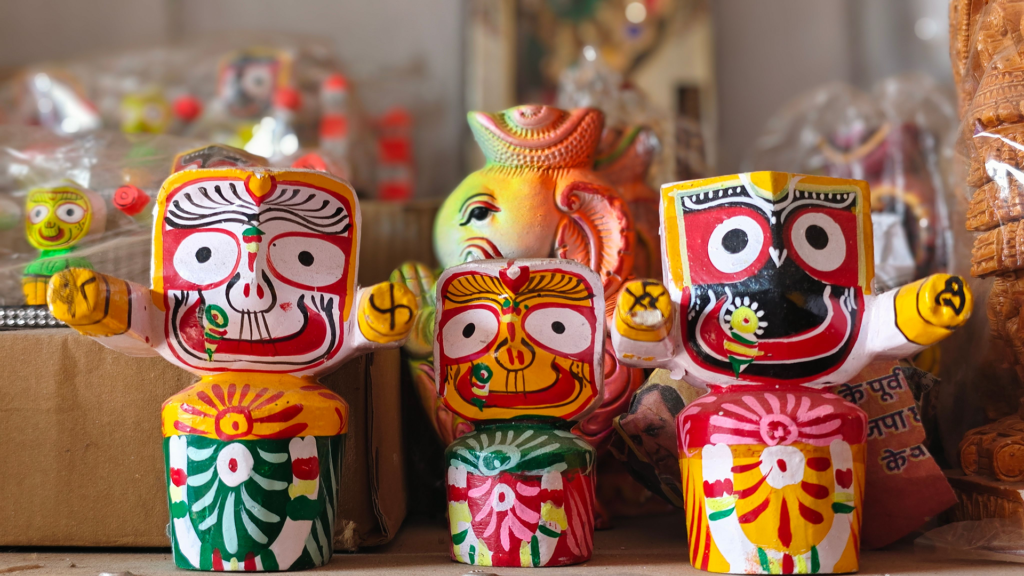
Beyond the temple, Puri runs on beach time. The stretch of sand facing the Bay of Bengal is a working beach as much as a tourist one, with fishing boats pulled up alongside sunbathers, and the nearby crafts village of Raghurajpur gives a look at Pattachitra painting, a traditional cloth and palm-leaf art form practised in the same families for generations.
Chilika Lake, the Coastal Add-On
Where an itinerary includes it, Chilika Lake adds a distinctly different kind of morning to the trip. Asia’s largest brackish water lagoon stretches across three districts, and a boat trip out to Satpada gives a fair chance of spotting Irrawaddy dolphins alongside a wide range of resident and migratory birdlife, with the winter months bringing the largest numbers of visiting species. It sits well as a half-day detour between Puri and Bhubaneswar and not as a standalone stop, and travellers keen on wildlife alongside temples should confirm it is built into this particular departure before booking.
Food Along the Way
Odisha’s food rarely gets the same attention as its temples, though it carries just as much of the region’s identity. Bhubaneswar’s thali-style meals lean on rice, dal, and a rotating set of vegetable dishes cooked with mustard oil and panch phoron, the five-spice mix that turns up across the state’s cooking. Puri, being a pilgrimage town, serves an enormous amount of mahaprasad, the food offered at the Jagannath Temple and then distributed to devotees, and stalls near the temple sell simplified versions of the same dishes to visitors. Sweets carry particular weight here too, with rasgulla regularly claimed by Odisha as a regional invention that predates its more famous Bengali version, a dispute that comes up on more than one guided tour of the state. Along the coast, fresh fish curries cooked with mustard paste show up on menus in both Puri and Konark, a fair distance in flavour from the vegetarian temple food served a short drive inland.
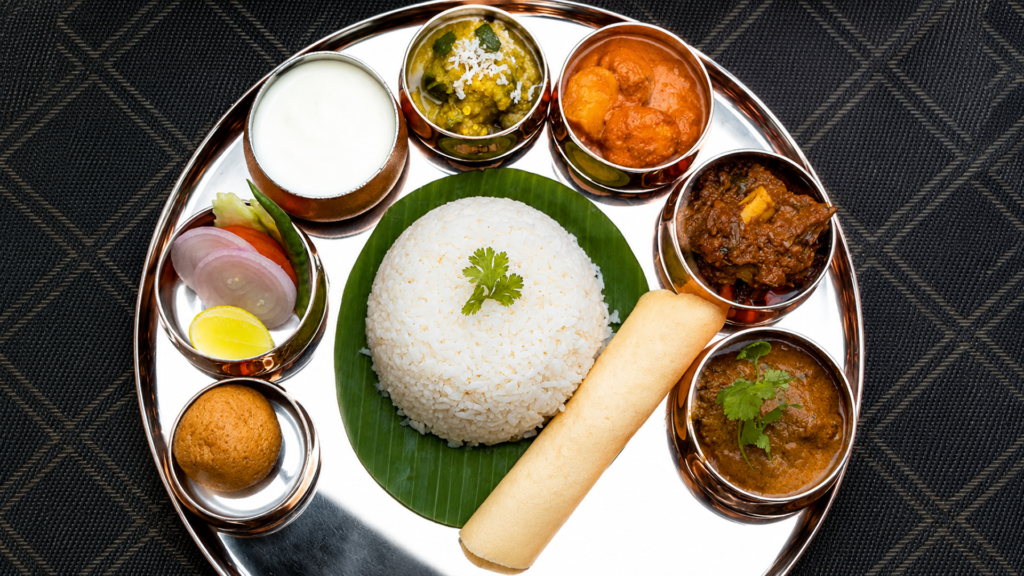
Anyone comparing Odisha tour packages on food alone will find this route gives a real spread, from temple kitchens to coastal curries. Our guide to the best places to eat in Odisha lists specific spots in each city.
Why This Counts Among the Best Golden Triangle Tour Packages
Plenty of operators run some version of the Bhubaneswar, Konark, and Puri circuit, but not all of them give each stop enough time to matter. Among the best Golden Triangle tour packages, the ones that hold up are the ones that treat Bhubaneswar as more than a one-temple stopover, since the city truly rewards a half-day or more given how spread out its sites are. The Highlights of Odisha route keeps driving distances short between stops, which leaves more of each day for the temples themselves and less of it on the road, and that split between coverage and pace is usually what separates the best Golden Triangle tour packages from ones that rush the middle stop to protect time at the beach.
What Bhubaneswar Reviews on Tripadvisor Tend to Miss
A search for Tripadvisor Bhubaneswar reviews turns up a fairly consistent set of complaints, namely confusion over which temples allow non-Hindu visitors, unclear opening hours around festival days, and drivers who rush the Khandagiri and Udayagiri caves to protect time elsewhere. A guided package answers most of this directly. Entry rules get explained before arrival and not at the gate, and a fixed itinerary means the caves and the temple circuit both get a proper visit and neither gets cut short.
Independent travellers piecing together the same three cities from Tripadvisor Bhubaneswar threads and forum posts regularly end up with a workable but uneven trip, strong on the big-name sites and thin on everything around them.
Planning Travel to Odisha Around the Seasons
October through February gives the most comfortable weather for temple-hopping and beach time alike, with the Rath Yatra in June or July drawing large crowds to Puri for anyone who wants to time a trip around the festival specifically. March through May brings heat that makes midday sightseeing harder going, particularly around the stone courtyards of Konark and Bhubaneswar, which hold warmth through the afternoon. The monsoon months from June to September bring humidity and rain that can affect the Chilika boat trips more than the temple stops, so travel to Odisha outside festival season is generally easier planned for the cooler half of the year. If you want to stretch the route, our Odisha itinerary guide for 5, 7 and 10 days shows how the circuit extends.
Booking the Highlights of Odisha Tour With Immersive Trips
Immersive Trips runs this circuit as a fixed itinerary with room to adjust hotel category, add extra nights in Puri or extend the route for travellers who want their travel to Odisha to go beyond the core circuit. Our guide to where to stay in Odisha helps if you are weighing hotel categories. Current dates, hotel options and pricing are listed on the Highlights of Odisha tour page, where the trip can be booked directly. Anyone comparing this with other Odisha tour packages Immersive Trips for a tailored quote or any questions before booking.
Frequently Asked Questions
How many days does the Highlights of Odisha tour take? The route covers Bhubaneswar, Konark, and Puri as its core circuit, with Chilika Lake commonly added on. The exact night count depends on the departure and hotel category chosen, and current options are listed on the tour page.
What does the package include?
Private transport between stops, accommodation, and sightseeing entry at the main sites are handled as one booking. Flights, personal expenses, and any optional add-ons are billed separately.
Can non-Hindu visitors enter the temples?
Lingaraj Temple in Bhubaneswar and the Jagannath Temple in Puri are both closed to non-Hindu visitors, though both have nearby viewing points. The Sun Temple at Konark is open to all visitors.
Is Chilika Lake included in this itinerary?
It depends on the specific departure. Chilika is commonly added as a half-day or full-day excursion, and this is worth confirming directly before booking.
When is the best time to travel to Odisha on this route?
October to February gives the most comfortable weather. Travellers wanting to see the Rath Yatra festival should target June or July, while March to May brings heat that makes midday sightseeing more demanding.
Can the itinerary be extended?
Yes. Immersive Trips can add extra nights in Puri, extend the route to cover more of Odisha, or adjust hotel categories before the trip is confirmed.