
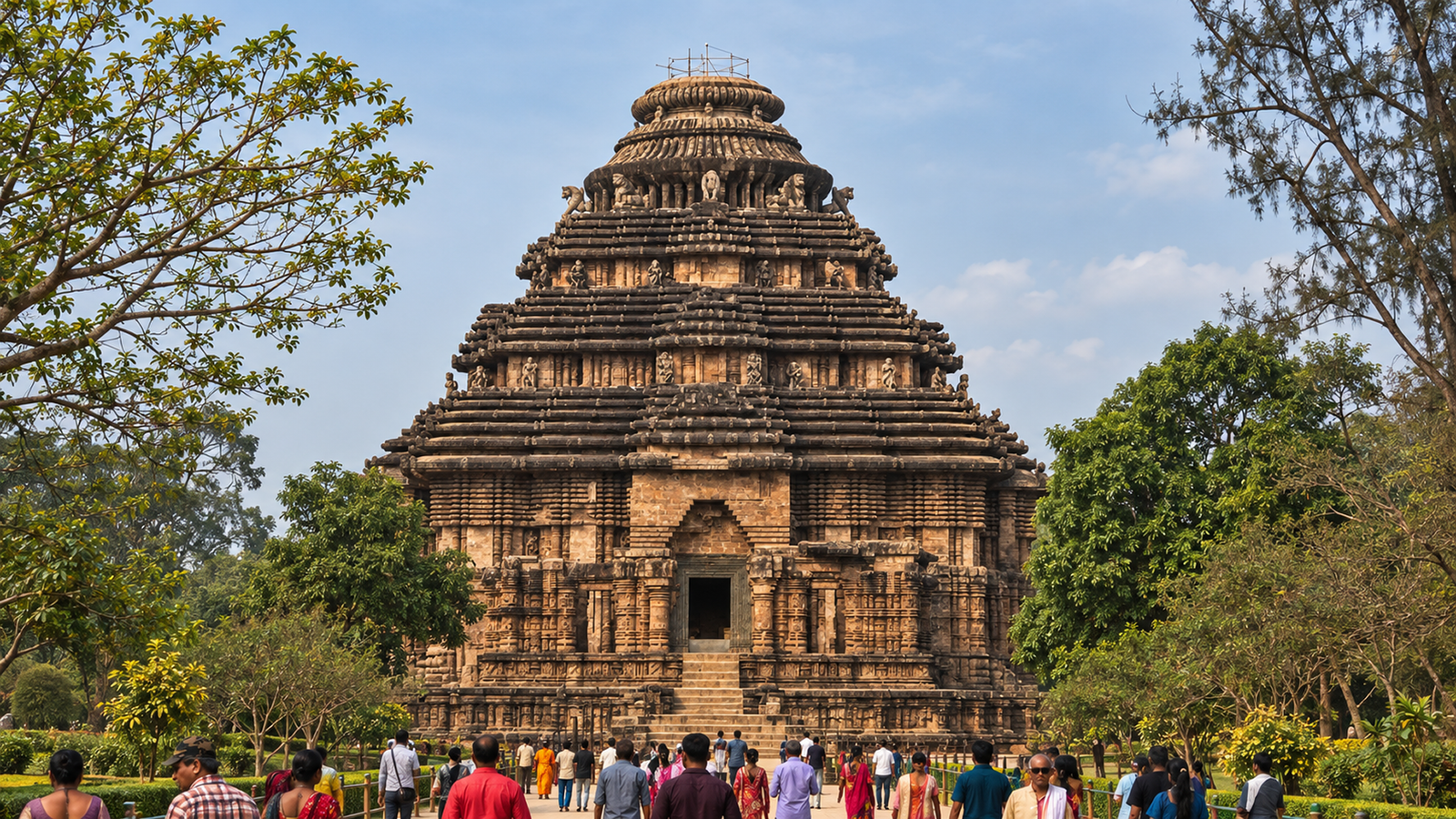
Konark exists almost entirely around a single monument, yet that monument carries enough history, engineering and myth to fill a proper day on its own. This Konark travel guide covers the Sun Temple’s story in real depth, along with the food, museum and coastal experiences that round out a visit to one of India’s most recognisable UNESCO World Heritage Sites.
Getting to Know Konark
The name Konark joins two words, kona meaning corner and arka meaning sun, a reference to the town’s position on the northeastern edge of Puri and its long association with sun worship. Local tradition also refers to the wider area as Arkakshetra, one of four sacred regions in Odisha tied to a Vishnu legend involving weapons placed at Puri, Bhubaneswar, Jajpur and Konark itself.
Konark sits around thirty five kilometres from Puri and roughly sixty five kilometres from Bhubaneswar, close enough to both that most visitors treat it as a day trip and not an overnight stop, though the town rewards a slower, more deliberate visit for anyone willing to give it the time. Unlike Bhubaneswar’s dense cluster of temples or Puri’s constant pilgrim activity, Konark today is a comparatively calm town built almost entirely around tourism to a single, extraordinary site.
The Sun Temple, Konark’s Defining Sight
Built in the middle of the thirteenth century by King Narasimhadeva I of the Eastern Ganga dynasty, the Sun Temple was designed as a colossal stone chariot carrying Surya, the Sun God, across the heavens. Twenty four intricately carved wheels, each reportedly around ten feet across, line the platform beneath the temple, commonly understood to represent the twenty four hours of the day, while seven straining stone horses at the front symbolise the days of the week.
The complex originally held three main sections: the Vimana or sanctum tower, the Jagamohana or audience hall and the Natamandira or dance hall. Its Vimana has collapsed over the centuries, its exact cause still debated among historians, ranging from structural failure to deliberate damage during later invasions, though no theory has been conclusively proven. Meanwhile the Jagamohana survives as the temple’s most recognisable standing feature, its pyramidal roof visible from a considerable distance across the flat coastal landscape.
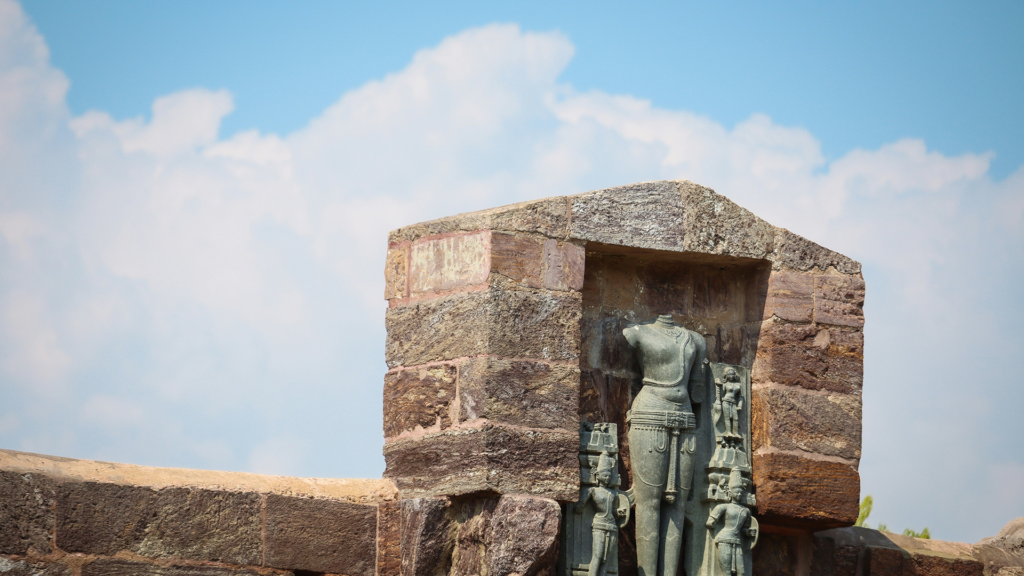
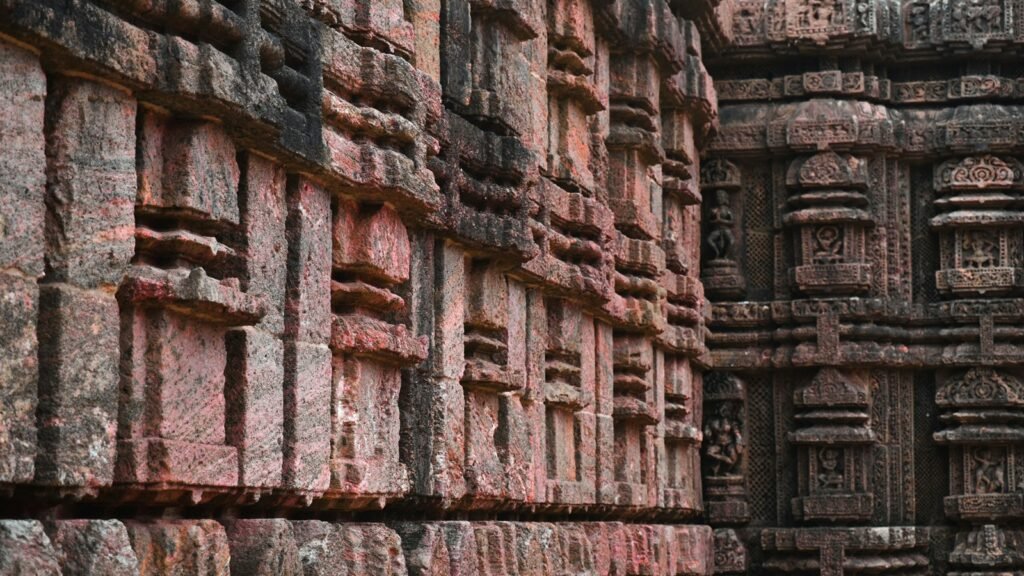
European sailors navigating this stretch of coast once used the temple’s dark, weathered silhouette as a landmark, giving rise to its enduring nickname, the Black Pagoda, a deliberate contrast to Puri’s whitewashed Jagannath Temple, sometimes called the White Pagoda in the same seafaring tradition. Carvings across the temple’s surface run to thousands of feet of continuous relief work, depicting scenes from pastoral, domestic, civil and military life alongside the more widely discussed erotic sculptures, a feature the temple shares with sites like Khajuraho and one that continues to draw scholarly debate about its original purpose and meaning.
The temple was declared a UNESCO World Heritage Site in 1984, recognition that speaks to both its architectural ambition and the sheer scale of skilled labour involved, with tradition holding that around twelve hundred artisans worked on the site for roughly a dozen years to complete it.
What to Eat in Konark
Konark’s food scene stays considerably smaller and simpler than Puri’s or Bhubaneswar’s, a natural result of its size as a town built primarily around a single monument and not a wider urban centre. Small dhabas and local eateries near the temple complex serve straightforward Odia staples, dalma, rice and simple vegetable preparations, alongside fresh seafood drawn from the nearby coast given the town’s position right on the Bay of Bengal.
Travellers looking for a wider spread of restaurants, more variety in cuisine, or a proper multi cuisine dinner generally do better basing themselves in Puri and treating Konark as a day trip, returning for an evening meal with considerably more choice. This pattern suits most itineraries well in any case, since Konark’s own attractions rarely demand an overnight stay.
Local Experiences Beyond the Temple
The Sun Temple’s evening light and sound show adds real depth to a visit that only covers the monument during daylight hours, using narration, music and lighting to walk through the temple’s history and legends after dark, with a choice of language available through wireless headphones. Watching the temple lit up after sunset gives a properly different sense of its scale compared to a daytime visit. Pairing the two, day and evening, makes for one of the more complete Konark places to visit on a single trip.
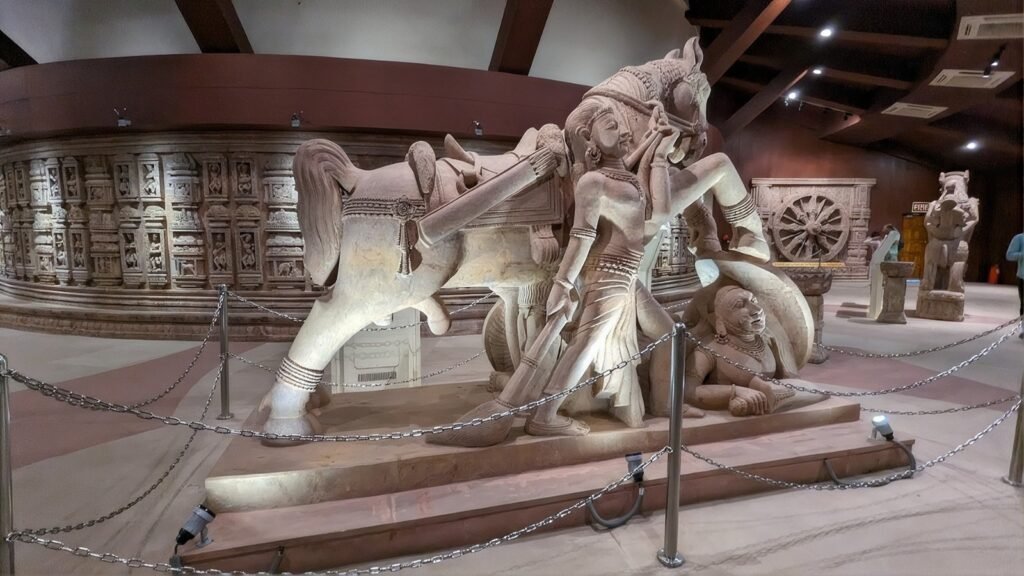
Konark’s Archaeological Museum, run by the Archaeological Survey of India and among the oldest museums in the region, houses a substantial collection of sculptures, architectural fragments and artefacts recovered from the temple site over the decades. A visit here works particularly well earlier in the day, before the light and sound show, since it gives useful context for details that might otherwise be missed while walking around the temple itself.
Chandrabhaga Beach, just a few kilometres from the temple, gives a natural place to unwind after a morning of sightseeing, distinguished as the first beach in India to receive Blue Flag certification for its clean, well managed coastline. Ramachandi Temple, a short drive away on the banks of the Kushabhadra River, adds a calmer, less visited pilgrimage stop dedicated to a form of the goddess Shakti, with its own local legends tied to surviving a period of temple destruction centuries ago.
Many travellers fold these stops into the wider Konark tour package that Immersive Trips designs, pairing the temple with Puri and Bhubaneswar on a fuller Odisha route and not treating Konark as an isolated stop.
Using This Konark Travel Guide to Plan a Visit
A half day gives enough time to see the Sun Temple properly and visit the Archaeological Museum, while staying a full day allows for the evening light and sound show and a stop at Chandrabhaga Beach as well. Very few travellers need more than a single day in Konark itself, given the town’s modest size, though pairing that day with an overnight stay in nearby Puri makes the logistics considerably easier.
Most Konark itineraries fold naturally into a longer Odisha trip built around Bhubaneswar and Puri, given how close all three sit together along this stretch of coast. Our places to visit in Odisha guide covers how a Konark visit fits into that wider route.
Frequently Asked Questions
How much time do I need to visit Konark?
A half day gives enough time to see the Sun Temple and the Archaeological Museum properly, without feeling rushed at either stop. Staying a full day allows for the evening light and sound show and a stop at Chandrabhaga Beach as well.
What is the Sun Temple’s Black Pagoda nickname about?
European sailors used the temple’s dark, weathered silhouette as a navigational landmark along the coast, leading to its nickname, the Black Pagoda. This was a deliberate contrast to Puri’s whitewashed Jagannath Temple, sometimes called the White Pagoda in the same tradition.
Why does the Sun Temple have 24 wheels?
The Sun Temple’s 24 carved stone wheels are commonly understood to represent the 24 hours of the day, part of the temple’s overall design as a chariot carrying the Sun God across the sky. Its seven horses at the front similarly represent the seven days of the week.
Is Konark worth visiting as a day trip from Puri?
Konark works very well as a day trip from Puri, given the short drive between the two towns and Konark’s relatively compact list of sights. Most travellers base themselves in Puri, given its wider range of accommodation and food options nearby.
What food is available in Konark?
Konark’s food options stay simple and limited compared to Puri or Bhubaneswar, mainly local dhabas serving Odia staples and fresh seafood near the temple complex. Travellers wanting more variety generally eat in Puri instead, treating Konark as a day trip.
Is the Konark light and sound show worth attending?
The Konark light and sound show is well worth attending, giving a properly different perspective on the temple after dark through narration, music and lighting. It pairs naturally with a daytime visit for a fuller sense of the site’s history and scale.
How old is the Konark Sun Temple?
The Konark Sun Temple was built in the middle of the thirteenth century by King Narasimhadeva I of the Eastern Ganga dynasty. It was declared a UNESCO World Heritage Site in 1984 in recognition of its architectural and historical significance.
Can I pair Konark with Chandrabhaga Beach in one visit?
Chandrabhaga Beach sits just a few kilometres from the Sun Temple, making it easy to pair both into a single visit to Konark. Many travellers use the beach as a relaxing stop after a morning spent exploring the temple complex.
Turning This Guide Into a Real Trip
A Konark travel guide can only go so far before the details depend on how much time a traveller wants to give a single, remarkable monument. Immersive Trips builds each Konark tour package around that pace, whether that means a tightly focused half day stop or a fuller day that includes the museum, the beach and the evening show. Anyone ready to start mapping a Konark itinerary of their own is welcome to begin that conversation directly.