
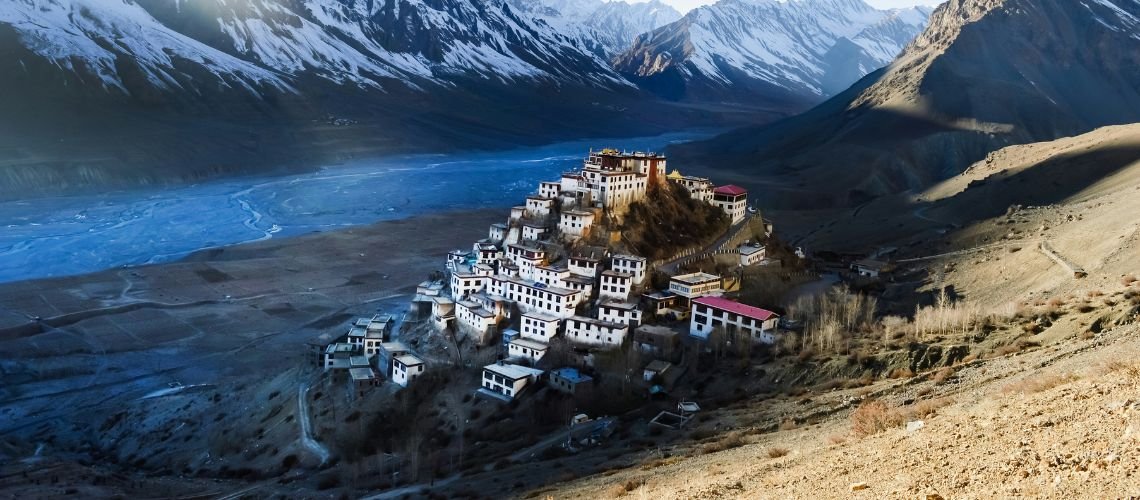
The best places to visit in Spiti spread across a genuinely large area, so this guide groups them into natural clusters rather than a single tidy route. This guide moves through those clusters from Kaza outward, covering the monasteries, high villages, and natural landmarks that make up a proper Spiti trip, with enough practical detail to plan a first visit properly
Kaza: The Base for Exploring Spiti
Kaza sits at the centre of Spiti Valley and works as the natural base for nearly every other place to visit on this list. The town holds most of Spiti’s guesthouses, cafes, and markets, along with an old Nono palace dating to medieval times, a quiet reminder of Spiti’s history as a semi-independent territory before it became part of Himachal Pradesh.
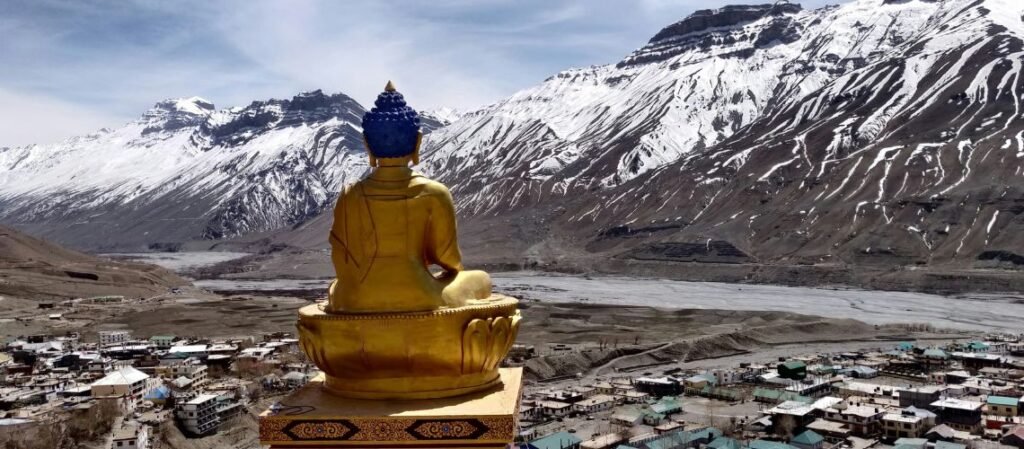
Most travellers spend at least a night or two in Kaza, both at the start and end of their trip, using it as a base to acclimatise before heading to the higher villages beyond.
Markets in Kaza sell woollens, local produce, and basic trekking supplies, while a handful of cafes offer a comfortable spot to plan the days ahead over strong coffee or butter tea. Mobile signal and internet both grow patchy past Kaza, so it’s worth treating the town as your last reliable point of contact before heading further into the valley.
Key Monastery and the High Villages Around It
Key Monastery, the largest in Spiti, sits around twelve kilometres from Kaza and dates back roughly a thousand years, its whitewashed walls stacked up a steep hillside above the Spiti river. Kibber, a short drive beyond Key, sits close to a wildlife sanctuary known for snow leopard sightings and connects to the village of Chicham across one of the highest bridges of its kind in Asia.
Langza and Hikkim, two of the higher villages accessible from Kaza, draw visitors for very different reasons. Marine fossils left behind from when this land sat beneath an ancient sea give Langza its reputation, while Hikkim holds the record for the world’s highest post office, a modest single-room building that has become something of a pilgrimage stop for travellers. Komic, nearby, ranks among the highest motorable villages anywhere on earth.
Dhankar and Tabo: Spiti’s Two Great Monasteries
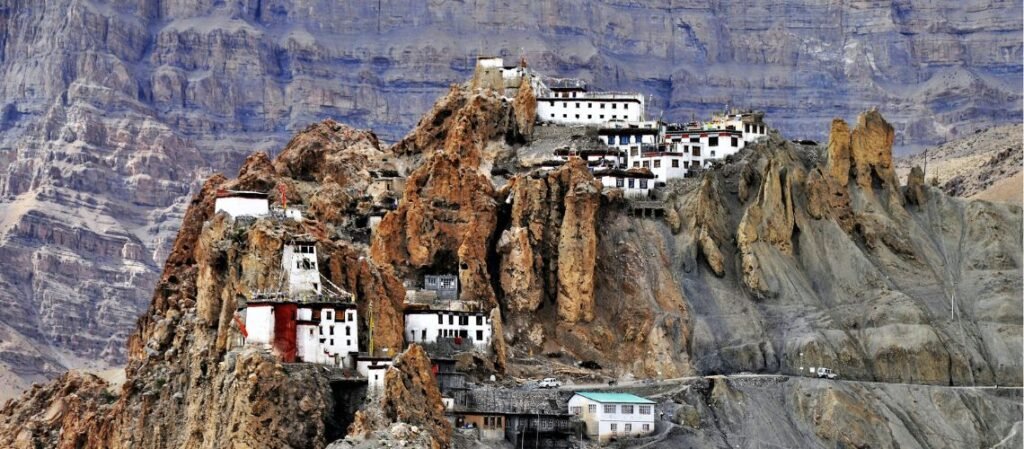
Dhankar Monastery clings to a cliff edge above the confluence of the Spiti and Pin rivers, ranking among the most dramatically located religious sites anywhere in the Himalayas. A trek beyond it leads to Dhankar Lake, a small, still body of water framed by bare peaks, reachable in under an hour of steady climbing.
Tabo Monastery, more than a thousand years old and built largely from mud brick, sits lower down the valley and holds murals detailed enough to have earned comparisons to the Ajanta caves. Its understated exterior gives little hint of the artistry preserved inside, which is part of what makes a first visit so memorable.
More Places to Visit in Spiti
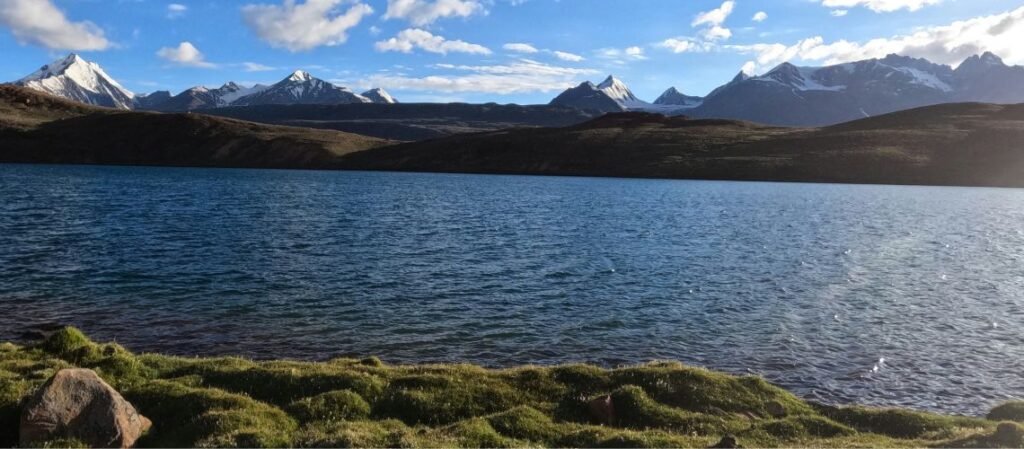
Chandratal Lake, a crescent-shaped lake of turquoise water near Kunzum Pass, ranks among the most photographed places to visit in Spiti, particularly for travellers willing to camp overnight at altitude. Pin Valley National Park, further south, protects habitat for the snow leopard and other high-altitude wildlife, with the Pin river cutting through a valley noticeably greener than much of the rest of Spiti.
Nako, a village with its own small lake near the Kinnaur border, suits travellers approaching Spiti from the Shimla side and makes a natural stop on the longer route in.
These outer sights work well spread across a longer Spiti itinerary, and Immersive Trips builds this stretch into its wider Himachal Pradesh tour packages as a genuine extension, added when a traveller’s own interest in altitude, remoteness, and monastery visits calls for the extra days.
Kunzum Pass and the Route In
Kunzum Pass, at just over 15,000 feet, marks the boundary between the Lahaul side of Himachal and Spiti proper, and sits close enough to Chandratal Lake to pair both in a single day for travellers coming from Manali. The pass closes with the first heavy snowfall each year and typically reopens by early summer, so it’s worth checking its status before setting out on this route.
Sequencing a Visit Around Spiti’s Best Sights
Two days in Kaza give room to acclimatise and visit Key Monastery, with a further two days covering the high villages of Kibber, Langza, and Hikkim. A final stretch to Dhankar, Tabo, and, weather permitting, Chandratal Lake rounds out a trip of five to seven days in total.
Altitude and road conditions matter more here than in almost any other part of Himachal. Building rest days into the plan and checking conditions on both entry routes before committing to a full itinerary is worth the extra effort.
Frequently Asked Questions
What are the top places to visit in Spiti?
Key Monastery, Kaza, and Chandratal Lake are the three places most itineraries build around. Dhankar Monastery, Tabo Monastery, and the high villages of Langza and Hikkim commonly follow as a second layer for travellers with more time.
How many days do I need to see Spiti properly?
Five to seven days give a realistic spread across Kaza, Key Monastery, the high villages, and at least one of Dhankar or Tabo Monastery. A shorter trip is possible but tends to feel compressed, given the distances and altitude involved.
Is Key Monastery free to enter?
Key Monastery has no formal entry charge, though visitors are expected to dress modestly and keep noise to a minimum near active prayer halls. Photography is generally permitted in the outer courtyards, with some restrictions inside during ceremonies.
What is the best time of day to visit Chandratal Lake?
Early morning and late afternoon bring the calmest water and the sharpest colour at Chandratal Lake, before and after the midday sun flattens it. Overnight camping nearby also allows for properly dark skies and strong stargazing, weather and permits allowing.
Is Tabo Monastery older than Key Monastery?
Yes, Tabo Monastery, founded in the tenth century, predates Key Monastery by roughly a hundred years, making it one of the oldest continuously functioning Buddhist monasteries anywhere in the Himalayas. Both remain active religious sites today, not historical museums.
Do I need a car to see Spiti’s outer sights?
A car and driver are essential for almost all of Spiti’s sights, since public transport is limited and distances between villages are considerable. Most travellers arrange a vehicle for the full trip rather than booking transport separately for each stop.
Is Pin Valley National Park worth visiting?
Pin Valley National Park suits travellers with a genuine interest in high-altitude wildlife and a greener landscape than much of the rest of Spiti. Snow leopard sightings are rare, so the park is best appreciated for its scenery, not treated as a guaranteed wildlife encounter.
What is Nako village known for?
Nako is known for its small lake and its position near the Kinnaur border, making it a natural stop for travellers entering Spiti from the Shimla side. An old monastery in the village adds a further reason to break the journey here.
Turning This List Into a Working Itinerary
A list of sights only becomes a trip once it’s set against real distances, altitude, and how a traveller wants to spend their days. Immersive Trips fits these Spiti places to visit into a wider tour package built around those specifics, not a fixed route decided in advance, so a focused five-day version and a fuller seven-day loop can both work well. Anyone ready to start mapping a Spiti itinerary is welcome to begin that conversation directly.