
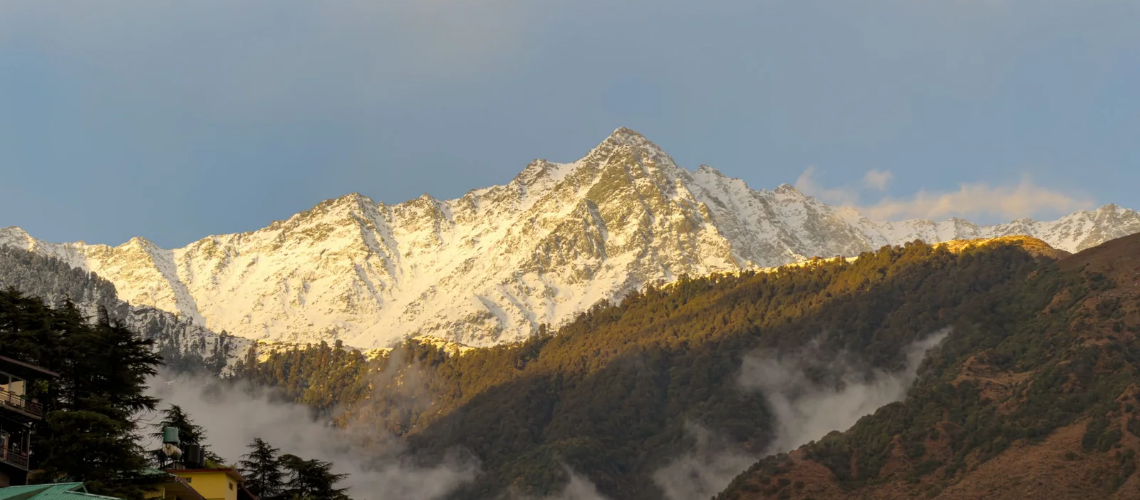
Dharamshala sits where two different worlds share a hillside. Below, a fairly ordinary Himachali market town goes about its business, while above it, McLeod Ganj hums with maroon robed monks, Tibetan flags and cafes serving thukpa alongside espresso. This Dharamshala travel guide sets out the places worth the climb, the food worth trying and the local experiences that go beyond a quick photo at the temple gates, so a first trip here covers what matters without losing a day working it out on arrival.
Getting to Know Dharamshala and McLeod Ganj
Dharamshala itself sits in the Kangra Valley at just over 1,450 metres, with the Dhauladhar range rising sharply behind it. McLeod Ganj, commonly called Upper Dharamshala, sits a short drive further uphill and has become the town’s cultural centre, largely because of what happened here in 1959.
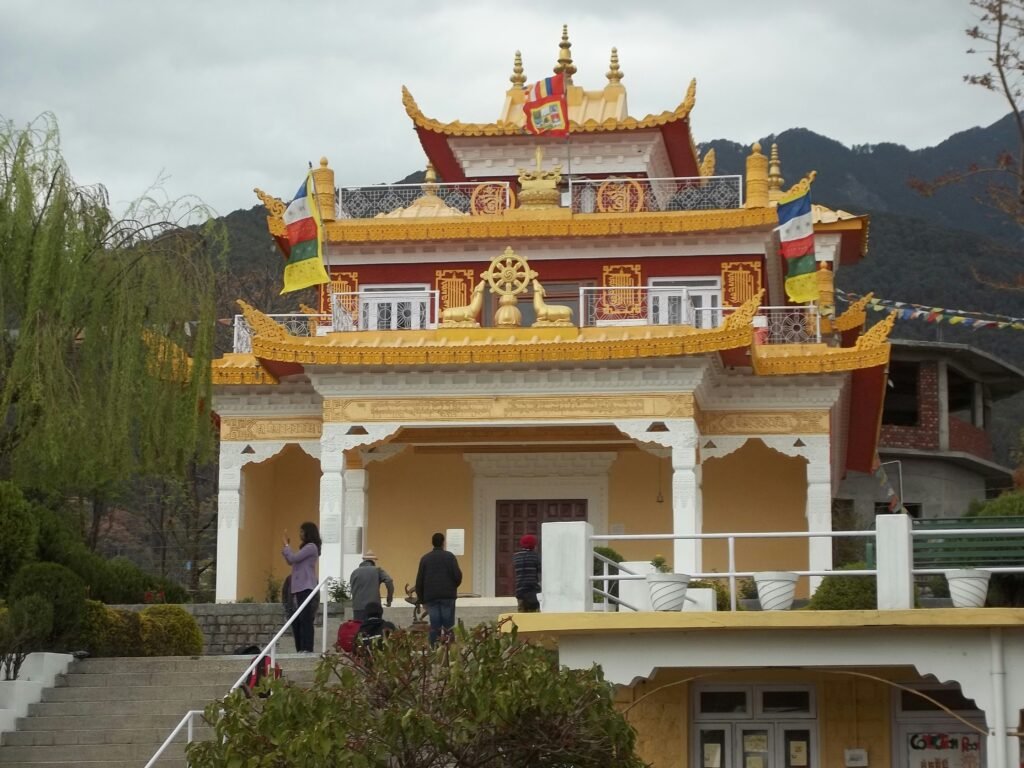
Following the Tibetan uprising that year, the fourteenth Dalai Lama settled in McLeod Ganj along with the Tibetan government in exile, and a large refugee community followed. That history earned the area its nickname, Little Lhasa, and it still defines daily life here, from the maroon robed monks on the streets to the momo stalls that outnumber almost anything else on the menu.
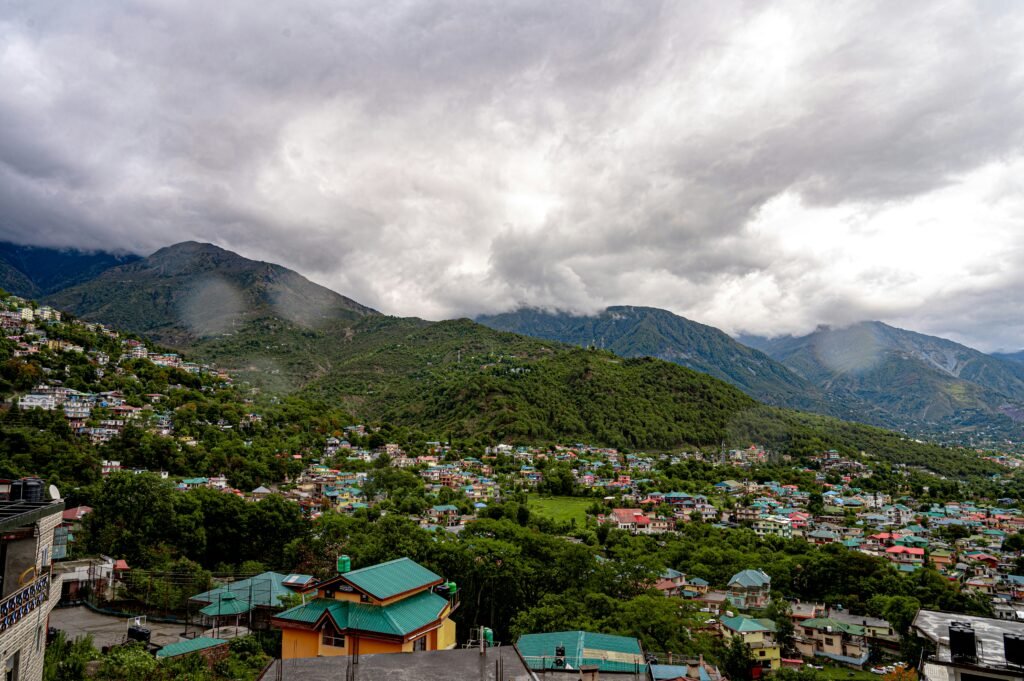
Lower Dharamshala, the more workaday part of town, holds the cricket stadium, several monasteries and the older Kotwali Bazaar, while McLeod Ganj and neighbouring Bhagsu and Dharamkot carry most of the cafes, guesthouses and trekking routes.
Best Places to Visit in Dharamshala
This list of Dharamshala places to visit leans toward what fits into two or three unhurried days, not a full inventory of every temple and viewpoint in the valley. The Tsuglagkhang complex in McLeod Ganj, home to the Dalai Lama’s temple and residence, is the obvious starting point for most visitors and remains an active place of worship, not a museum piece. Nearby, the trek to Triund climbs through forests of oak and deodar to a ridge with open views across the Dhauladhar peaks. For a closer look at the activities and experiences worth adding to your itinerary, explore our guide to the best things to do in Dharamshala.
Bhagsunag, a short walk from McLeod Ganj’s main square, holds an old Shiva temple said to be among the oldest in the Kangra Valley, along with a waterfall that draws a steady stream of visitors, particularly after the monsoon. Naddi, further along the ridge, gives some of the clearest sunset views over the valley, along with a small lake known locally as Dal Lake, not to be confused with the far larger lake of the same name in Kashmir.
Down in lower Dharamshala, the Himachal Pradesh Cricket Association Stadium sits at more than 1,400 metres above sea level, making it one of the highest grounds used for international cricket anywhere, with the Dhauladhar range as a backdrop on a clear day. It welcomes visitors even when no match is on.
What to Eat in Dharamshala
McLeod Ganj runs on Tibetan food. Momos, steamed or fried dumplings filled with meat, cheese or vegetables, are everywhere, alongside thukpa, a noodle soup built for cold evenings, and thenthuk, a hand pulled version of the same idea. Tingmo, a soft steamed bread, and shapta, a stir fried meat dish with capsicum and onion, round out a fuller Tibetan meal, and butter tea, made with yak butter and salt and not sugar, is worth trying at least once even for travellers who end up preferring the milkier, more familiar chai.
Lower Dharamshala and Kotwali Bazaar lean more Himachali, built around dham, a festive vegetarian meal traditionally served on special occasions, and dishes like madra, chickpeas or beans cooked slowly in a yoghurt gravy, and siddu, a steamed bun stuffed with fillings that range from spinach and potato to walnuts and poppy seed.
Local Experiences and Things to Do in Dharamshala
The Norbulingka Institute, a short drive from central Dharamshala, was built to keep Tibetan art forms alive, and its workshops in thangka painting, wood carving and traditional tailoring are open to visitors who want a closer look than a museum case usually allows. Cafe culture across McLeod Ganj, Bhagsu and Dharamkot draws its own crowd, with small, independent spots serving everything from Tibetan staples to Israeli and Italian food, many with a book exchange or live music in the evening.
Anyone with an extra day can add Kangra Fort, one of the oldest forts in India and once held by the Katoch dynasty, or the Masroor rock cut temples, a cluster of monolithic shrines carved directly from the hillside around forty kilometres away. Both make for a fuller Kangra Valley day trip beyond Dharamshala itself.
Dharamshala works well on its own, though many travellers build it into a longer Himachal loop. The Himachal tour packages that Immersive Trips designs treat Dharamshala as one possible stage on a wider route through the hills, built around how much time a traveller has for temples, trekking and cafe mornings, not a fixed number of nights set in advance.
Using This Dharamshala Travel Guide to Plan a Short Stay
Two full days give enough time for the Tsuglagkhang complex, a walk up towards Triund and an evening at Naddi, without rushing any of it. A further day suits Bhagsu, the cricket stadium and a slower morning around Kotwali Bazaar, or an early start for Kangra Fort and the Masroor temples for anyone keen to see more of the valley.
Weather matters more here than in most of Himachal’s lower towns. March to June and October to November bring the clearest skies and the most comfortable temperatures, while the monsoon months of July and August can bring heavy rain and occasional landslides on the approach roads, so checking conditions before travelling in that window is worth the extra minute.
Frequently Asked Questions
How many days are enough for Dharamshala?
Two days cover McLeod Ganj, the Tsuglagkhang complex and a walk towards Triund. An extra day allows for Bhagsu, the cricket stadium or a day trip to Kangra Fort, though it is not essential for a satisfying first visit to the area.
What is Dharamshala famous for?
Dharamshala is best known as the home of the Dalai Lama and the Tibetan government in exile, along with McLeod Ganj’s Tibetan culture and food. The town is also known for the Triund trek and for hosting one of the highest altitude cricket stadiums in the world.
Is McLeod Ganj the same as Dharamshala?
McLeod Ganj is a neighbourhood of Dharamshala, sitting a short drive uphill from the main town and commonly called Upper Dharamshala. Most cafes, guesthouses and the Dalai Lama’s temple sit in McLeod Ganj, while the cricket stadium and older bazaar areas sit in lower Dharamshala.
What food should I try in Dharamshala?
Momos, thukpa and thenthuk are the Tibetan dishes most associated with McLeod Ganj, while dham, madra and siddu represent the local Himachali side of the region’s food. Trying both gives a fuller sense of what makes Dharamshala’s food scene distinct.
What is the best time of year to visit Dharamshala?
March to June and October to November bring clear skies and comfortable temperatures for walking and sightseeing. The monsoon months of July and August bring heavy rain and occasional landslides, while December to February can be cold, with snow possible at higher points.
Is the Triund trek difficult?
Most reasonably fit travellers manage the Triund trek without much trouble, climbing steadily through forest for around nine kilometres before opening onto a ridge with wide Dhauladhar views. It can be done as a long day hike or split with an overnight stop, and warm layers are worth carrying even in the milder months.
Can vegetarians eat well in Dharamshala?
Vegetarians eat well in Dharamshala, since Tibetan staples like vegetable momos and thukpa are widely available, and Himachali dham is traditionally a vegetarian meal built around lentils, chickpeas and dairy. Most restaurants across McLeod Ganj clearly mark vegetarian options on the menu.
Do I need a permit to visit the Dalai Lama’s temple?
No permit is needed to visit the Tsuglagkhang complex itself, though security checks are routine and bags may be inspected at the entrance. Meeting the Dalai Lama in person is a separate matter, requiring advance registration and depending entirely on his travel schedule at the time.
Plan Your Dharamshala Trip with Immersive Trips
A guide can only go so far before the details start to depend on a traveller’s own pace, interests and time available. Immersive Trips builds each Himachal tour package around those specifics and not a fixed template, so a Dharamshala stay can run to two focused days or extend into a slower loop that takes in Bir Billing, Manali or the wider Kangra Valley, whatever suits the trip. Anyone ready to start mapping a Dharamshala itinerary of their own, or a full Dharamshala tour package, is welcome to begin that conversation directly.