
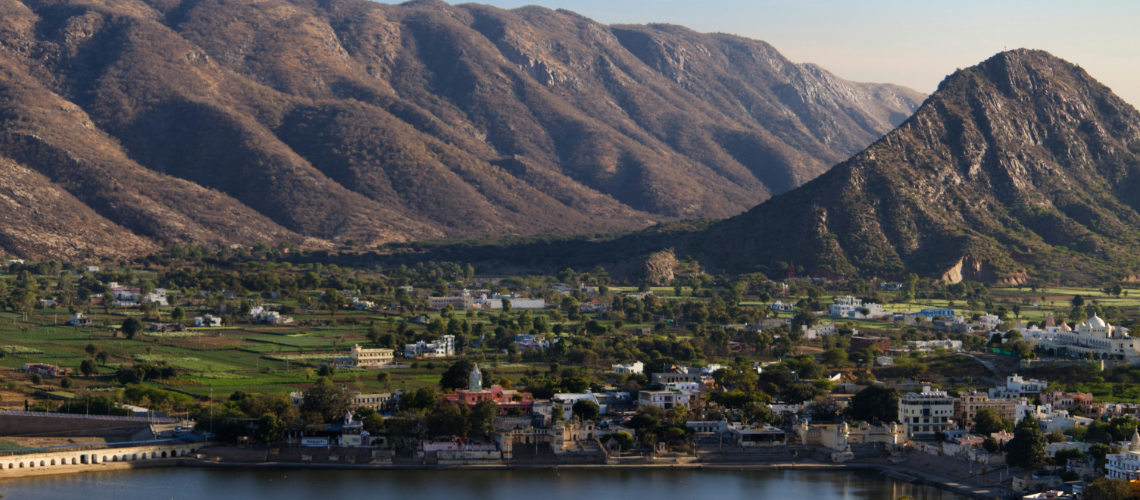
Pushkar is one of the oldest and most sacred towns in India, a place where spirituality and bohemian charm meet in a natural bowl of the Aravalli hills. Ringed by 52 ghats descending to a holy lake said to have been created when Lord Brahma dropped a lotus from the sky, Pushkar is home to one of the very few temples in the world dedicated to Brahma, the creator god. It is at once a profound Hindu pilgrimage centre, a laid-back travellers’ haven of rooftop cafes and markets, and the setting for the world-famous Pushkar Camel Fair. This Pushkar travel guide covers everything you need to plan a rewarding visit: the sacred sites, the temples, the markets, the food, and practical tips for this unique desert town.
For full state planning, see our Rajasthan travel guide, and for curated itineraries, our Rajasthan tour packages collection.
Pushkar Travel Guide: Understanding the Sacred Town
Pushkar sits in a natural bowl of the Aravalli hills, about 145 kilometres from Jaipur (roughly 2.5 to 3 hours by road) and just 11 to 15 kilometres from the city of Ajmer. According to legend, the sacred Pushkar Lake was created when Lord Brahma dropped a lotus flower to the earth, and the town takes its name from the flower (pushpa). Hindu scriptures describe the lake as Tirtha Raj, the king of all pilgrimage sites, and a dip in its waters is believed to cleanse sins and is considered essential to the ultimate pilgrimage.
Pushkar is unique among Rajasthan’s towns. As a sacred pilgrimage centre, it is officially vegetarian and alcohol-free, which shapes its relaxed, spiritual character. At the same time, its rooftop cafes, markets, and yoga scene have made it a favourite of international travellers seeking a laid-back, bohemian atmosphere.
This blend of the deeply devotional and the traveller-friendly gives Pushkar its distinctive appeal. One to two days is enough for most visitors, though the Camel Fair warrants longer.

Pushkar Travel Guide: Sacred Sites & Temples
Pushkar Lake and the 52 Ghats
The Pushkar Lake is the soul of the town, a sacred lake surrounded by 52 ghats (stone bathing steps) and hundreds of temples. Pilgrims descend to the water to take a holy dip, and the daily rituals, morning baths, and evening aarti ceremonies (with bells, lamps, and chanting) create a deeply atmospheric spiritual experience. Walking the ghats at sunrise or sunset, watching the rituals unfold and the light change over the still water, is one of the most memorable experiences in Rajasthan. (Note: be aware of unofficial “priests” on the ghats who may pressure visitors for large donations; agree to any offering in advance or politely decline.)
Brahma Temple in Pushkar
The Brahma Temple, dating in its current form to the 14th century, is the spiritual heart of Pushkar and one of the very few temples in the world dedicated to Lord Brahma, the creator in the Hindu trinity. According to legend, a curse from Brahma’s wife, Savitri, limited his worship to Pushkar alone, which explains the rarity. The red-spired temple, with its marble floors and silver-coin-embedded sanctum, is a major pilgrimage site. Entry is free, and morning is the most peaceful time to visit. A modest dress is required, and photography inside is not permitted.
Savitri Temple & Ratnagiri Hill
The Savitri Temple, dedicated to Brahma’s first wife, Goddess Savitri, sits atop Ratnagiri Hill behind the Brahma Temple. It can be reached by a steep climb of stone steps or by a ropeway (cable car). Sunrise and sunset visits reward the effort with spectacular panoramic views of Pushkar, the sacred lake, and the surrounding desert and Aravalli hills. It sees fewer crowds than the Brahma Temple, making it a peaceful spot for reflection.
Varaha Temple & Other Sacred Temples
The Varaha Temple, dedicated to Lord Vishnu’s boar incarnation and dating to the 12th century, is one of the oldest and most historically significant temples in Pushkar, quieter and more reverent than the Brahma Temple. The Rangji Temple, built in a distinctive South Indian architectural style, is another of the town’s notable shrines. Pushkar is home to hundreds of temples in total, reflecting its status as a major pilgrimage centre.

The Pushkar Camel Fair
The Pushkar Camel Fair, held each November around the full moon of Kartik Purnima, is one of the largest livestock fairs in the world and one of Rajasthan’s most extraordinary spectacles. What began as a camel and cattle trading fair has grown into a vast cultural extravaganza, combining livestock trading with folk music and dance, camel races and parades, competitions, handicraft and jewellery stalls, and the sacred bathing rituals of Kartik Purnima.
The surrounding grounds transform into a huge living festival, and special tented camps are set up to accommodate the influx of visitors. If you can time your visit to coincide with the fair, it offers an unforgettable cultural experience, though it requires booking accommodation well in advance. Our Rajasthan festival travel guide covers the fair in detail.
Markets, cafes and desert experiences
Pushkar Camel Fair
The Pushkar Bazaar, a stretch of narrow market lanes, is a shopper’s and culture lover’s paradise, offering silver jewellery, embroidered and tie-dye clothing, camel-leather goods, brass, handmade journals, rose products, and quirky bohemian finds. It is a wonderful place for people-watching and browsing, where Pushkar’s devotional and bohemian sides meet. Our shopping in Rajasthan guide covers the market.
Pushkar Markets, Cafes & Desert Experiences
As a sacred town, Pushkar is entirely vegetarian and alcohol-free, but its food scene is delightful. The town’s rooftop cafes overlooking the lake serve a mix of Indian and international dishes and are a lovely place to relax with chai and watch the rituals unfold. Local specialities include malpua (a sweet pancake) and Pushkar’s famous lassi, along with kachoris, samosas, and falafel (Pushkar has become known for its falafel, reflecting its international traveller scene). Our places to eat in Pushkar guide covers the food.
Camel Safaris & Desert Experiences
Pushkar’s setting on the edge of the desert makes it a good base for a camel safari through the surrounding dunes and villages, typically ending with a desert sunset. It is a relaxed, scenic way to experience the Thar landscape in a quieter setting than the main desert destinations.
Yoga & Wellness in Pushkar
Pushkar’s spiritual atmosphere has made it a centre for yoga and meditation, with numerous classes, retreats, and wellness experiences available, particularly appealing to the international travellers the town attracts.

Day Trip to Ajmer Sharif Dargah
Just 11 to 15 kilometres from Pushkar, the city of Ajmer is home to the Ajmer Sharif Dargah, one of the most important Sufi Muslim pilgrimage sites in India, the shrine of the saint Khwaja Moinuddin Chishti. It attracts pilgrims of many faiths and offers a fascinating contrast to Pushkar’s Hindu spirituality, making Ajmer a rewarding half-day trip that reflects the region’s religious diversity.
Pushkar Travel Guide: Practical Travel Tips
- Walk the ghats at sunrise. The ghats are at their most magical and peaceful at sunrise, when the rituals begin, and the light is beautiful, and it is free.
- Dress modestly. As a sacred town, Pushkar requires respectful dress, particularly at the temples and ghats. Cover shoulders and knees, and remove footwear before the ghats and temple sanctums.
- Be aware of the ghat “priests”. Some individuals on the ghats may pressure visitors into large donations for a puja. Agree to any offering in advance or politely decline.
- Book far ahead for the Camel Fair. During the November fair, accommodation prices rise sharply, and availability is limited, so book well in advance.
- Allow one to two days (more for the fair). One to two days cover the temples, ghats, market, and a camel safari. The Camel Fair warrants four to five days to experience fully.
Plan your Pushkar visit with Immersive Trips
At Immersive Trips, we craft Pushkar itineraries that capture the town’s unique blend of the sacred and the relaxed, from sunrise on the ghats and the rare Brahma Temple to the markets, rooftop cafes, and desert safaris, and the extraordinary Camel Fair for those who can time their visit. Get in touch with our team to plan your Pushkar visit.
Frequently asked questions about visiting Pushkar
How many days do I need in Pushkar?
One to two days is enough for most visitors to cover the Brahma Temple, the sacred lake and ghats, the Savitri Temple, the market, and a camel safari. Those visiting during the Pushkar Camel Fair in November should allow four to five days to experience the festival fully.
Why is Pushkar famous?
Pushkar is famous for its sacred lake, ringed by 52 ghats, which Hindus believe was created by Lord Brahma; for being home to one of the very few temples in the world dedicated to Lord Brahma; and for the world-famous Pushkar Camel Fair held each November. It is one of India’s most important Hindu pilgrimage towns and a beloved travellers’ haven.
What is special about the Brahma Temple in Pushkar?
The Brahma Temple in Pushkar is one of the very few temples in the world dedicated to Lord Brahma, the creator in the Hindu trinity. According to legend, a curse from Brahma’s wife, Savitri, limited his worship to Pushkar alone, which explains its rarity. The 14th-century red-spired temple is the spiritual heart of Pushkar and a major pilgrimage site.
When is the Pushkar Camel Fair?
The Pushkar Camel Fair is held each November, around the full moon of Kartik Purnima. The exact dates are set by the lunar calendar and confirmed by Rajasthan Tourism each year, so it is worth checking the official dates closer to the time. It is one of the largest livestock fairs in the world and a spectacular cultural event.
What is the best time to visit Pushkar?
October to March offers the most comfortable weather, with pleasant temperatures ideal for exploring on foot. November is peak season due to the Camel Fair. December and January are the coolest and most pleasant. The summer months (April to June) are very hot, and the monsoon (July to September) brings a greener landscape and fewer crowds.
Is Pushkar vegetarian and alcohol-free?
Yes. As a sacred pilgrimage town, Pushkar is officially vegetarian and alcohol-free, particularly in the main areas near the ghats and temples. This shapes its relaxed, spiritual character. Despite this, the food scene is delightful, with excellent vegetarian food, famous local specialities such as malpua, and a thriving rooftop cafe culture.
How do I get to Pushkar?
Pushkar is about 145 kilometres from Jaipur (2.5 to 3 hours by road) and just 11 to 15 kilometres from Ajmer, which has the nearest major railway station (Ajmer Junction). The nearest airport is Jaipur. Pushkar sits conveniently between Jaipur and the southern Rajasthan cities, making it a natural stop on the circuit. Our how to reach Rajasthan guide covers the options.
What is the Savitri Temple and how do I reach it?
The Savitri Temple, dedicated to Brahma’s first wife, Goddess Savitri, sits atop Ratnagiri Hill behind the Brahma Temple. It can be reached by a steep climb of stone steps or by a ropeway (cable car). Sunrise and sunset visits reward the effort with spectacular panoramic views of Pushkar, the sacred lake, and the surrounding desert.
Should I be cautious of anything in Pushkar?
Be aware of unofficial “priests” on the ghats who may pressure visitors into making large donations for a puja; agree to any offering in advance or politely decline. Also be cautious of vendors selling fake gemstones or overpriced handicrafts. Dress modestly at the temples and ghats, and behave respectfully given the town’s sacred status.
Can I combine Pushkar with Ajmer?
Yes. The city of Ajmer, just 11 to 15 kilometres from Pushkar, is home to the Ajmer Sharif Dargah, one of the most important Sufi Muslim pilgrimage sites in India. It offers a fascinating contrast to Pushkar’s Hindu spirituality and makes a rewarding half-day trip that reflects the religious diversity of the region.