
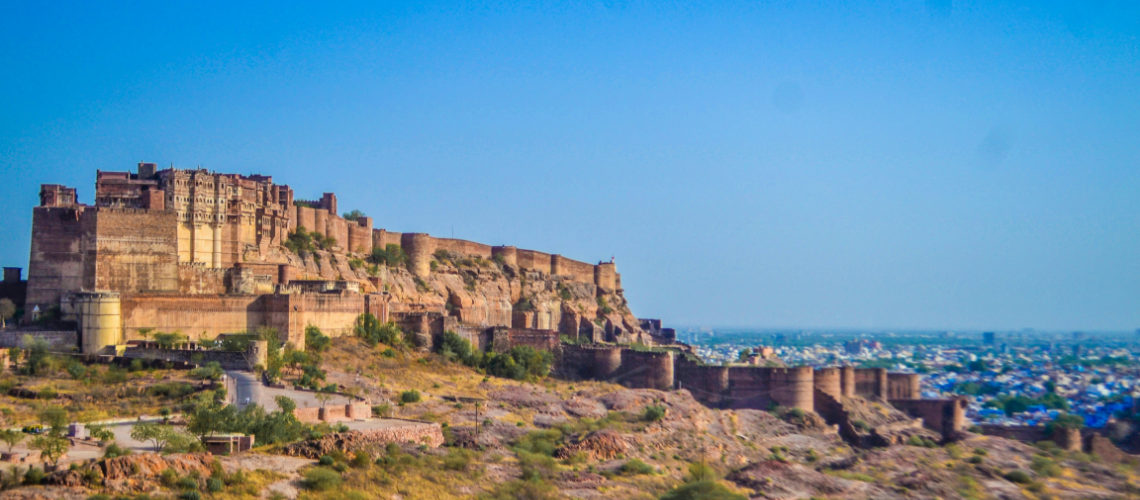
Jodhpur, the Blue City, is one of the most atmospheric and photogenic destinations in Rajasthan. Beneath the mighty walls of Mehrangarh Fort, one of the largest and most magnificent forts in India, spreads a sea of indigo-painted houses, a maze of narrow lanes filled with the scent of ghee, chilli, and hot stone.
This is a city of dramatic contrasts: a towering fortress and intimate blue alleyways, royal palaces and bustling street markets, fiery curries and cooling saffron lassi. This Jodhpur travel guide covers everything you need to plan a rewarding visit: the essential sights, the best food, the local experiences, and practical tips for the Blue City.
For full state planning, see our Rajasthan travel guide, and for curated itineraries, our Rajasthan tour packages collection.
Jodhpur Travel Guide: Everything You Need to Know
Jodhpur was founded in 1459 by Rao Jodha, the Rathore ruler, who established the city and its great fortress on a rocky hill for better security than the earlier capital of Mandore. The Rathore dynasty that built it still owns Mehrangarh Fort today, one of the few forts in India to remain with its founding family. Jodhpur was the capital of the Marwar kingdom, a powerful desert state on the edge of the Thar Desert, and its position on the trade routes made it a prosperous centre.
The city is famous above all for its blue houses, which spread out below the fort. Two explanations are commonly given: the blue originally denoted Brahmin homes, and the copper-sulphate limewash used to create it doubles as a termite repellent and helps keep houses cool. Today, anyone can paint their house blue, but a civic code maintains the same indigo shade. Jodhpur is a city for travellers who love detail, atmosphere, and photography, and one to two days is ideal.

Best Places to Visit in Jodhpur
Mehrangarh Fort
The Mehrangarh Fort is the dominant sight of Jodhpur and one of the finest forts in India, rising some 120 to 125 metres above the city on a rocky hill. Built from 1459 and expanded over the following centuries, it houses an outstanding museum of palanquins, royal cradles, paintings, costumes, and weaponry, alongside beautifully decorated palaces including the Moti Mahal (Pearl Palace), the Phool Mahal (Flower Palace), and the Sheesh Mahal (Mirror Palace).
The fort has seven gates, and its ramparts offer spectacular views over the blue city below. Arrive soon after opening (around 9 am) for the best light and fewest crowds, and allow two and a half to three hours. Our places to visit in Jodhpur guide covers the fort in detail.
Jaswant Thada
Just below the fort, the Jaswant Thada is a serene white marble memorial (cenotaph) built in 1899 in honour of Maharaja Jaswant Singh II, often called the Taj Mahal of Marwar. Built from thin sheets of polished marble that glow warmly in the sun and set beside a garden and lake, it is a peaceful contrast to the grandeur of the fort and a lovely spot for photography and quiet reflection. It is a 10- to 15-minute walk from the fort.
Umaid Bhawan Palace
The Umaid Bhawan Palace, on Chittar Hill, is one of the largest private residences in the world. Built between 1928 and 1943 as a famine-relief project to provide employment, this vast palace of sandstone and marble blends Indo-Saracenic, Classical Revival, and Art Deco styles. It is divided into three parts: the private residence of the royal family, a luxury Taj hotel, and a museum open to the public, displaying artefacts, artworks, and a fascinating collection of vintage cars.
The Blue City and Toorji Ka Jhalra
No visit to Jodhpur is complete without wandering the blue-painted lanes of the old city below the fort, one of the most photographed sights in Rajasthan. The restored Toorji Ka Jhalra stepwell, with its intricate carving and surrounding cafes, is the heart of a revitalised old-city district. The area around the Ghanta Ghar (Clock Tower) and Sardar Market is the bustling commercial heart of the old city, filled with stalls selling spices, textiles, and handicrafts.
Mandore Gardens
The Mandore Gardens, about 8 kilometres from the city, mark the site of the old Marwar capital before Jodhpur was founded. The gardens contain the striking red sandstone cenotaphs of the Marwar rulers, built in the style of Hindu temples, along with a hall of heroes, set among greenery and langur monkeys. It offers a quieter, atmospheric contrast to the main city sights.
What to Eat in Jodhpur
Jodhpur is a foodie paradise. Essential experiences include the famous makhaniya lassi (a thick, saffron-and-cardamom lassi topped with cream) at Shri Mishrilal Hotel near the clock tower, the sweet mawa kachori, the spicy mirchi bada and pyaaz kachori, and a rooftop thali with a fort view. Our places to eat in Jodhpur guide covers the city’s food scene in full.

Best Local Experiences in Jodhpur
Bishnoi Village Safari
A Bishnoi village safari near Jodhpur offers a moving encounter with a community renowned for its devotion to protecting nature and wildlife, along with demonstrations of traditional crafts and home-cooked food. It is one of the most authentic cultural experiences in Rajasthan. Our Rajasthan village experiences guide covers this in detail.
Zip-lining at Mehrangarh Fort
The Flying Fox zip-line circuit at Mehrangarh Fort offers a thrilling series of ziplines over the fort’s lakes and walls, with spectacular views, a genuine highlight for older children and adventurous travellers.
Practical Travel Tips for Visiting Jodhpur
Start at Mehrangarh early. Arriving soon after the 9 am opening gives the best golden light on the ramparts and the fewest crowds, and avoids the fierce midday heat (the stone radiates heat from April to June).
Combine the fort with Jaswant Thada. The two are a short walk apart, and a combined ticket at the fort gate saves money and time.
Hike Pachetia Hill for free views. For the best free, unobstructed views over the blue city and the fort, hike up Pachetia Hill, ideally at sunrise.
Allow one to two days. One full day covers Mehrangarh and Jaswant Thada; a second day allows Umaid Bhawan, Mandore, the stepwell, and the markets. Add a third day for a Bishnoi village safari.
Use autos and app cabs. Auto-rickshaws and Ola/Uber are the easiest ways to get around, though the narrow old-city lanes near the fort are best explored on foot.
Plan Your Jodhpur Trip with Immersive Trips
At Immersive Trips, we craft Jodhpur itineraries that capture the drama of the fort, the atmosphere of the blue city, the richness of the food, and the authenticity of the surrounding villages. Get in touch with our team to plan your Blue City visit.
Frequently asked questions about places to eat in Udaipur
How many days do I need in Jodhpur?
One to two days is ideal. One full day covers the essential Mehrangarh Fort and Jaswant Thada; a second day allows the Umaid Bhawan Palace, Mandore Gardens, the Toorji Ka Jhalra stepwell, and the markets. A third day allows a Bishnoi village safari for a rural cultural experience.
Why is Jodhpur called the Blue City?
Jodhpur is called the Blue City because of the sea of indigo-painted houses that spread out below Mehrangarh Fort. The blue originally denoted Brahmin homes, and the copper-sulphate limewash used to create it doubles as a termite repellent and helps keep houses cool. A civic code maintains the same indigo shade today.
What is the main attraction in Jodhpur?
Mehrangarh Fort is the dominant attraction, one of the largest and most magnificent forts in India, rising some 120 to 125 metres above the city. Its museum, decorated palaces (Moti Mahal, Phool Mahal, Sheesh Mahal), and ramparts with spectacular views over the blue city make it the essential Jodhpur experience.
What is the best time to visit Jodhpur?
October to March offers the most comfortable weather, with pleasant temperatures for fort visits and exploring the blue city. The summer months (April to June) are extremely hot, with the fort’s stone radiating significant heat by midday. If visiting then, start early and be indoors by late morning.
Is Jaswant Thada worth visiting?
Yes. Jaswant Thada, a serene white marble memorial built in 1899 and often called the Taj Mahal of Marwar, is a peaceful and beautiful contrast to the grandeur of Mehrangarh Fort. Built from thin polished marble that glows in the sun and set beside a garden and lake, it is a lovely spot for photography and quiet reflection and a short walk from the fort.
What food is Jodhpur famous for?
Jodhpur is famous for its makhaniya lassi (a thick, saffron-and-cardamom lassi topped with cream), mawa kachori (a sweet stuffed pastry), pyaaz kachori, mirchi bada (fiery stuffed chilli fritters), and its rooftop thalis with fort views. The area around Ghanta Ghar and Sardar Market is the best place to sample them. Our places to eat in Jodhpur guide covers the food scene.
What is the Umaid Bhawan Palace?
The Umaid Bhawan Palace, on Chittar Hill, is one of the largest private residences in the world, built between 1928 and 1943 as a famine-relief project. It is divided into three parts: the private residence of the royal family, a luxury Taj hotel, and a museum open to the public, which displays artefacts, artworks, and a collection of vintage cars.
Can I do a village safari from Jodhpur?
Yes. A Bishnoi village safari near Jodhpur offers a moving encounter with the Bishnoi community, renowned for their devotion to protecting nature and wildlife, along with traditional crafts and home-cooked food. It is one of the most authentic cultural and eco-tourism experiences in Rajasthan. Our Rajasthan village experiences guide covers it.
How do I get to Jodhpur?
Jodhpur has a domestic airport with flights from Delhi, Mumbai, and other cities, and is well connected by train and road. It is approximately 4.5 to 5 hours from Jaisalmer, and around 4.5 to 5 hours from Udaipur (via Ranakpur). It is a natural stop on the Rajasthan circuit. Our how to reach Rajasthan guide covers the options.
Where can I get the best views of the Blue City?
For the best free, unobstructed views over the blue city and Mehrangarh Fort, hike up Pachetia Hill, ideally at sunrise. The ramparts of Mehrangarh Fort itself offer spectacular views over the indigo houses, and the rooftop cafes and restaurants around the Toorji Ka Jhalra stepwell offer lovely fort and city views.