
Jaipur, the magnificent Pink City, is the gateway to Rajasthan and one of India’s most spectacular urban destinations. As the capital of the state and one corner of the famous Golden Triangle, it combines the grandeur of hilltop forts and royal palaces with the energy of bustling bazaars, a legendary food culture, and a craft tradition that produces some of the finest gemstones, textiles, and pottery in India. This Jaipur travel guide covers everything you need to plan a rewarding visit: the essential sights, the best food, the local experiences, practical tips, and how to make the most of your time in the Pink City.
For full state planning, see our Rajasthan travel guide, and for curated itineraries, our Rajasthan tour packages collection.
Jaipur Travel Guide: Understanding the Pink City
Jaipur was founded in 1727 by Maharaja Sawai Jai Singh II, who moved his capital from the nearby hilltop fort of Amber to a new city on the plains, driven by a growing population and water scarcity. It holds the distinction of being the first planned city in India, laid out on a grid according to the ancient principles of Vastu Shastra by the architect Vidyadhar Bhattacharya. The old city was painted pink, traditionally the colour of hospitality, in 1876 to welcome the Prince of Wales, and a local law still requires buildings in the old city to maintain the pink hue.
Today, Jaipur is a vibrant blend of the historic and the modern: a city where royal palaces and ancient observatories sit alongside contemporary cafes and one of the most important gemstone trading markets in the world. It is the natural starting point for a Rajasthan journey and rewards at least two to three days of exploration.

Essential Places to Visit in Jaipur
Amber Fort: Jaipur’s Most Iconic Fort
The Amber Fort (Amer Fort), about 11 kilometres from the city centre, is Jaipur’s crowning glory: a magnificent hilltop fort-palace complex overlooking Maota Lake. Built in 1592 by Raja Man Singh I, it served as the Kachhwaha Rajput capital before Jaipur was founded. A UNESCO World Heritage Site, it combines Rajput and Mughal architecture, with highlights including the dazzling Sheesh Mahal (Mirror Palace), the ornate Ganesh Pol gate, and the Diwan-i-Aam and Diwan-i-Khas halls. Arrive early (by 8 to 8:30 am) to avoid the crowds and heat, and allow two to three hours. Our places to visit in Jaipur guide covers the fort in detail.
City Palace: The Royal Heart of Jaipur
The City Palace, in the heart of the old city, is a stunning blend of Mughal and Rajput architecture built by Jai Singh II and expanded by later rulers. Still partly inhabited by Jaipur’s royal family (who reside in the Chandra Mahal), the complex includes museums displaying royal costumes, weapons, and artefacts, the reception hall of Mubarak Mahal, and the famous painted Peacock Gate. Allow one and a half to two hours.
Hawa Mahal: The Icon of the Pink City
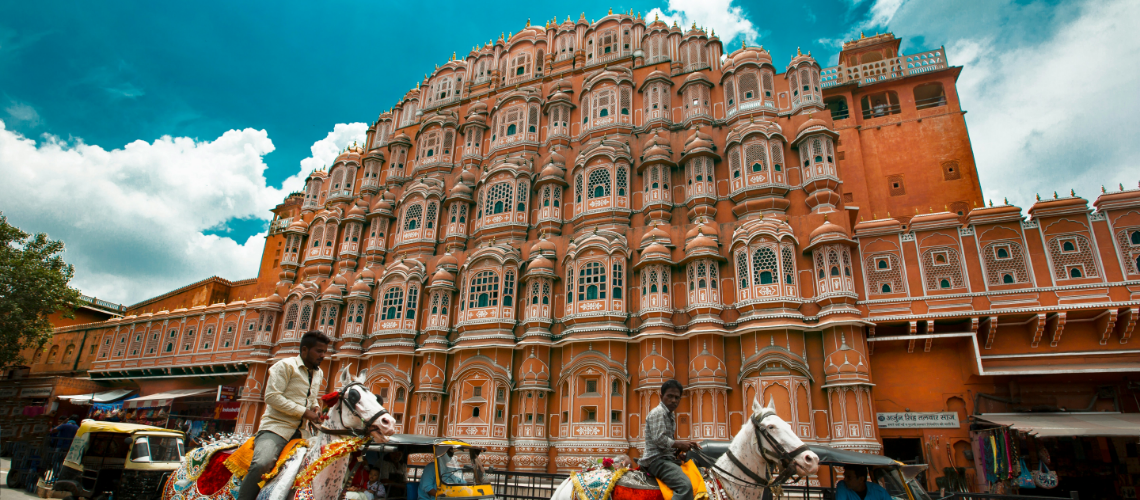
The Hawa Mahal (Palace of Winds), built in 1799 by Maharaja Sawai Pratap Singh, is Jaipur’s most iconic landmark: a five-storey pink sandstone facade of 953 small latticed windows (jharokhas), designed so royal women could observe street life unseen, and shaped to resemble the crown of Lord Krishna. The best photograph is taken from across the street, ideally from one of the rooftop cafes opposite, in the morning light.
Jantar Mantar: Jaipur’s UNESCO Observatory
Jantar Mantar, a UNESCO World Heritage Site next to the City Palace, is the largest of the five astronomical observatories built by Jai Singh II. Its collection of monumental stone instruments includes the world’s largest stone sundial, accurate to within seconds. A guide or audio guide greatly enhances a visit, explaining how each remarkable instrument works.
Nahargarh and Jaigarh Forts: The Best Views Over Jaipur
Nahargarh Fort, on the Aravalli ridge above the city, offers spectacular sunset views over Jaipur and a hilltop cafe. Jaigarh Fort, above Amber, houses the Jaivana, once the world’s largest cannon on wheels. Both add depth to a Jaipur itinerary beyond the main old-city sights.
Jal Mahal Other Must-Visit Attractions in Jaipur
The Jal Mahal (Water Palace) appears to float in the middle of Man Sagar Lake and is a beautiful (free) photo stop on the road to Amber. Other worthwhile sights include the Albert Hall Museum (a striking Indo-Saracenic building in Ram Niwas Garden), the symmetrical Panna Meena Ka Kund stepwell near Amber, the Gaitore royal cenotaphs, and the Galtaji (Monkey Temple).
Food in Jaipur: What to Eat in the Pink City
Jaipur has one of the richest food cultures in Rajasthan. Essential experiences include pyaaz kachori from Rawat Mishtan Bhandar, a traditional Rajasthani thali, and a cultural village dinner at a complex such as Chokhi Dhani with folk performances. The old city bazaars, particularly along MI Road, Johari Bazaar, and Bapu Bazaar, offer the best street food. Our places to eat in Jaipur guide covers the city’s food scene in full.

Shopping in Jaipur: Markets, Handicrafts and Souvenirs
Jaipur is one of India’s great shopping cities, renowned for gemstones and jewellery (Johari Bazaar is one of Asia’s largest gem markets), block-printed textiles, blue pottery, and bangles (Tripolia Bazaar). Buying directly from workshops in the nearby craft towns of Sanganer and Bagru offers the best quality and value for block prints. Our shopping in Rajasthan guide covers Jaipur’s markets in detail.
Jaipur Travel Tips for First-Time Visitors
Use the composite ticket. A single composite ticket covers Amber Fort, Hawa Mahal, Jantar Mantar, Nahargarh Fort, and the Albert Hall Museum, and saves money if you visit three or more sites. It is valid for two consecutive days and available at any of the sites.
Start early. Arriving at Amber Fort and Hawa Mahal soon after opening avoids both the heat and the tour-bus crowds that build by mid-morning.
Skip the elephant rides at Amber. Walking up the paved ramp takes 10 to 15 minutes and lets you appreciate the architecture, while jeeps are available for those with mobility concerns. Animal welfare is a genuine concern with the elephant rides.
Allow two to three days. One long day can cover the highlights, but two to three days allow you to explore Jaipur properly, including the bazaars, the outlying forts, and a craft workshop.
Avoid weekends and holidays at the forts. Amber Fort, in particular, sees significantly heavier crowds on Saturdays and public holidays.
Plan Your Jaipur Trip with Immersive Trips
At Immersive Trips, we craft Jaipur itineraries that go beyond the standard sights, connecting you to the best of the city’s food, crafts, and culture while ensuring the timing and logistics are smooth. Get in touch with our team to plan your Pink City visit.
Frequently asked questions about visiting Jaipur
How many days do I need in Jaipur?
Two to three days is ideal. One long day can cover the main highlights (Amber Fort, City Palace, Hawa Mahal, Jantar Mantar), but two to three days allow you to explore properly, including the outlying forts, the bazaars, a craft workshop, and the food scene, without rushing.
What is the best time to visit Jaipur?
October to March offers the most comfortable weather, with pleasant temperatures ideal for fort visits and sightseeing. November and February are particularly good. The summer months (April to June) can be extremely hot, and if visiting then, start sightseeing early and be indoors by midday.
What are the must-visit places in Jaipur?
The essential sights are Amber Fort, City Palace, Hawa Mahal, and Jantar Mantar. Beyond these, Nahargarh Fort (for sunset), Jaigarh Fort, Jal Mahal (for photos), the Albert Hall Museum, and the Panna Meena Ka Kund stepwell are all worthwhile additions.
Is the Jaipur composite ticket worth buying?
Yes, if you plan to visit three or more of the covered sites. The composite ticket covers Amber Fort, Hawa Mahal, Jantar Mantar, Nahargarh Fort, and the Albert Hall Museum, saves money over individual tickets, and is valid for two consecutive days. It is available at any of the covered sites.
Should I take an elephant ride at Amber Fort?
We recommend walking up the paved ramp instead, which takes 10 to 15 minutes and allows you to appreciate the fort’s architecture, or taking a jeep if mobility is a concern. There are genuine animal welfare concerns associated with the elephant rides at Amber Fort.
What food is Jaipur famous for?
Jaipur is famous for pyaaz kachori (spiced onion pastry), the traditional Rajasthani thali, dal baati churma, and laal maas. Rawat Mishtan Bhandar is the go-to spot for kachori, and cultural village complexes such as Chokhi Dhani offer a full thali with folk performances. Our places to eat in Jaipur guide covers the food scene.
What should I buy in Jaipur?
Jaipur is famous for gemstones and jewellery (Johari Bazaar), block-printed textiles, blue pottery, and bangles (Tripolia Bazaar). Buying directly from workshops in the nearby towns of Sanganer and Bagru offers the best block prints. Our shopping in Rajasthan guide covers the markets.
How do I get to Jaipur?
Jaipur has an international airport with connections across India and to several international destinations, is served by the fast Vande Bharat train from Delhi (around four hours), and is approximately five to six hours from Delhi by road. It is the most connected city in Rajasthan and the natural entry point to the state. Our how to reach Rajasthan guide covers the options.
Is Jaipur part of the Golden Triangle?
Yes. Jaipur forms one corner of the Golden Triangle, along with Delhi and Agra (home of the Taj Mahal). This is the most popular short introduction to northern India and a natural way to begin a wider Rajasthan trip.
What are the best day trips from Jaipur?
Popular day trips from Jaipur include the Abhaneri stepwell (Chand Baori), the Shekhawati painted havelis (with Mandawa the most accessible town), and Ranthambore National Park for a tiger safari (though this is better as an overnight extension). Jaipur is also well connected to Pushkar, Ajmer, and the wider Rajasthan circuit.