
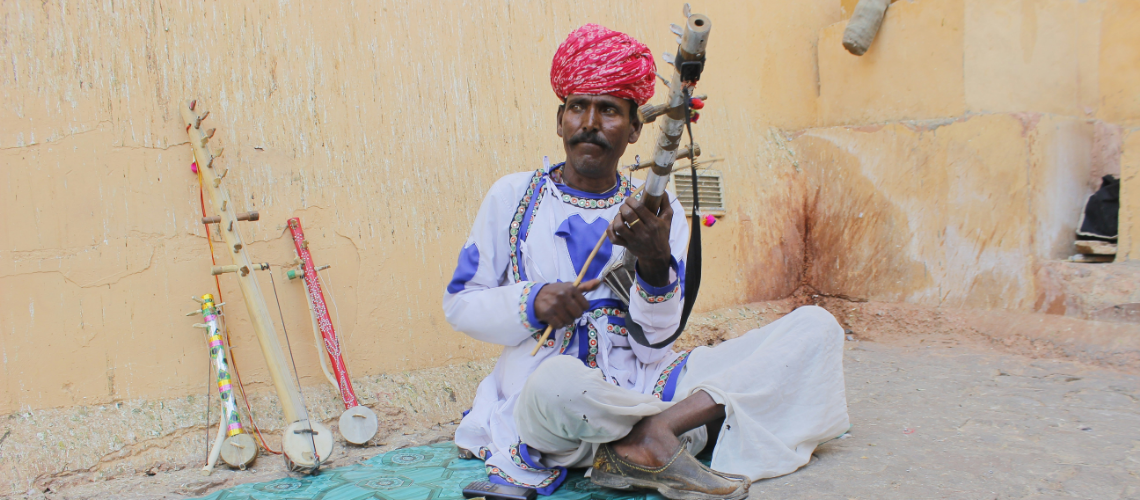
Beyond its forts and palaces, the real soul of Rajasthan lies in its living culture: the haunting desert music of hereditary musician communities, the whirl of folk dancers in mirror-worked skirts, the puppet theatres that have told the same stories for centuries, the artisans who still block-print, weave, and paint using ancestral techniques, and the warm, generous hospitality that welcomes every guest as royalty. The best cultural experiences in Rajasthan connect travellers to this living heritage, transforming a trip from a tour of monuments into a genuine encounter with one of the richest regional cultures in India. This guide covers the music, dance, crafts, festivals, food, and community experiences that define authentic Rajasthan.
For full trip planning, see our Rajasthan travel guide, and for curated cultural itineraries, our Rajasthan tour packages collection.
The folk music of Rajasthan
Rajasthan’s folk music is among the richest in India, sustained by hereditary musician communities whose art has been passed down through generations. The Manganiyar and Langa communities of western Rajasthan are among the finest folk musicians in the country, performing soulful desert ballads on traditional instruments such as the kamaicha, the sarangi, and the dholak. Their music, once patronised by the desert nobility, tells stories of love, valour, and devotion, and hearing it performed live, particularly at a desert camp or a village setting under the stars, is one of the most moving cultural experiences Rajasthan offers.

The folk dances of Rajasthan
Rajasthan’s folk dances are as vivid as its music. The Ghoomar, a graceful dance performed by women in flowing skirts, is the signature dance of the Rajput tradition. The Kalbeliya dance, performed by the Kalbeliya (snake-charmer) community and characterised by its sinuous, serpentine movements and black mirror-worked costumes, is inscribed on UNESCO’s Representative List of the Intangible Cultural Heritage of Humanity. Other spectacular dances include the Kathputli puppet performances, the fire-based Chari and Bhavai dances (in which dancers balance multiple pots on their heads), and the energetic Terah Taali. These performances are staged at cultural venues, heritage hotels, desert camps, and festivals across the state.
The crafts of Rajasthan
Rajasthan is one of the great craft centres of India, and each city has its own speciality. Jaipur is renowned for blue pottery, gemstone cutting and jewellery, and block printing (particularly in the nearby towns of Sanganer and Bagru). Jodhpur is known for its furniture, textiles, and bandhej (tie-dye). Udaipur is famous for its miniature paintings, a tradition of exquisitely detailed artwork depicting royal courts, hunts, and religious scenes. Jaisalmer is known for its embroidery and leatherwork. Visiting the workshops where these crafts are made and meeting the artisans who create them is one of the most rewarding cultural experiences in Rajasthan, and buying directly from the makers supports the continuation of these traditions. Our shopping in Rajasthan guide covers where to find the best crafts.
The festivals of Rajasthan
Rajasthan’s festivals are among the most colourful and spectacular in India. The Pushkar Camel Fair, held each November, is one of the largest livestock fairs in the world, combining a vast camel and cattle market with folk performances, competitions, and a pilgrimage to the sacred lake. The Jaisalmer Desert Festival, held in winter, fills the Sam Sand Dunes with camel races, folk music, dance, and turban-tying competitions. Teej and Gangaur celebrate the monsoon and the goddess Parvati with processions, music, and dance. Timing a visit to coincide with one of these festivals adds an extraordinary dimension to a Rajasthan trip. Our Rajasthan festival travel guide covers the festival calendar in detail.
The food culture of Rajasthan
Food is central to Rajasthani culture, and experiencing it goes far beyond simply eating in restaurants. A traditional Rajasthani thali, with its dal baati churma, gatte ki sabzi, ker sangri, and array of accompaniments, is a cultural experience in itself, reflecting centuries of adaptation to the desert climate. A cooking class with a local family or a heritage hotel chef offers insight into the techniques and ingredients behind the cuisine. And a meal shared in a village home, as part of a community visit, connects travellers to the food culture at its most authentic. Our traditional food of Rajasthan and places to eat in Rajasthan guides cover the cuisine in detail.
Village and community experiences
Some of the most meaningful cultural experiences in Rajasthan come from encounters with its rural communities. A Bishnoi village safari near Jodhpur introduces travellers to a community renowned for its devotion to protecting nature and wildlife, offering insight into a traditional lifestyle, handicrafts, and home-cooked food. Village visits across the state, whether to potters, weavers, or farming communities, provide a window into a way of life that continues alongside the grand heritage of the forts and palaces. Our Rajasthan village experiences guide covers these encounters in detail.
Heritage and architecture as living culture
Rajasthan’s forts, palaces, havelis, and temples are not merely historical monuments but expressions of a living culture. The painted havelis of the Shekhawati region, often called the world’s largest open-air art gallery, tell stories of merchant wealth and artistic tradition. The stepwells (baoris) of Bundi and Abhaneri reflect centuries of water management and craft. Staying in a heritage hotel, attending a cultural performance in a fort courtyard, or exploring a painted haveli connects travellers to this architectural heritage as a living tradition. Our fort and palace tours in Rajasthan guide covers the architecture.

Tips for authentic cultural experiences in Rajasthan
Seek out live folk music and dance. A live Manganiyar or Langa performance, or a Kalbeliya dance, particularly in a desert or village setting, is one of the most moving experiences Rajasthan offers.
Buy crafts directly from artisans. Visiting workshops and buying directly from the makers supports the continuation of traditional crafts and gives you a genuine connection to the objects you take home.
Time your visit to a festival if you can. The Pushkar Camel Fair, the Jaisalmer Desert Festival, and celebrations such as Teej and Gangaur add an extraordinary cultural dimension to a trip.
Take a cooking class or share a village meal. Engaging with Rajasthani food beyond the restaurant table, through a cooking class or a home meal, deepens your understanding of the culture.
Choose authentic experiences over staged ones. A knowledgeable operator can connect you to genuine cultural encounters, rather than purely tourist-facing performances, for a richer and more meaningful experience.
Plan your cultural Rajasthan journey with us
At Immersive Trips, we build Rajasthan itineraries rich in authentic cultural experiences, connecting travellers to the musicians, artisans, communities, and traditions that make the state’s living heritage so extraordinary. Get in touch with our team to plan a culturally immersive Rajasthan journey.
Frequently asked questions about cultural experiences in Rajasthan
What are the best cultural experiences in Rajasthan?
The best cultural experiences include live folk music from the Manganiyar and Langa communities, folk dances such as Ghoomar and the UNESCO-listed Kalbeliya, visits to craft workshops (block printing, blue pottery, miniature painting), attending festivals such as the Pushkar Camel Fair, traditional thali meals and cooking classes, and village and community visits such as the Bishnoi village safari.
What is the Kalbeliya dance?
Kalbeliya is a folk dance performed by the Kalbeliya (snake-charmer) community of Rajasthan, characterised by sinuous, serpentine movements and black mirror-worked costumes. It is inscribed on UNESCO’s Representative List of the Intangible Cultural Heritage of Humanity and is one of the most spectacular folk dances in India.
Where can I hear traditional Rajasthani folk music?
The finest Rajasthani folk music, performed by the hereditary Manganiyar and Langa communities, can be heard at desert camps near Jaisalmer, at cultural venues and heritage hotels across the state, and at festivals. A live performance in a desert or village setting under the stars is particularly moving.
What crafts is Rajasthan known for?
Rajasthan is renowned for its crafts, with each city specialising in different traditions: Jaipur for blue pottery, gemstones, jewellery, and block printing; Jodhpur for furniture and bandhej tie-dye; Udaipur for miniature paintings; and Jaisalmer for embroidery and leatherwork. Visiting artisan workshops is a rewarding cultural experience.
What are the most important festivals in Rajasthan?
The Pushkar Camel Fair (November), one of the largest livestock fairs in the world, and the Jaisalmer Desert Festival (winter) are the most spectacular. Teej and Gangaur celebrate the monsoon and the goddess Parvati with processions and dance. Timing a visit to coincide with a festival adds an extraordinary dimension to a trip.
Can I take a cooking class in Rajasthan?
Yes. Cooking classes with local families and heritage hotel chefs are widely available across Rajasthan and offer insight into the techniques and ingredients behind the region’s distinctive cuisine. It is one of the most engaging and hands-on cultural experiences a traveller can have in the state.
What is a Bishnoi village safari?
A Bishnoi village safari, near Jodhpur, introduces travellers to the Bishnoi community, renowned across India for their devotion to protecting nature and wildlife. The experience includes learning about their traditional lifestyle and environmental principles, seeing handicrafts, and sharing home-cooked food. It is one of the most authentic cultural and eco-tourism experiences in Rajasthan.
Where can I see puppet shows in Rajasthan?
Kathputli (string puppet) performances, a centuries-old Rajasthani tradition, are staged at cultural venues, heritage hotels, cultural village complexes, and festivals across the state, particularly in Jaipur and Udaipur. They are colourful, engaging, and especially popular with families.
What is the Shekhawati region known for culturally?
The Shekhawati region in northern Rajasthan is known as the world’s largest open-air art gallery, thanks to its extraordinary concentration of painted havelis. These merchant mansions are covered in frescoes depicting mythology, folk tales, and historical scenes, representing a remarkable living tradition of art and architecture. Mandawa is the most accessible base for exploring them.
How can I experience authentic Rajasthani culture rather than staged shows?
Working with a knowledgeable operator who can connect you to genuine cultural encounters, such as live folk music in a village setting, visits to artisan workshops, community experiences like the Bishnoi village safari, and home-cooked meals, ensures a richer and more authentic experience than purely tourist-facing performances. Seeking out festivals and craft villages also deepens the cultural connection.