
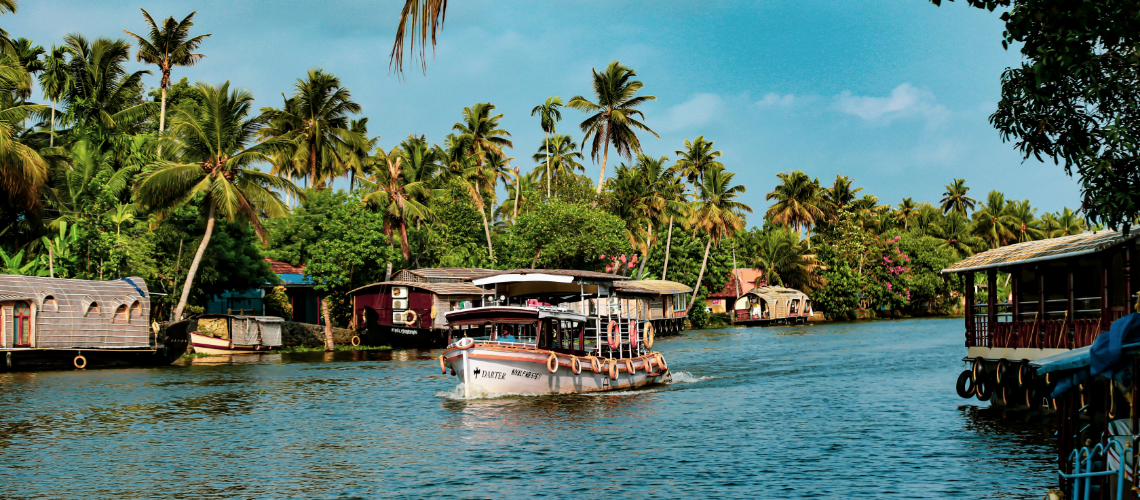
Kerala’s backwaters form one of the most distinctive landscapes anywhere in the world: a network of over 900 kilometres of interconnected canals, rivers, lakes, and lagoons running along the coast from Kollam to Kochi. Backwater tours in Kerala range from a single afternoon shikara ride to a multi-day journey across several lakes, and the right choice depends entirely on the experience you are looking for. This guide covers the major routes, the different types of boats and tours available, and how to choose the backwater experience that suits you best.
For the wider Kerala context, see our Kerala travel guide and our destination-specific travel guide to Alleppey, the heart of backwater tourism
Understanding the Kerala Backwaters
The backwaters were formed by waves and shore currents, creating low barrier islands across the mouths of rivers flowing down from the Western Ghats into the Arabian Sea. Vembanad Lake, at approximately 96.5 kilometres long and covering around 2,033 square kilometres, is the largest lake in Kerala and the centrepiece of backwater tourism, connecting Kochi in the north to the canals of Kottayam and Alleppey in the south.
The backwaters host three of the world’s Ramsar Convention-listed wetlands: Ashtamudi Lake, Sasthamkotta Lake, and the Vembanad-Kol wetlands, all recognised as wetlands of international importance. The Kuttanad region, where farming takes place one to two metres below sea level, was declared a Globally Important Agricultural Heritage System by the Food and Agriculture Organisation of the United Nations in 2013, and UNESCO recognised the region’s cultural and agricultural landscape as early as 1972.
The traditional vessel of the backwaters is the kettuvallam, originally used to transport rice and spices through the canals. The name derives from “kettu” (to tie or stitch) and “vallam” (boat), referring to the construction method: planks of anjili wood are tied together with coconut or palm fibre rope, without a single nail. More than 2,000 of these vessels, now converted into tourist houseboats, ply the backwaters today, classified by the Kerala government into platinum, gold, and silver categories.

The Major Backwater Routes
Alleppey and Punnamada Lake
Alleppey (Alappuzha) is the most popular starting point for backwater tours and is home to over 1,200 registered houseboats, making it the undisputed houseboat capital of Kerala. The standard route departs from the Alleppey jetty, crosses Punnamada Lake (the venue for the Nehru Trophy Boat Race), and continues into the narrower canals around Kainakary and Champakulam. This route mixes open water with intimate village waterways and is the most accessible introduction to the backwaters for first-time visitors.
A quieter variation of the Alleppey route runs through Thottappally, Nedumudi, and Thakazhi, offering calmer, less-trafficked waterways with a more genuinely rural character.
Kumarakom and Vembanad Lake
Kumarakom, on the eastern shore of Vembanad Lake about 32 kilometres from Alleppey, offers wider waterways and a more exclusive backwater experience with fewer houseboats and a higher concentration of luxury resorts. The Kumarakom Bird Sanctuary on the lake shore is a significant highlight, home to numerous resident and migratory species, including herons, egrets, darters, and (in season) rare visitors such as the Siberian crane. Sunsets at Kumarakom are widely considered to be better than those at Alleppey, owing to the lake’s open expanse. Pathiramanal Island, a small, uninhabited island in the lake accessible only by boat, is a popular stop for birdwatching on tours departing from either Alleppey or Kumarakom.
Kuttanad village routes
Kuttanad, the agricultural region spanning the Alappuzha and Kottayam districts, is one of the few places in the world where farming takes place below sea level. A canoe or small shikara tour through the Kuttanad channels, rather than a standard houseboat cruise, gives the most direct access to this extraordinary landscape: paddy fields growing at or below the waterline, narrow channels crossed by low-arched bridges, and farmers navigating the polders by boat as a matter of daily life. These village tours typically last three hours to a full day and can be booked through local operators in the Kuttanad area south of Alleppey.
Kollam to Alleppey
The Kollam to Alleppey route, run by Kerala’s State Water Transport Department (also known as the DTPC ferry), is an eight-hour public ferry journey connecting the two towns through Ashtamudi Lake and the connecting backwater channels. This is one of the best-value backwater experiences available, costing a fraction of a private houseboat charter, and passes through stretches of water that most private tours never reach. It is best suited to travellers with a full day to spare and an interest in seeing the backwaters as local people actually use them.
Kollam and Ashtamudi Lake
Kollam (formerly Quilon), one of the oldest trading ports on India’s western coast and historically noted by travellers including Marco Polo and Ibn Battuta, has grown in popularity as a backwater destination without yet becoming overly commercialised. The Ashtamudi Kayal (lake), known as the gateway to the backwaters from the south, offers a quieter, more historically rich alternative to the Alleppey circuit, with its own cashew-processing industry adding a distinct economic character to the region.
Munroe Island
Munroe Island, a cluster of small islands at the confluence of rivers and backwater lagoons near Kollam, is among the quietest and most photogenic backwater destinations in Kerala. Locals still use kettuvallam-style ferries, and visitors can watch coir-making and toddy-curing in progress while taking narrow canoe rides through reed-lined channels. It remains largely free of mass tourism and is ideal for travellers seeking village life on water rather than a managed tourist experience.

Types of Backwater Tours
Day cruises typically run for three to eight hours and include lunch, covering a single lake or a short stretch of canal. These suit travellers with limited time who still want to experience the backwaters.
Overnight houseboat stays are the classic Kerala backwater experience: departing in the late morning, cruising through the afternoon, anchoring on the lake overnight, and returning the following morning after breakfast. This is strongly recommended over a day cruise for the full experience.
Shikara and canoe tours use smaller, more manoeuvrable boats that can access narrow village channels closed to larger houseboats. These are ideal for sunrise tours, village visits, and bird watching.
Public ferry journeys, run by the Kerala State Water Transport Department, offer an authentic and inexpensive way to see the backwaters as local people experience them daily, including the eight-hour Kollam to Alleppey route and the shorter Alleppey to Kottayam service.
What to Look for on a Backwater Tour in Kerala
Village life: Watching daily activities along the canal banks, including washing, fishing, and coir-making, gives backwater tours their most memorable texture.
Bioluminescence: Between October and February, certain stretches of the backwater canals produce visible bioluminescence after dark, best seen from a shikara or canoe on moonless nights.
Bird watching: The Kumarakom Bird Sanctuary, Pathiramanal Island, and the wetlands around Munroe Island offer some of the best bird watching in Kerala, particularly during the migratory season from November to February.
Toddy shop dining: A meal at a canal-side toddy shop, serving fresh karimeen fry, kappa, and locally tapped coconut toddy, is one of the most authentic food experiences available on a backwater tour.
Boat-building yards: Traditional boatyards around Champakulam, where snake boats used in the famous regattas are built and maintained, offer a fascinating glimpse into the craft and community effort behind Kerala’s boat racing culture.
Plan your Backwater Tour with Immersive Trips
At Immersive Trips, we know which backwater routes deliver the most authentic experience for your travel style, whether that means a luxury overnight houseboat, a quiet village canoe tour, or a public ferry adventure most tourists never discover. Get in touch with our team or explore our Kerala tour packages.
Frequently asked questions about backwater tours in Kerala
1. Which is better for a backwater tour: Alleppey or Kumarakom?
Alleppey offers the widest range of houseboats and the most established infrastructure, making it the best choice for first-time visitors. Kumarakom offers a quieter, more exclusive experience with wider waterways and a stronger focus on bird watching and luxury resorts. Many travellers combine the two: an overnight houseboat trip from Alleppey, followed by a few nights at a Kumarakom resort.
2. How long should a backwater tour be?
A single overnight stay on a houseboat is generally sufficient to experience the highlights of the backwaters. Two-night cruises can feel repetitive for some travellers, who often prefer pairing one houseboat night with a stay at a lakeside resort or canal-side homestay instead.
3. Is the Kollam to Alleppey public ferry worth taking?
Yes, for travellers who want an authentic and inexpensive way to see the backwaters. The eight-hour journey costs a fraction of what a private houseboat would cost and passes through areas most tourist boats do not reach. It particularly suits photographers, repeat visitors, and those who find the main Alleppey circuit too commercialised.
4. What is Kuttanad, and why is it significant?
Kuttanad is the agricultural heartland of the Alleppey and Kottayam districts, where rice farming takes place one to two metres below sea level using a system of dykes, bunds, and sluice gates developed over centuries. It was declared a Globally Important Agricultural Heritage System by the United Nations in 2013 and is one of the most unusual farming landscapes in the world.
5. Can I see wildlife on a backwater tour?
Yes. The Kumarakom Bird Sanctuary and Pathiramanal Island are excellent for bird watching, particularly during the migratory season from November to February. Otters, turtles, and a variety of fish and crab species are also part of the backwater ecosystem, alongside frequent sightings of kingfishers, herons, egrets, and cormorants.
6. What is a kettuvallam?
A kettuvallam is the traditional rice barge of Kerala’s backwaters, constructed from anjili wood planks tied together with coconut fibre rope rather than nails. Originally used to transport rice and spices, these vessels have been converted into the houseboats that now define backwater tourism. The Kerala government classifies tourist houseboats as platinum, gold, or silver.
7. Is it possible to do a backwater tour without staying overnight on a houseboat?
Yes. Day cruises of three to eight hours are widely available from Alleppey and Kumarakom. Canoe and shikara tours through Kuttanad or Munroe Island can also be done as half-day or full-day excursions without an overnight stay. Canal-side homestays offer the backwater setting without the houseboat experience itself.
8. What is the best time of year for a backwater tour?
October to March offers the most comfortable weather for backwater tours. September and October, immediately after the monsoon, show the landscape at its lushest and greenest. August brings the Nehru Trophy Boat Race to Punnamada Lake near Alleppey, adding a unique cultural dimension for those who time their visit around it.
9. Are backwater tours suitable for families with children?
Yes. Houseboat stays, shikara rides, and canoe tours are generally calm and safe for children, who typically enjoy the novelty of life on the water. Choose a premium houseboat with secure railings for families with young children, and communicate ages to the operator when booking.
10. How do I avoid an overly commercialised backwater experience?
Choosing a quieter route, such as the Alleppey to Thottappally stretch via Punnamada, the Kollam to Alleppey public ferry, Munroe Island, or a Kuttanad village canoe tour, gives a noticeably more authentic experience than the busiest sections of the main Alleppey circuit. Booking through a knowledgeable local operator who can recommend specific routes and timing also makes a significant difference.