
Kochi is the city most travellers enter Kerala through, and it deserves more time than the typical single overnight stop on most itineraries. A proper Kochi travel guide should start with one honest observation: this is one of the most historically layered cities in India. Portuguese, Dutch, British, Jewish, Chinese, Arab, and indigenous Kerala influences have all left their mark on the city’s architecture, food, culture, and character. The result is a place where a 16th-century synagogue, a 14th-century fishing-net tradition, and a biennial contemporary art festival coexist within walking distance of one another. Kochi rewards those who slow down.
Our broader Kerala travel guide and guide to the best things to do in Kerala provide a wider context for planning a full Kerala trip.
Understanding Kochi: the city’s different neighbourhoods
Kochi is not one place but several, connected by ferry, road, and bridge across a network of islands, peninsulas, and waterways.
Fort Kochi is the historic peninsula where the Portuguese established their first settlement after arriving on the Malabar coast in 1503. The streets here are lined with colonial buildings in varying states of restoration, art galleries, heritage homestays, and small restaurants. This is the most atmospheric area of the city for visitors and the best base for exploring the historical sights.
Mattancherry adjoins Fort Kochi to the south and is the former centre of the Jewish community and the spice trade. The Mattancherry Palace (known as the Dutch Palace), the Paradesi Synagogue, and the Jew Town spice markets are all located here. The area has also become one of the most vibrant street art destinations in South India.
Willingdon Island is a man-made island created from harbour dredging, housing several of the city’s major hotels and the Port of Kochi authority. It sits centrally and is accessible by ferry.
Ernakulam is the mainland commercial centre, with the main railway station, bus terminus, and a more contemporary urban environment. It offers a wider range of mid-range accommodation and is the practical hub for transport connections.

Best places to visit in Kochi
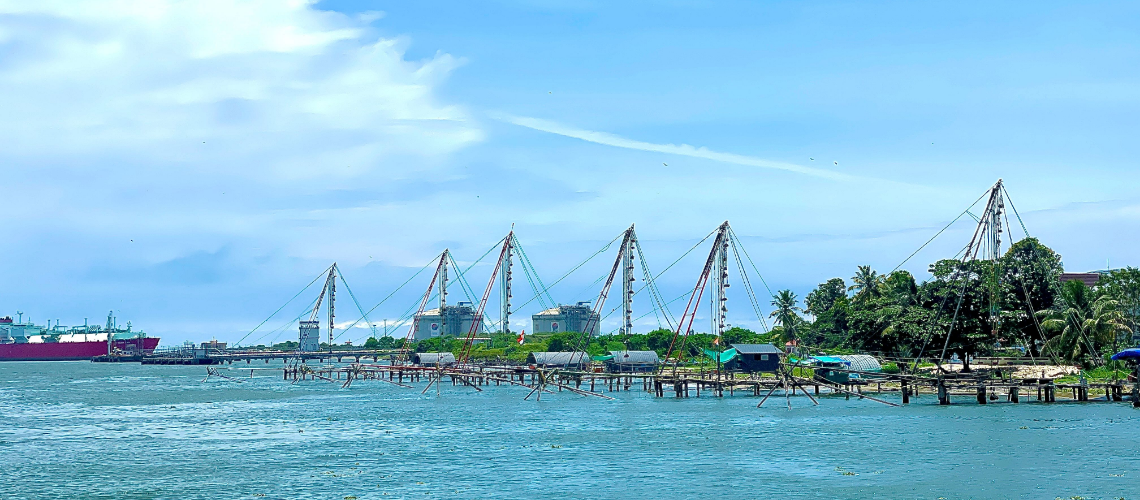
Chinese fishing nets
The Chinese fishing nets that line the waterfront at Fort Kochi are the city’s most photographed landmark. These massive cantilevered wooden structures, which lower their nets into the water and raise them on a counterweight system, are believed to have been introduced to Kochi by traders from the court of Kublai Khan in the 14th century. They are still operated by local fishing families today, and the sight of the nets silhouetted against a sunset over the Arabian Sea is genuinely spectacular. Fresh fish bought from the net operators can be taken to nearby stalls for immediate grilling.
St Francis Church
St Francis Church, built originally by the Portuguese Franciscans in 1503, is the oldest European church in India still in active use. The explorer Vasco da Gama was buried here in Kochi in 1524, before his remains were taken to Portugal fourteen years later. The church passed successively from Portuguese to Dutch to British control, each leaving its mark on the building. The interior houses a 17th-century Dutch baptism book and a collection of artefacts spanning the colonial period.
Mattancherry Palace (Dutch Palace)
The Mattancherry Palace, built by the Portuguese in 1555 and presented to the Raja of Kochi as a token of appreciation for trading rights, was later renovated by the Dutch in 1663 (giving it its common name). The building houses a remarkable collection of Kerala mural paintings depicting scenes from the Ramayana and Mahabharata, royal coronation robes, Dutch maps of Old Cochin, and palanquins used by past Rajas. It is one of the finest examples of Kerala’s largely unknown tradition of mural painting.
Paradesi Synagogue
The Paradesi Synagogue in Jew Town, Mattancherry, was built in 1568 on land granted by the Raja of Kochi to the Malabar Jewish community. It is one of the oldest active synagogues in the Commonwealth. The interior features hand-painted Chinese floor tiles brought from Canton in the 18th century, Belgian crystal chandeliers, and ancient Torah scrolls. The Jewish community that built and sustained this synagogue has diminished significantly over the decades, with most members having emigrated to Israel, but the synagogue remains open and maintained.
Kochi-Muziris Biennale
The Kochi-Muziris Biennale, held every two years in Fort Kochi and Mattancherry, is one of the largest contemporary art events in Asia. First held in 2012, the Biennale uses the heritage buildings, warehouses, and public spaces of Fort Kochi as exhibition venues, bringing together artists from across India and the world. Outside Biennale years, many of the permanent galleries and artist studios in Fort Kochi remain active and worth visiting.
Kerala Folklore Museum and Hill Palace
The Hill Palace Museum in Tripunithura, about 12 kilometres from Ernakulam, is the largest archaeological museum in Kerala, housed in a 49-building heritage complex that was the royal residential palace of the Cochin Royal Family. The collection includes royal thrones, weapons, ornaments, manuscripts, and artefacts spanning several centuries of Kochi’s royal history. It is less visited than the Fort Kochi sights and offers a quieter, more considered experience.

Things to do in Kochi
Fort Kochi heritage walk: The lanes of Fort Kochi are best explored on foot over two to three hours, taking in the street art, the colonial architecture, the spice warehouses of Mattancherry, and the waterfront. Several guided heritage walking tours are available and significantly deepen the experience.
Kathakali and Kalaripayattu performances: Evening cultural performances are staged at multiple venues in Fort Kochi, typically including a pre-show Kathakali makeup demonstration. See our guide to cultural experiences in Kerala for fuller guidance on finding the most authentic performances.
Ferry rides: Kochi’s ferry network connects Fort Kochi, Mattancherry, Willingdon Island, and Ernakulam and is both a practical mode of transport and a genuinely enjoyable way to see the city from the water. The ferry from Fort Kochi to Ernakulam passes the Chinese fishing nets and the harbour, offering some of the best views of the city.
Kumbalangi village visit: India’s first model ecotourism village, just 15 kilometres from Kochi, offers an immersive half-day experience of traditional village life. See our guide to offbeat places in Kerala for the full story on Kumbalangi.
Cherai Beach: About 30 kilometres from Fort Kochi and accessible by ferry to Vypin Island, followed by a short drive, Cherai is a long, relatively uncrowded beach with gentle surf and views of the backwaters from the seafront.

Where to eat in Kochi
Kochi’s food scene reflects its layered history. Fort Kochi and Mattancherry offer the most interesting dining, ranging from traditional Kerala meals at neighbourhood restaurants to waterfront seafood spots and heritage hotel dining rooms. Our detailed guide to places to eat in Kerala covers Kochi’s dining culture in depth.
The fresh fish market at Fort Kochi waterfront, where the morning catch from the Chinese fishing nets and from fishing boats further out is brought ashore and sold, is worth visiting early in the morning. Several small stalls adjacent to the market will cook fresh fish to order for a small fee.
Mattancherry’s spice streets, lined with the aromas of black pepper, Malabar tamarind (kudampuli), cinnamon, and dried ginger, are essential to walk through even if you are not buying. The spice markets here have been active since the days when Kochi was one of the world’s most important pepper trading ports.
Kochi Travel Guide: How to Move Around the City
The ferry network is the most pleasant and practical way to move between Fort Kochi, Mattancherry, and Ernakulam. Ferries run regularly throughout the day and cost a nominal fare. Auto-rickshaws are widely available in Fort Kochi and Ernakulam for shorter journeys. For travel to outlying areas such as Hill Palace or Cherai Beach, taxis or a hired car are the most convenient option. The Fort Kochi peninsula itself is best explored entirely on foot.
Plan your Kochi visit with us
Kochi is a city that rewards repeat visits and careful attention. At Immersive Trips, we know which galleries are worth your time, which heritage walks offer the real story, and how to combine a stay in Kochi with the best of the wider Kerala itinerary. View our Kerala packages or contact our team to start planning.

Frequently asked questions about visiting Kochi
How many days should I spend in Kochi?
Two to three days is the minimum for doing justice to Fort Kochi and Mattancherry. If you want to include day trips to Kumbalangi, Cherai Beach, and the Hill Palace Museum, three to four days is more comfortable. Kochi also works well as a base for a day trip to Thrissur.
Is Fort Kochi walkable?
Yes. The Fort Kochi peninsula is small enough to explore almost entirely on foot. Most of the main sights, including the Chinese fishing nets, St. Francis Church, Santa Cruz Basilica, Mattancherry Palace, and the Paradesi Synagogue, are within a comfortable walking or cycling distance of one another.
What is the best time to visit Kochi?
October to March is the most comfortable period. The weather during this time is warm but not oppressively hot, with low humidity and reliable sunshine. December and January are the peak tourist months. The Kochi-Muziris Biennale, when it takes place (every two years), transforms the city and draws visitors from across the world.
Which area is best to stay in for a first visit to Kochi?
Fort Kochi is the most atmospheric and best-located area for a first visit. Staying here puts you within walking distance of most of the main sights and within ferry distance of Mattancherry. The heritage homestays and boutique hotels in Fort Kochi are among the most characterful accommodation options in Kerala.
Can I visit Kochi as a day trip from another Kerala destination?
Yes, though it is not ideal. Kochi has an international airport and good rail connections. A day trip from Munnar (approximately four hours by road) or Alappuzha (approximately 90 minutes by road) is feasible but gives limited time. Kochi is better experienced as an overnight or multi-night stay.
Is the Paradesi Synagogue open to visitors?
Yes, the Paradesi Synagogue in Mattancherry is open to visitors. It is closed on Fridays, Saturdays, and Jewish holidays. Entry requires modest dress, and shoes must be removed before entering. Photography inside the synagogue is generally not permitted.
What is the Kochi-Muziris Biennale?
The Kochi-Muziris Biennale is one of Asia’s largest contemporary art exhibitions, held in Fort Kochi and Mattancherry every two years (in even years). The event uses historic buildings, public spaces, and warehouses as exhibition venues and draws artists from across India and internationally. It runs for approximately three months, typically from December to March.
What is the best way to see the Chinese fishing nets in operation?
The nets are operated in the early morning and late afternoon, with the sunset session being the most photogenic. Arrive at the Fort Kochi waterfront by around 5 pm to see the nets lowered and raised against the evening light. Fish caught in the nets can be purchased from the operators and cooked at adjacent stalls.
Are there good vegetarian food options in Kochi?
Yes. Kerala cuisine has a rich vegetarian tradition, and Kochi has a wide range of restaurants catering to vegetarian diners, from traditional Kerala thali restaurants to South Indian tiffin houses and contemporary cafes. The Onam Sadya, a full vegetarian banana leaf feast, is available at several established restaurants year-round.
How do I travel from Kochi to Munnar or Alappuzha?
Both Munnar (approximately four hours) and Alappuzha (approximately 90 minutes) are accessible from Kochi by road. Taxis and hired cars are the most comfortable option. KSRTC buses also serve both routes. For Alappuzha, a ferry service from Kochi is available and is a scenic alternative to road travel.