
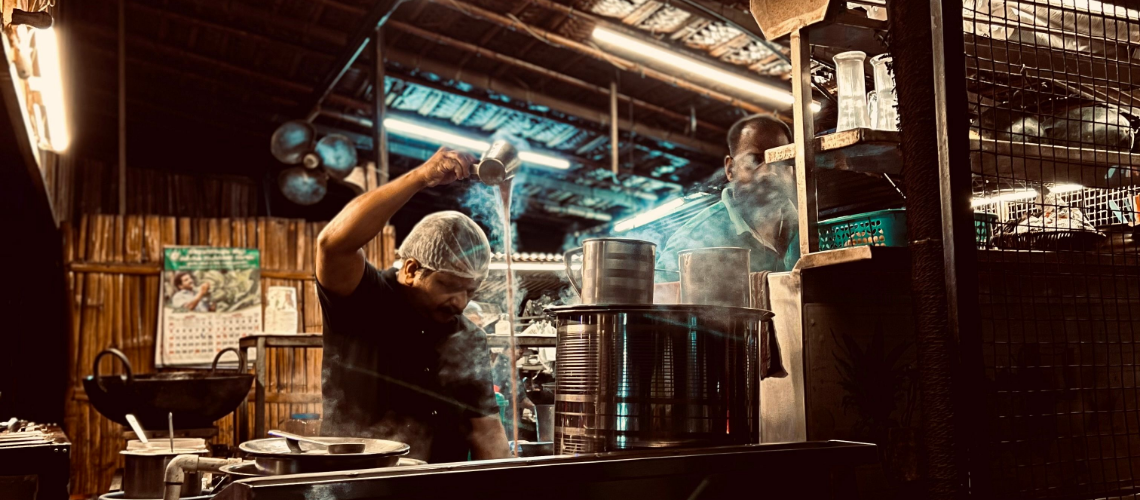
Kerala does not just feed you well. It feeds you memorably. From a steaming plate of puttu and kadala curry at a neighbourhood tea shop to a full banana leaf sadya at a heritage restaurant, the best places to eat in Kerala span every register – humble and grand, beachside and backwater, ancient family kitchens and contemporary dining rooms. This guide covers where to eat across the state, from iconic restaurants with decades of history to local spots most travellers never find without a trusted recommendation.
What Shapes the Best Places to Eat in Kerala
Before you start planning your meals, it helps to understand how Kerala’s eating culture is organised. The state has three distinct culinary regions: the Malabar coast in the north, shaped by Arab trade and the Mappila Muslim community; Central Kerala, home to Syrian Christian kitchens and the backwater cuisine of Alappuzha and Kottayam; and Travancore in the south, including Thiruvananthapuram, where Hindu Nair and Brahmin traditions dominate the table.
Each region has its own signature dishes, cooking fats (coconut oil is universal, but usage varies), and dining culture. A toddy shop in Kottayam serves very different food from a Malabar hotel in Kozhikode, even though both are quintessentially Keralite. Knowing the region you are in determines what you should order.
Kozhikode: the Food Capital of Kerala
Ask most food-focused travellers which city they would choose for a single meal in Kerala, and many will say Kozhikode (Calicut). The city’s centuries-long connection with Arab spice traders gave its cuisine a depth and complexity found nowhere else in the state.
Paragon Restaurant is the most celebrated name in Kozhikode dining. Founded in 1939 by Govindan Panhikeyil, a former Indian Railways employee, it has been serving Malabar cuisine for over 85 years and is now run by the family’s third generation. The Kozhikodan chicken biryani here uses short-grained jeerakasala rice rather than basmati, which gives it a nuttier, more aromatic quality. Appam with fish mango curry is another dish that regulars return for repeatedly. Expect a queue during peak hours – it is a sign you are in the right place.
For a more historic and atmospheric experience, Kayees Rahmathulla Hotel in Mattancherry, Kochi, is a must. Founded in 1948 by V.K. Kayee, who had cooked for the British Army in the 1940s, the restaurant built its reputation on a single dish: mutton biryani. The no-frills setting and the packed lunchtime crowd are part of the experience. Arrive early – the mutton biryani often runs out before the afternoon is over.

Kochi: Where Old kitchens Meet New Dining
Kochi is Kerala’s most cosmopolitan city, and its food scene reflects that layered history. Alongside exploring the many places to visit in Kochi, Fort Kochi sits on centuries of Portuguese, Dutch, British, Jewish, and Syrian Christian influence, all of which left something behind in the city’s kitchens.
The Puttu in Kochi is one of the most inventive dining concepts in the state: an entire restaurant dedicated to Kerala’s beloved steamed rice cake. The menu offers an imaginative range of puttu variations – sweet, savoury, stuffed, and fusion – each a tribute to a dish that most of Kerala considers simple breakfast food. It is a genuinely fun meal, and a good introduction to just how versatile traditional Kerala cooking can be.
For seafood and a grander setting, the restaurant at Brunton Boatyard is housed in a 19th-century colonial building near the waterfront in Fort Kochi. The dining room is designed in the shape of a snake boat, and the menu leans heavily on fresh catches from the Arabian Sea, alongside Kerala thalis and coastal curries.
Kochi is also where you will find the highest concentration of homestays, particularly in the lanes around Fort Kochi and Mattancherry. Several families open their homes to travellers and cook ancestral recipes to order – a more intimate and often more authentic experience than any formal restaurant.
Alappuzha and The Backwaters: Eating on the Water
The backwater regions of Alappuzha (Alleppey) and Kottayam offer a dining experience that is inseparable from the landscape. On a Kerala houseboat, freshly caught karimeen pollichathu (pearl spot fish wrapped and grilled in banana leaf) is prepared in the onboard kitchen, often from fish caught that morning. Eating this dish while drifting through quiet canals lined with coconut palms is, for many travellers, the single most memorable meal of their trip.
On land, Alappuzha’s network of toddy shops (known locally as kallu shaap) is the most honest place to eat in the region. These are rustic, open-sided establishments where coconut toddy is poured fresh from earthen pots and the food – kappa and fish curry, prawn ularthiyathu, spiced crab – arrives in generous, unfussy portions. They are not formal restaurants, and that is precisely their appeal. Toddy shops are where fishermen, farmers, and travellers eat together, and the food reflects it.
Kappa and meen curry (boiled tapioca with spicy fish curry) is the defining dish of this region. It is simple, deeply satisfying, and costs almost nothing at a local eatery.

Thiruvananthapuram: The Home of the Grand Sadya
Kerala’s capital is the best city in the state for experiencing a proper banana leaf sadya. Several established restaurants serve full sadya thalis year-round, featuring the complete range of dishes – avial, thoran, olan, sambar, rasam, papadam, pickles, and multiple varieties of payasam – that make up Kerala’s most important ceremonial meal.
The city also has a strong culture of early morning breakfast restaurants serving the classics: puttu and kadala, idiyappam with fish moilee, and appam with vegetable stew. These small, busy eateries open before 7 am and are usually winding down by 10 am – a rhythm that rewards the early riser.
For a more atmospheric evening meal, Thiruvananthapuram has a handful of heritage dining rooms housed in restored colonial buildings, where the menu blends Kerala seafood with continental dishes in settings that reflect the city’s long history as a royal capital.
Hill stations: Munnar and Thekkady
The food culture shifts when you move into the hills. In Munnar, small restaurants near the tea estates serve warming dishes designed for cooler weather: pepper chicken fry, rich coconut curries, and aromatic spice tea made with ginger, cardamom, and black pepper. Several plantation homestays offer guests home-cooked meals using ingredients grown on the property, including fresh black pepper, cardamom, and locally sourced vegetables – a genuinely farm-to-table experience.
In Thekkady, near the Periyar Wildlife Sanctuary, a number of family-run restaurants serve traditional Travancore food, and cooking classes are available where travellers can learn Keralan recipes directly from local families.
Types of Eating Places to Visit in Kerala: A Travel guide
Malabar hotels are traditional Muslim-run restaurants found across northern Kerala, known for biryanis, pathiri (rice flatbread), and meat-heavy dishes. They are typically open for breakfast and lunch, and many close by mid-afternoon.
Toddy shops (kallu shaap) are the traditional informal eateries of central and southern Kerala, serving fresh coconut toddy alongside simple, excellent food. They are not always easy to find without local knowledge, but the food is among the most authentic you will eat.
Sadhya restaurants serve the full banana leaf feast, either as a daily thali or as a special occasion meal. Several in Thiruvananthapuram and Thrissur have built strong reputations for preserving the full traditional spread.
For many travellers, homestays are the single best way to eat in Kerala. A family cooking for guests in their own kitchen, using recipes passed down through generations and ingredients sourced locally, consistently produces food that no restaurant can fully replicate.
Houseboat kitchens in Alappuzha are a category of their own – the cook on board prepares everything fresh each day, often incorporating whatever was caught or bought that morning at the local market.

Plan your Kerala Food Journey with Immersive Trips
The best places to eat in Kerala are not always the ones that appear on standard travel lists. Many of the most memorable meals happen in places you find through local knowledge – a family home in Kottayam, a toddy shop off an unmarked road in Alappuzha, a breakfast stall in Kozhikode that has been serving the same three dishes for forty years.
At Immersive Trips, we build Kerala itineraries that take food seriously. If you want your trip to include the right restaurants, the right homestays, and the kind of local guidance that gets you to the table in the first place, get in touch with our team and we will plan it around you.
A final note on eating local
Kerala’s food culture rewards patience and curiosity. The best meals rarely announce themselves. They arrive on a banana leaf in a busy canteen, or on a steel plate in a kitchen that doubles as a family home, or fresh off a houseboat grill while the backwaters slip quietly past. Wherever you find them, Kerala’s traditional food is one of the most distinctive and satisfying cuisines in India, and its places to eat are as varied and memorable as the state itself.
Start planning your Kerala trip today and let us help you find the meals you will still be talking about long after you get home.
Frequently Asked Questions
What are the main culinary regions in Kerala?
Kerala has three distinct culinary regions: the Malabar coast in the north, Central Kerala, including Alappuzha and Kottayam, and Travancore in the south. Each region has its own signature dishes, cooking styles, and dining traditions.
Which city is considered the food capital of Kerala?
Kozhikode (Calicut) is regarded as the food capital, famous for Malabar cuisine, biryanis, and historic restaurants such as Paragon and Kayees Rahmathulla Hotel.
Where can I experience Kerala Sadya authentically?
Thiruvananthapuram is the best city for a proper banana leaf Sadya, with several restaurants offering full thalis year-round, featuring avial, thoran, olan, sambar, rasam, papadam, pickles, and payasam.
What is unique about dining in Kochi?
Kochi combines historical influences from Portuguese, Dutch, British, Jewish, and Syrian Christian cuisines. Highlights include Puttu-speciality restaurants, Brunton Boatyard for seafood, and homestays offering family-cooked ancestral recipes.
What makes houseboat dining in Alappuzha special?
On Alappuzha houseboats, meals like Karimeen Pollichathu are prepared fresh from fish caught that morning, creating a dining experience inseparable from the scenic backwaters.
What are toddy shops and where are they found?
Toddy shops (kallu shaap) are rustic, open-sided eateries in central and southern Kerala that serve fresh coconut toddy with local dishes such as kappa and fish curry, prawn ularthiyathu, and spiced crab.
Which Kerala city is best for historic Malabar cuisine?
Kozhikode is renowned for Malabar hotels and traditional Muslim-run restaurants, serving dishes such as biryanis, pathiri, and meat-heavy breakfasts and lunches.
What is the best place to try farm-to-table meals in Kerala?
In Munnar, several tea estate homestays serve home-cooked meals made with fresh, locally sourced ingredients such as black pepper, cardamom, and vegetables, offering an authentic farm-to-table experience.
Can I take cooking classes while visiting Kerala?
Yes. In Thekkady, family-run restaurants often offer hands-on cooking classes, letting travellers learn traditional Travancore recipes directly from locals.
What types of eating places are available across Kerala?
Kerala offers Malabar hotels, toddy shops, Sadya restaurants, homestays, and houseboat kitchens, each catering to different budgets and providing unique culinary experiences.